
Edinburgh Alumna Sam McAlister on securing the royal interview that shook the world
A proud alumna of the University of Edinburgh, Sam McAlister’s connection to Scotland’s capital runs deep. Her time in the city laid the foundation for a legal and media career that would eventually see her shape one of the most high-profile interviews in British broadcasting history.
A BAFTA-nominated producer, Sam rose to prominence at the BBC’s Newsnight, where she was responsible for securing interviews with world leaders, Hollywood A-listers and, most famously, Prince Andrew.
Her role in brokering that explosive conversation has made her one of the UK’s most sought-after mental resilience speakers, with audiences captivated by her behind-the-scenes insight, bold decision-making, and unshakeable tenacity under pressure.
Now an Executive Producer on the Netflix drama Scoop and a Visiting Senior Fellow at the London School of Economics, Sam is widely respected as one of the country’s top high performance speakers.
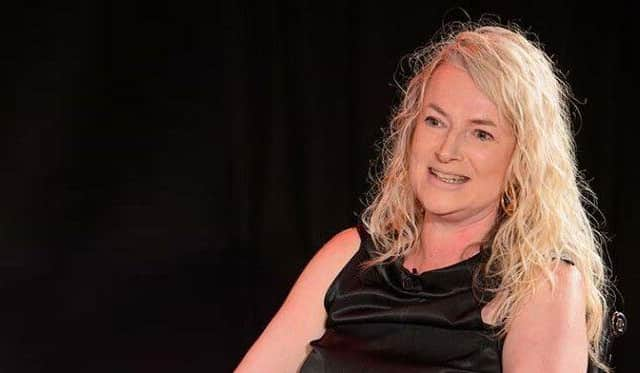

In this exclusive interview with The Champions Speakers Agency, she shares what it really took to secure the most talked-about royal interview in modern history — and the lessons she now passes on to the next generation.
Q: You’ve become known globally for securing the now-infamous interview with Prince Andrew. Take us back to the beginning — what first drew your attention to this story?
Sam McAlister: “Well, the story had always been in the public consciousness, but only a little bit. My job at Newsnight was really to pursue interviews with people who were in the public profile — world leaders, members of royalty, actors, people who were working in politics.
“And in this particular circumstance, the story of Prince Andrew, at the stage at which I first started dealing with his people — which was in October 2018 — it really wasn’t that big of a deal. He was kind of a forgotten prince, and the tale of his friendship with Jeffrey Epstein was also somewhat forgotten.
“But over the period of the year and one month that I was dealing with Buckingham Palace, it became the biggest story in the country — and certainly almost the world. So it was one of those classic cases of something that starts with something that your team at Newsnight say, “That’s not very Newsnight.”
“We turned it down twice, and then, over the period of that year, it became the negotiation of my life — because everyone in the world wanted that particular interview. He had so many big questions to answer about his friendship with the convicted paedophile Jeffrey Epstein, but also the specific allegations — which he denies to this day — against him for sexual acts committed against Virginia Giuffre.”
Q: Convincing a senior royal to sit down on record is no small feat. What negotiation tactics helped you earn the trust of Prince Andrew’s team?
Sam McAlister: “I think that really honesty is the best policy. It’s quite rare in negotiation for people to be blunt and honest. I mean, in the film adaptation of my book Scoop on Netflix, I call him “Randy Andy” to his face — and I actually did that in this negotiation. Because, effectively, honesty is the best policy.
“Over the many months that I was dealing with Amanda Thirsk — who was his chief of staff at the palace — and then with him personally, face-to-face, in a tiny room with Emily Maitlis (the presenter), Stuart Maclean (the deputy editor), and a surprise guest — his daughter, Princess Beatrice — in those very, very important moments of dealing with someone, you have to earn their trust quickly. Over the time I’d been dealing with Amanda and all the people involved in this, I had just been blunt. Not rude, not disrespectful — but blunt.
“This was an interview about Jeffrey Epstein. There would be no conditions, and Newsnight was looking to have the definitive narrative from him — his version of events of these incredibly serious accusations, and the problem of this friendship with this man who was now dead, but who had been a prolific sex offender.
“So it really was a matter of professional honesty, without blurring the lines between truth and trying to get the interview that you want. Because ultimately, you know what a prize it is journalistically — so you have to make sure you don’t cross that line.”
Q: As someone who sat just feet away from the Duke of York during that historic interview, what moments surprised you most as it unfolded live on camera?
Sam McAlister: “What usually happens is you do a briefing call — not usually with the actual person that’s doing it — and then, by the time you get to the interview itself, they’ve cleaned it up completely. This was the one time that didn’t happen. We spoke to him on the Monday — he revealed lots of the things he revealed on camera on the Thursday, when the interview happened.
“But I never, for one second, thought he would replicate those things in the public domain. So the real shock for me, sitting in that room 15 feet behind his chair, was the fact that he put Pizza Express, Woking, the fact that he had a condition where he didn’t sweat at the time — the fact that he put those into the public domain was the thing that was really shocking to me, because I assumed he would not put any of that on camera.”
Q: You’ve spoken candidly about the pressures of working in high-stakes broadcast journalism. How vital was mental resilience during your time at the BBC?
Sam McAlister: “I think the thing that I’ve learned about myself is actually that resilience was really my best friend. You know, I was lucky enough to have an extraordinary education, incredible colleagues, the brilliant brand of the BBC, an incredible presenter like Emily Maitlis or Jeremy Paxman by my side, effectively.
“But ultimately, if you give up, you get nothing. And in this particular job that I was doing — with so much rejection and so many “no’s,” so many doors closed in my face, figuratively and sometimes literally — resilience was my best friend. And I had an unending optimism. So 99% of the time, I’d get a “no,” but I would always believe it would be the 1%, even though that doesn’t really make sense in terms of my experience.
“So I think that stoicism, that resilience, and not taking the rejection personally but seeing it as a professional decision — I think those really were the things that meant I was able to carry on with this very difficult role.”
Q: Now teaching negotiation at the London School of Economics, what’s the single most important lesson you pass on to your students?
Sam McAlister: “The number one tip in negotiation is to listen. I mean, I was a barrister — did criminal defence — so I was taught how to do negotiation, you know, at law school. And the thing I found fascinating — and we all know this, we all do it (I do it too sometimes) — is people are waiting to speak, and they’re not listening.
“I think the profound difference between a good negotiator and a bad negotiator is: bad negotiators go in with an end in mind, and they have five points to make, and they will make them at any cost. Medium negotiators go in with five points in mind, and they’ll make three, but they’ll make them at any cost. The negotiator that’s most successful goes in with five possible points in mind, but might not make any of them — because they are in a living, breathing situation, where they respond to the person opposite them on a human level and on a professional level.
“That really is the thing — to adapt, to listen, and to make sure that you’ve prepared in a way that means you can answer questions, but you’re not just basically listening to your own voice and listening to your own points. That’s where the most skilful negotiations are. I think it can be taught and learned.
“One of the interesting things I’ve learned while I’ve been a Visiting Senior Fellow at the London School of Economics is that, effectively, there are quite formal structures that people are used to — in professional life and in education — in terms of how they kind of are just conforming to things all the time, which is understandable, because people are frightened of risk.
“So one of the things that I do try to teach is to be, in a sense, a bit more informal, and to try and bring some more of somebody’s professional self, their personality, a bit more of their humanity into the situation.
“Because if you imagine in a negotiation, someone might meet 100 people — it’s very easy to forget 100 people, actually. So trying to be remembered for the right reasons, and showing a bit more of yourself and breaking down that kind of automated kind of response to things, can be very, very useful.
“Because the longer you’ve been in a profession — and I used to be a lawyer myself — the more inauthentic, in a sense, you feel. So that’s one of the things that I teach to the students, and by the end of it, a lot of them are quite different from when they first met me, in terms of how they interact.”
This exclusive interview with Sam McAlister was conducted by Roxanna Hayes of The Motivational Speakers Agency.
For More Information: Champions Media & Journalism Speakers