
How facing cancer helped me turn my company into a major player: Commsworld's Ricky Nicol discusses his most pivotal moment in business
I co-founded Commsworld in 1994 – and it’s now the UK’s largest independent network provider, with more than 100 staff and a roster of major clients.
But 15 years ago I went to the doctor about a lump on my neck. I didn’t think it was anything serious, but it turned out to be throat cancer.
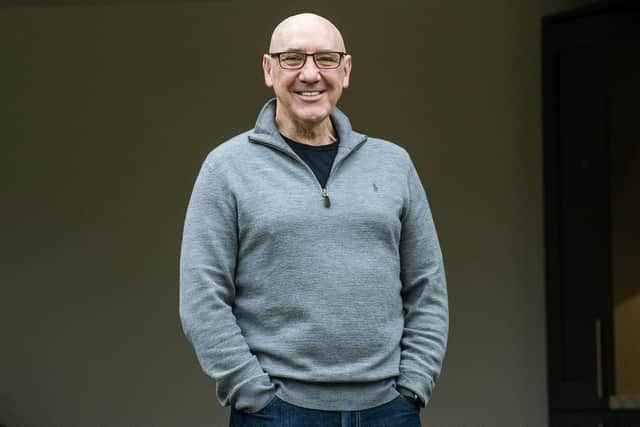

When I was growing up cancer was seen as a death sentence, although the odds are much better now for people diagnosed with the disease.
I asked the consultant if I was going to die and he said that I wouldn’t make it past six months without any treatment. Even with treatment, there was only a 50:50 chance of survival.

However, he explained that due to factors such as my relatively young age – 44 – it meant I could get the maximum treatment, which was really intense and too much for older, more frail patients.

I had radiotherapy, chemotherapy and a neck dissection. I was off work for more than a year, lost three stone, and for the first five or six months or so, I really wasn't well. At one stage I didn't think I'd ever get back to work, to be honest.
But then as I started to recover, although I wasn't well enough to return to work, I spent a lot of time on the internet as there was nothing else to do, and I saw how it let you research so much.
I became convinced that it was going to grow arms and legs, so in a strange way my illness was a good thing – it gave me the vision that Commsworld should become more internet-driven rather than core telephony driven as we had been.
I said to my wife “look, this may fail, and once I start going down this road, the company could collapse – or I could just leave it as is, ticking along, or I could just bail out”.
In fact, a close friend suggested that I sell my stake in the business and have an “easy life” – by then I was already financially comfortable anyway.
But perversely, I was more determined, because I thought, “no, I've got a second chance, I'll just go for it – and if it doesn't work, it doesn't work. I don't care. Because I thought I'd rather try and fail than sit back and think I wonder what could have happened”.
Before my illness, I was risk-averse and played it safe, but after I thought I would give more things a go – and if I fail, I’m not going to die, I’ll just be back where I was before.
It literally gave me the drive to change the direction of Commsworld – it was a major changing point. It took a while before we kicked into the big time because of things like the financial crash, but it was a defining moment in my career and my life.
When I got back to work, my colleagues made sure that I wasn’t working 12 hours a day any more, so in a strange way I was probably less stressed than before, but I was more determined. As my dad used to say, life’s not a rehearsal.
But whenever I spoke to competitors of any significance, any scale, any size, they all repeatedly said I couldn’t grow Commsworld to be a major player. Some would literally laugh at us and say we could never compete.
I used to just say “fine, that’s for me to find out”. Then, once we started winning contracts and delivering them, the customers put in writing that we were a better, slicker, faster, sharper and nicer service than any other carrier they’d used – and some of the big firms that had doubted us ended up folding.
We've won FTSE 100 customers and four of the biggest councils in Scotland – and last year we completed the final stage of our UK-wide optical core network.
If you go back a few years, it would have been impossible for a firm of our scale to win the deals that we’ve done across the UK and deliver them – and to build a network using our own sweat, guts and intelligence.
We’ve delivered what no other Scottish company’s ever done – we’ve built a major network across the UK with no external money, which rivals the Vodafones and BTs. We manage the largest privately-funded optical core network in the country – and now we’re going head to head with these incumbents and winning major contracts.
Last year we were named one of the UK’s "most dynamic and fastest-growing” small and medium sized enterprises by London Stock Exchange Group. Additionally I won the lifetime achievement prize at the WeDo Scottish Business Awards, and that’s on the back of a lot of encouragement from key Scottish entrepreneurs like Brian Williamson, Paul Atkinson, Jim McColl and Chris van der Kuyl.
It’s also actually been easier than I thought it would be to bid for big contracts, which we ended up winning. When you face your fear, it’s not as frightening as you thought it would be and I think that goes for cancer or business – although you have no choice with cancer; in business you can just walk away.
Commsworld has grown from five people – it's a big company now. We've got big ambitions to grow and grow and grow, and I still want to be part of that.
However, with everything I’ve been through, particularly my cancer, I want to be able to take some time out as well. I’ve stepped down as CEO, and am now vice-chairman, remaining on the board. I have a great senior team, so I’m more than comfortable with doing that.
I'm genuinely as excited about the future as I am proud about the past.
As told to Emma Newlands