
Edinburgh's ban on worst-polluting vehicles to start by May 2022
Date set for Low Emission Zone
PLANS to ban the worst-polluting vehicles from the Capital have been rescheduled to come into force by May 2022.
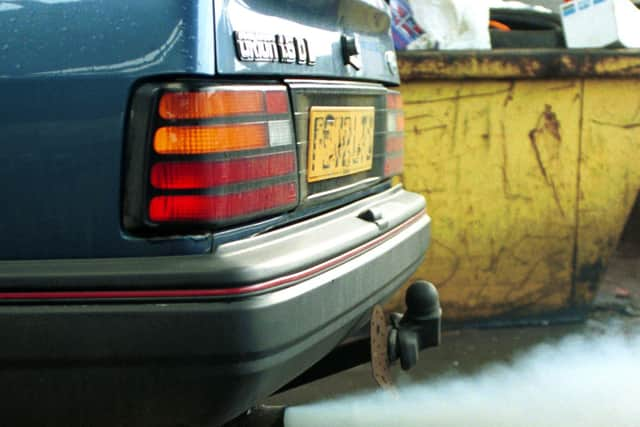

Introduction of the Edinburgh’s Low Emission Zone was put on hold by the Scottish Government because of Covid.
But now new dates have been announced for all four of Scotland’s major cities to have their LEZ schemes up and running between February and May 2022.
Glasgow has already introduced the first LEZ which applies to buses only at this time.
Edinburgh’s LEZ plans, unveiled last year, involve a two-tier scheme, with cars, buses and lorries which fail to meet pollution standards being banned from the city centre, while a separate zone for the wider city will exempt cars.
It was originally expected that once approved by the Scottish Government the measures would be in force by the end of next year.
But the government announced in May progress on LEZs had been “temporarily paused” due to the impact of Covid-19 on local authorities.
The new starting dates for the zones were agreed by the “LEZ leadership group” which brings together government ministers and council leaders from the four major cities.
The group said the we dates were an “indicative timeframe” and a commitment to bring in the measures as quickly as possible rather than a “finalised timetable”.
Transport Secretary Michael Matheson said: “LEZs are key to improving air quality, protecting public health and supporting Scotland’s wider climate change ambitions by encouraging more sustainable transport options.
“With the indicative timeline now established, planning continues at a local authority level and the Scottish Government will continue to develop the required regulations as well as providing funding to help people and businesses prepare.”
Edinburgh’s transport and environment convener Lesley Macinnes said LEZ were crucial to tackling poor air quality in the city and its negative impact on health and wellbeing.
“Now more than ever we are aware of the need to protect public health. During lockdown, when motor traffic dropped significantly on our roads, we were able to experience cleaner, fresher air and the wide-reaching benefits of walking, wheeling and cycling.
“We want to sustain these positives as we work towards the city’s recovery from the pandemic.
“This will complement a great deal of work over recent years toward implementing sustainable transport options and significantly improved walking and cycling infrastructure, all of which will contribute to the climate emergency and our own 2030 net zero carbon goals.”