
Conflict between cyclists and pedestrians on Water of Leith path is top concern in MP's survey
‘Many cyclists think they have right of way and that there is no obligation on them to slow down’ - Water of Leith path user
Conflict between cyclists and pedestrians has emerged as the biggest concern in a survey of people using the path along the Water of Leith.
More than 450 people answered the questionnaire. Other issues raised included litter, dog fouling, horse manure and pollution affecting the river.
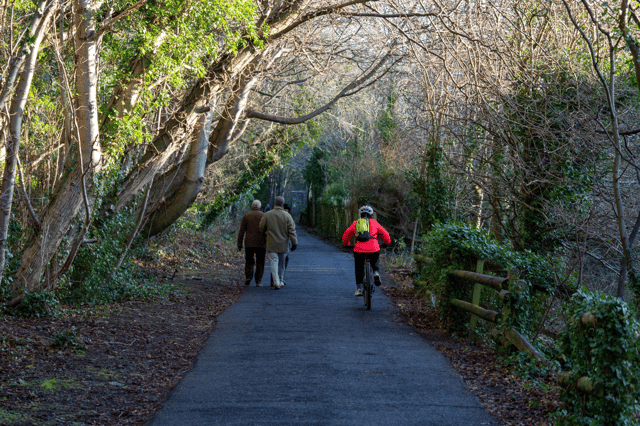

Edinburgh South West Labour MP Scott Arthur said the survey, carried out by his office, showed how much people valued the Water of Leith, with almost half the 450 respondents using the path several times a week and more than 80 per cent rating the Water of Leith as exceptional or very good.
But it also highlighted aspects which required attention. The most prominent issue was conflict between users of the shared path network, particularly between cyclists and pedestrians.
The survey report said pedestrians complained of cyclists going too fast and failing to warn of their approach. One claimed cyclists treated the path as a “racetrack”. There were calls for the use of a bell to be made mandatory and some wanted to ban cyclists from the path.
The report quotes one path user saying: “I can’t relax walking along that path anymore as I’m on constant vigilant alert to make sure child and dog are not in cyclists’ way.”
Another said: “Most cyclists don’t bother me at all, but some do go very fast and if you’re older or not so mobile it can be a bit upsetting and defeats the purpose of a walking in nature.”
And a third said: "Many, but not all, cyclists think they have right of way and that there is no obligation on them to slow down.”
But some cyclists were also unhappy. One was quoted in the report saying: “Despite ringing my bell behind walkers and making sure I give enough space when passing I’m tutted or shouted at.”
And another cyclist said: "I am afraid of dogs running into me while cycling after it happened and caused a bad accident.”
Dr Arthur followed up the survey with a public meeting, when user conflict was again a key theme.
People also expressed concern at the meeting about pollution levels, particularly where the Murrayburn enters the Water of Leith at Longstone, and the number of combined sewer overflows discharging into the river.
And residents voiced frustration over horse manure on the path, with some saying that since the path was resurfaced, horse manure was more prevalent and did not wash away so easily on the artificial surface.
Dr Arthur said since the public meeting he has had discussions with Michelin Mobility Intelligence, part of the Michelin Group, which analyses anonymised data on driving behaviour, including cyclist behaviour, over billions of kilometres to support road safety, infrastructure planning, and sustainable transport.
Dr Arthur believes this data has the potential to identify specific locations along the Water of Leith where safety issues are most likely to arise. “If the Michelin data shows there are hotspots where cyclists are repeatedly braking heavily, we could look to see if we can understand what is causing that and whether or not there is an easy way to fix it.”
He suggested it could lead to improved signage, modifications to the design of the path, changes to increase visibility and maintenance improvements, which could make the path safer for both pedestrians and cyclists.
He is also taking up the pollution concerns with the Scottish Environment Protection Agency (SEPA) and Scottish Water.
And he said the council had written to the British Horse Society requesting that local stables be made aware of local concerns and encouraged to use the path responsibly.