
Council safety work at historic West Lothian cemetery branded a 'desecration'
Council defends dismantling historic gravestones over 'immediate' collapse risks
A councillor has branded safety work at a Linlithgow cemetery as a "desecration".
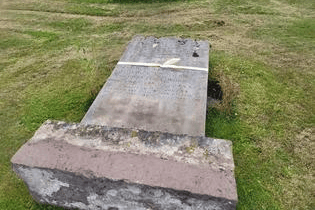
Liberal Democrat councillor Sally Pattle said she was shocked that ancient memorials had been broken up into sections and laid out at the 12th-century Abercorn Church near the West Lothian town.
The work has been carried out as part of an ongoing maintenance and safety programme in which the council’s cemeteries team checks gravestones.
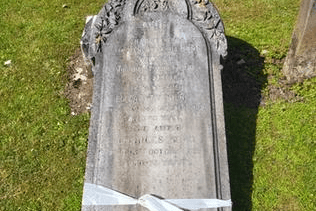

Some deemed at risk of falling have been dismantled and laid flat.
Chairing a meeting of the Linlithgow Local Area Committee, Cllr Pattle said: “I keep being told remedial works are planned. They have not started.
"The last time I was there on Thursday, it was obvious that a large animal had made its home under one of the upturned and desecrated tombstones.”
She added that council staff "have just left such a terrible mess and it is quite distressing".
Victoria Mungall, the council's NETs land and countryside services manager, said the antiquity of the churchyard in the hamlet made it more liable to have problems, given shallow foundations and the weight of the tombstones.
She added: “The stones are structurally unsafe. Because of the size and weight of them, they posed an immediate risk to anyone who was in that cemetery.”
Mrs Mungall said she was conscious there was high footfall in the ancient churchyard because it is a tourist attraction.
“When you inspect those stones, you have no option because of the stability of them but to lay them flat. But in doing that, it causes other issues because if the foundations beneath that have collapsed, it gives more means of access to the grave.
“We are doing all we can to ensure that each plot is handled with the utmost sensitivity and we are doing everything we have to do to make sure it is kept safe.”
Cllr Pattle said the situation had been distressing for visitors and residents, adding: “This is not a normal cemetery; this is a historical monument. This desecration happened with no contact with anyone. There was no indication of the scale of destruction that has occurred.”
Mrs Mungall said that after relying on contractors, the council had now trained its own staff to carry out legally mandated inspections of gravestones every five years. This follows a 2015 incident in Glasgow when a boy was killed by a falling gravestone.
Councillor Tom Conn disputed Cllr Pattle’s description of desecration. “That conveys the wrong message of what has taken place to keep it safe. I don’t disagree with you that it is emotional,” he said.
He said he had seen vandalism in cemeteries where 60 headstones had been pushed over by youngsters for fun.
“That is desecration. In these circumstances, in a historical graveyard that is being attended to by officers, I don’t think it helps them doing their job hearing that comment.
“I have to say I didn’t recognise the condition of the graveyard as was described. There is not a mess. The stones have been laid down in a respectful manner.”
He added that some of the larger stones, built in sections, had been held together with a “drizzle” of lime mortar.
Councillor Pauline Orr won agreement from all for her comments on the lack of on-site information at the graveyard explaining what was happening. She suggested more information should have been given to councillors to put out, and a more visible explanation should have been attached to the churchyard gates.
A spokesperson for the council told the Local Democracy Reporting Service: “West Lothian Council is currently undertaking memorial safety inspections of headstones in Abercorn cemetery.
“Memorials that have failed our inspection have been taped or stickered and may be laid flat or sheughed – that is, buried upright in their correct location at about a third of their height – in due course.
“The headstones of concern have either come off their foundation or plinth and the pins may no longer be holding them in place. This means that they can often readily be pushed or pulled over and are therefore a risk to cemetery visitors.
“We apologise for any distress and anxiety caused by this inspection work that is being carried out in the interests of public safety.”
The council has a five-year rolling programme of inspections in place for all memorials in its cemeteries, as required by the Scottish Government.
The spokesperson added: “The lair holder, rather than the council, is responsible for the headstone on a lair. If no works are undertaken to remedy or repair the unsafe headstones by lair holders, these may be laid flat, sheughed in or staked in due course to ensure the safety of cemetery visitors.
“If your family memorial has been taped or stickered, can you please contact the council and have it inspected, repaired or reinstated by a qualified stonemason. Please note the lair number and section are often inscribed on the side of the headstone plinth.”
After the meeting, Cllr Pattle told the LDRS: “While I appreciate the fact that West Lothian Council have belatedly realised they could have handled the situation at Abercorn Cemetery better, I’m afraid that doesn’t change the fact that their actions have caused not only damage to an internationally and historically important monument, but also real distress to anyone who has a stake in the site, and to those visiting the area.
“I remain concerned that remedial work to make what they did right has still not begun, and I will continue to monitor the situation closely.”