
Our little girl was diagnosed with 1 in 10,000 genetic disorder but Edinburgh Uni research gives us hope

An Edinburgh toddler will require ‘round-the-clock care for life’ after she was diagnosed with a rare condition that affects just 1 in 10,000 females.
Parents Cesar Garcia Torres and Virginia Munoz Rucian received the devastating news their daughter Valentina has the life-limiting Rett Syndrome (RTT) shortly before Christmas 2025 after months of concerning signs in her development, and — even more worryingly — skill regression.
After months of working with an NHS physio where little progress was made, family members back home in Spain advised them to see a specialist neurologist. Testing confirmed that Valentina had the rare and debilitating syndrome.
“You just think about the bad things that could happen, but nothing that's as bad as this,” said Cesar, 38.
“That day, when we went to the doctor in Spain and we were told it was Rett... I don't know how we then came back from that.”
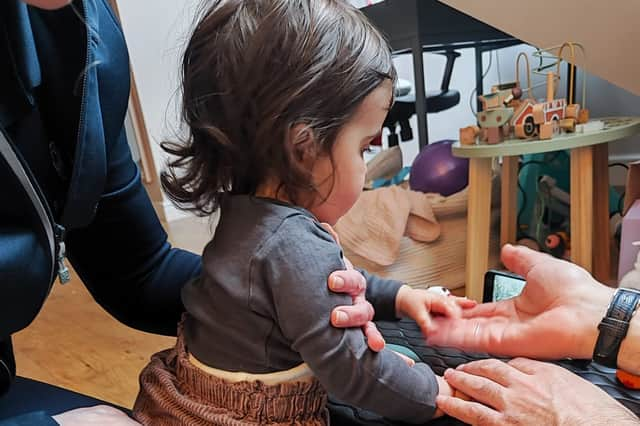

After the diagnosis was confirmed, Valentina’s parents scoured the internet for information about the illness.
Rett syndrome is a rare, severe genetic neurological and developmental disorder that affects how the brain develops. It primarily affects females, occurring in roughly 1 in 10,000 female births and causes lifelong cognitive impairment.
There is currently no cure.
Cesar said: “Even if the doctor explains a little bit what a disease can do, there's such a spectrum of severity, you really want to know within that spectrum what can happen. So when you go to the internet and start learning it's really, really scary.”
It was a heart breaking blow for them as they pictured a changing future from what they had once envisioned.
“You've been picturing this life with your baby as they grow up,” Cesar said, “going to school, going on trips with them, all sorts of stuff, getting them to learn how to ride a bike, and going swimming, going on holidays, and all of a sudden, it's out of the picture.”
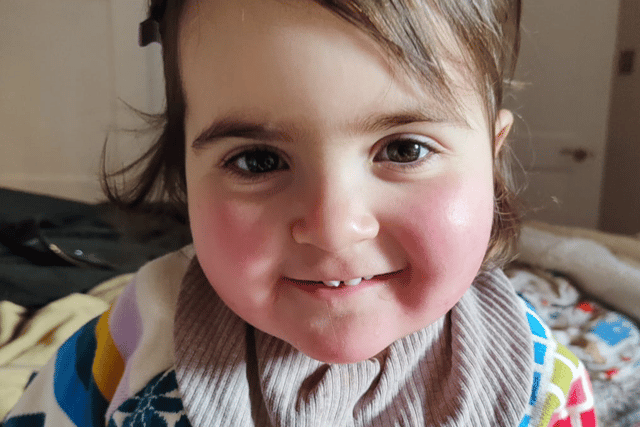
He added: “That's really, really hard.”
But it was Valentina herself who brought back hope to Cesar and Virginia, 36, and the little girl they have raised.
“I think we came to terms with the fact that she was the same girl that she's been until now. And whatever the future brings is in the future, and we don't know how she's going to develop, or what that’s going to look like,” Cesar said.
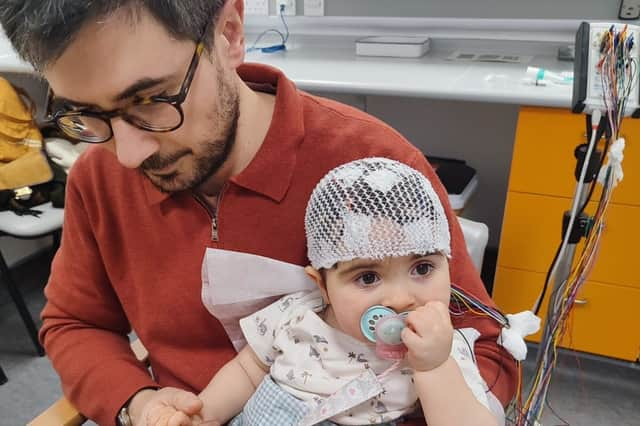
But amidst the heartache, there is a glimmer of hope. Clinical trials in gene therapy are being conducted in their adopted home city of Edinburgh, in a bid to reverse the effects of the condition.
Groundbreaking research from the University of Edinburgh alongside pharmaceutical companies in the US could soon result in a viable treatment entering the market. It has filled the entire Rett community with “hope and expectation”.
In the meantime, Cesar and Virginia will continue as they have since Valentina’s diagnosis.
“It’s lots of physiotherapy, lots of occupational therapy. Working with her, a lot at home. We are trying to give her as much stimulation as possible,” Cesar said.
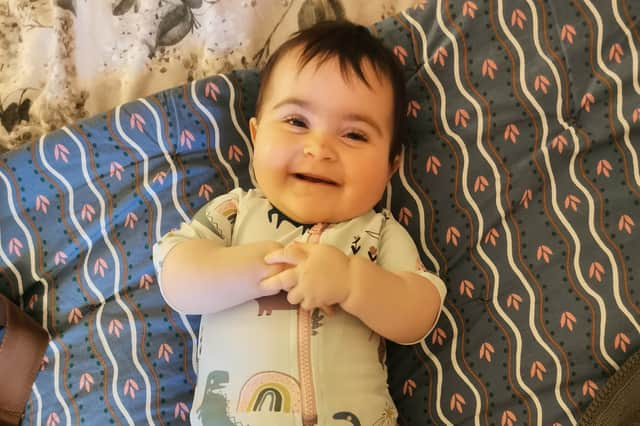
Valentina has come on leaps and bounds since her diagnosis. She is able to stand with support and can kneel. There are toys that she finds help her to communicate alongside facial expressions.
And now Cesar and Virginia want to help further research into the condition by fundraising for Rett Reverse, a national advocacy group that has been funding research since 2000.
Cesar said: “They've basically been the drivers in the UK. They have been the main funding source for school, clubs, labs here in Edinburgh. So all the money from the fundraiser is going for them so they can continue doing their work.”