
Edinburgh council faces 'abolition' under Scottish Government shake-up proposals
With new regional and community authorities, Edinburgh council could cease to exist
Edinburgh council would effectively be abolished under the Scottish Government's plans to shake up local authorities, council leader Jane Meagher has claimed.
And she warned plans for "community" authorities could end up setting different parts of the city against each other.
The government has put forward "initial proposals" to replace the current system by creating between six and 10 new regional authorities across the country and, within these, up to 160 smaller community authorities, naming Leith as an example.
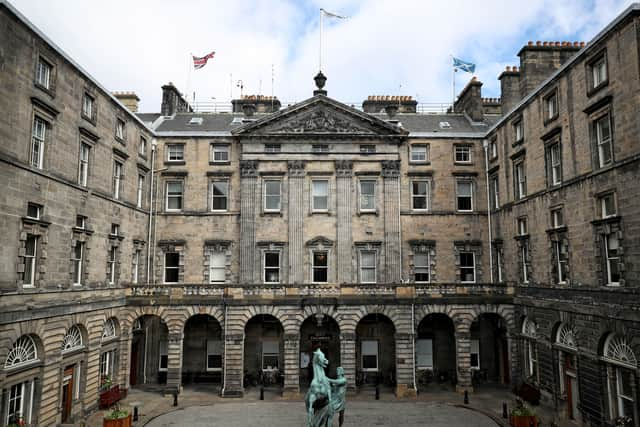

But Cllr Meagher said: "It looks as if Edinburgh council could cease to exist under these proposals."
She said Scotland's local government did need reform and noted the city region - which includes Edinburgh, the other Lothians councils, Fife and Borders - had called for more powers so it could drive forward initiatives.
The government proposals say regional authorities would be responsible for strategic matters like transport, planning, housing and economic development, while community authorities would deal with more local matters such as planning applications and licensing decisions, as well as open space and regeneration of town centres.
But Cllr Meagher said the plans published so far did not have enough detail on how the new system would work. "It doesn't say anything about council tax," she said. "Edinburgh is already the lowest-funded local authority in Scotland.
"And if we're going to have these community authorities - Leith is mentioned [in the government document], then we've Queensferry, Morningside, Fairmilehead, Colinton, Granton, Pilton, areas of multiple deprivation all over the city - does that mean they would be fighting each other for their share of council tax cake?"
The government has said there would be three months of "intensive dialogue" over the shake-up with the Convention of Scottish Local Authorities and others.
But Cllr Meagher said: "It's really hard to envisage, without a lot more detail, how these proposals would work. And I don't think 11-12 weeks to debate the political future of the capital city of Scotland is anywhere near sufficient."
The government proposals envisage councillors elected at ward level serving on both their community authority and the associated regional authority and adds that the increase in responsibilities would prompt “serious consideration of the appropriate remuneration”.
Cllr Meagher said: “How much is this [shake-up] going to cost? I can't imagine an extra layer of government can be introduced without it having some cost attached, not least because they're proposing to pay councillors more.”
Edinburgh Tory group leader Iain Whyte was also concerned that Edinburgh would disappear as a council. “I don't how Edinburgh fits into this,” he said. “But surely the capital city must have its own authority, a council and a voice that can speak up for it.
“Think of all the debates we've had about the festivals and funding this year. Regardless of what side you’re on, you want those debates to be had in a city authority.”
And he said the plan for community authorities could become “a Nimby’s charter”. He said: “If you put all the local planning and licensing in the hands of a very local group of councillors you’re never going to allow any new developments in those areas. It's going to be a Nimby's charter.”
But Edinburgh SNP group leader Lesley Macinnes said: “No-one should rush to judgement on exactly what this would mean for our local communities or for Edinburgh as a whole, because we are in the midst of that conversation and we have a chance to contribute meaningfully to it.”
Green co-convener Alys Mumford said three months was an “eye-wateringly short time” for consultation on such a major reform.
But she said: “We all know that there are elements of local government which aren’t working - councils are blocked from making radical changes by national legislation, and the public services we deliver are consistently underfunded.
“Reforms which bring democracy closer to the people impacted by those decisions is undoubtedly a good thing, while at the same time we need regional cooperation on some of the biggest challenges facing us like the climate emergency and social care crisis.
“A lot of councillors are understandably sceptical about the Scottish Government’s commitment to localism. This reform will be a crucial test.”