
Edinburgh councillors vote to remove traffic filters from Morningside's Braid estate
‘The council has a duty to safeguard its most vulnerable road users’ - parent Ruth Findlay
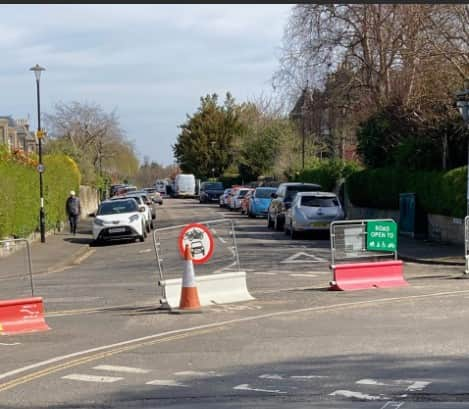
Councillors have voted to remove traffic filters from an Edinburgh estate despite impassioned pleas to keep them in place to make streets safer for children.
The city's transport committee agreed by six votes to five to accept officials' plans to take out two filters in Morningside's Braid estate, first installed during Covid, and carry out traffic monitoring before any further measures are introduced.

However, the committee accepted a Lib Dem call for a review of the changes after 12 months.
Officials said drafting errors in the original traffic order for the filters on Cluny Drive at the junctions with Hermitage Gardens and Braid Avenue meant they could not be made permanent.
But councillors asked why the filters could not be kept since another filter on nearby Canaan Lane, which was affected by a similar problem, was to be retained by means of a temporary traffic order while a permanent one was processed.
Temporary traffic orders can only be used in certain circumstances and Deborah Paton, the council's head of transport strategy, explained that Canaan Lane’s proximity to three schools and two NHS facilities meant it was viewed as “a destination for a significant number of vulnerable road users” which was seen as putting it in a different category from the other roads with filters.
A deputation on behalf of five parent councils - from Canaan Lane, St Peter’s RC, South Morningside, Bruntsfield and James Gillespie’s Primary Schools - appealed to the committee to maintain all the filters.
Ruth Findlay said: “If a way can be found to protect children on Canaan Lane, surely every effort should be made to explore a similar solution on Braid Avenue and Hermitage Gardens.
“Children do not vote, they do not submit objections, they do not sit on committees but they are the people who will be most affected.
“The council has a duty to safeguard its most vulnerable road users. Removing these protections and monitoring the consequences for the next 12 months cannot be an acceptable outcome.
“Children should not be expected to bear the consequences of an administrative error made by adults. And they should not have to wait for harm to occur before action is taken.”
And Jane Brown, leading a deputation from Braid Estate Liveable Streets, said: “We want to make our streets safer for everyone. Removing these filters will reverse five years of progress.
“The council’s own data shows through traffic is down by 40 per cent, average speeds have gone from 27 to 15mph and cycling is up 160 per cent.”
A third deputation, from Midmar residents, supported the removal of the filters, saying they had meant that for the last five years, all the traffic had been going down Midmar Drive and Midmar Avenue while Braid Avenue, the widest, straightest road on the estate, was closed to traffic.
Morningside Green councillor Ben Parker urged the committee to back a Green amendment and use a temporary traffic order to keep the two filters despite the officials’ advice that it could result in a legal challenge.
Lib Dem councillor Kevin Lang asked him: “Given the history of this project and the differing voices, do you not think there is quite a likely chance of a legal challenge if this committee chooses to go against the legal advice we have had?”
Cllr Parker replied: “I think that's probably true, but I suppose it doesn't stop me from doing what I think is right and I think the right thing to do is stand with children and young people and parent councils and the school communities on this topic and if someone wants to challenge us about that, then so be it.”
Cllr Lang said: “We have ended up in the most awful guddle in all of this. This is one of the most polarised issues I have dealt with in my time on this committee. Somehow, we’ve ended up in a position where we’re pleasing nobody at all.”
But he said: “It would be irresponsible of us to knowingly go against the professional advice we have had.”
Green councillor Chas Booth asked what the committee was there for. “Is it to cave in to the voices of those who shout loudest or is it to save lives, especially of vulnerable road users - children, young people, older people, those with mobility issues?
“If someone wants to take legal action against us because they feel their right to drive down the road is more important than the safety of kids walking to school, the council’s response should be four words: See you in court.”
SNP councillor Lesley Macinnes said the issue was “incredibly contentious”. And she continued: “I cannot tell you how disappointed I am that we are going to pass something which blows a hole in a really beneficial scheme, one which was put in at enormous effort and one which has delivered clear benefits.”
Labour transport convener Stephen Jenkinson said he accepted not everyone would be happy with the decision the committee was making, but he hoped the door had been left open to get the information needed to make better decisions going forward.
“It has been a contentious issue, it has generated a lot of concern in the local community, it has generated a lot of correspondence and a lot of time and money has been spent on this. What I’m keen to do is bring some clarity to the community and make sure that decisions we do take are always based on clear data and evidence.”