
Edinburgh history: An election 90 years ago dominated by economic depression and fear of war
It was to be the last general election for a decade, the first fought by the SNP and it marked the start of an era of two-party politics across the UK.
Candidates in Edinburgh and the Lothians included a leading suffragist and peace activist who now has a university building named after her; a male politician once jailed for campaigning for women to have the vote; and a former British Army officer who later became the only MP interned during the Second World War as a suspected Nazi sympathiser.
The election held on November 14, 1935, was overshadowed by the continuing effects of economic depression and the fear of another war.


A Conservative-dominated coalition had been in power since 1931, when a minority Labour government quit after failing to agree on measures to tackle the economic crisis and prime minister Ramsay MacDonald agreed to form a National Government with Tories and Liberals.
The coalition had won a mandate with a massive majority at the 1931 election and MacDonald had continued as prime minister until earlier in 1935 when he stepped down and Tory leader Stanley Baldwin took over the helm and called the election.
At home, unemployment was persistently high and the jobless faced a harsh means test which involved officials inspecting people's homes and possessions and taking into account the incomes of all members of the household.
Abroad, Hitler was building up Germany's military, prompting calls for British rearmament; and Mussolini's Italy had invaded Abyssinia (now Ethiopia), prompting the League of Nations - forerunner of the UN - to impose economic sanctions against Italy.
The result of the election saw the National Government returned with a comfortable majority, but Labour - which had suffered badly in the 1931 election - made an impressive recovery under interim leader Clement Attlee, winning 38 per cent of the vote and gaining 102 seats to give them 154 MPs.
The Liberals, who were badly split with some supporting the government as “Liberal Nationals” and others opposing it, fared badly and were effectively effectively relegated to being Britain’s third party.
The SNP, formed in 1934 by the merger of the National Party of Scotland and the Scottish Party, fought just eight seats, losing its deposit in five but getting 28 per cent of the vote in the Western Isles and 16 per cent in Inverness.
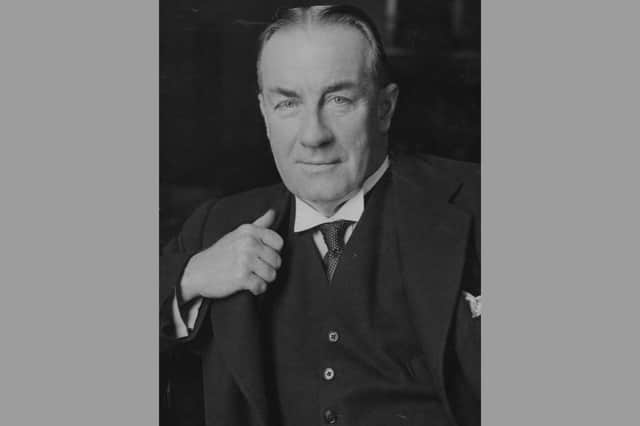
One of the Labour gains was Edinburgh East, won from the Liberals by Fred Pethick Lawrence, a 63-year-old barrister who had first been elected an MP in 1923 by beating Winston Churchill in Leicester West, going on to serve as Financial Secretary to the Treasury in the 1929-31 Labour government.
He had been active along with his wife in the campaign for women to have the vote and in 1912 he was jailed for nine months following the suffragettes' window-smashing campaign, even though he disagreed with the policy. While in prison he underwent force-feeding and after release was made bankrupt when he refused to pay the costs of his trial.
During the 1935 campaign, he attacked the National Government over its policy at home and abroad. The Evening News reported a meeting he addressed at Portobello Town Hall: “The Government to-day were supoorting collective action by the League of Nations, but only a few short months ago they were pursuing a directly opposite policy.
“They now admitted the need for reform with regard to education, to the mines, and to the means test. Why had they waited till the General Election to realise this instead of making changes during their four years of office ?”
Meanwhile, the Liberal candidate in Edinburgh North was Chrystal Macmillan, another activist for women's right to vote, but on the non-militant wing of the movement, who were known as suffragists rather than suffragettes.
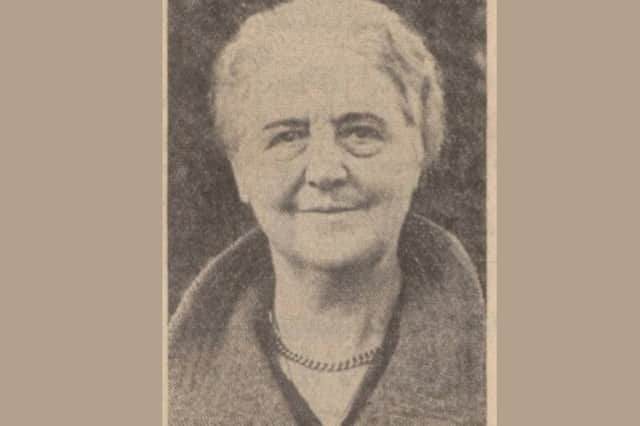
In 1892, she had been among the first female students to enrol at Edinburgh University, and in 1896 she became the university's first female science graduate, finishing with first-class honours. She was a regular speaker at suffrage rallies, including alongside pioneering doctor Elsie Inglis at meeting in Edinburgh in 1909. She was a peace activist during the First World War, involved in relief work, and later trained as a lawyer.
In 1935, she launched her campaign at the Broughton Halls, telling the audience p as reported in the Evening News - “she believed the Liberal policy of giving the same rights to men and women would do much to help the full development of women, so that they would be able to make a much greater contribution to the welfare of the community ."
She finished third with 1,798 votes in what had long been a safe Unionist seat.
She died two years later. In 2012 a newly-refurbished building in George Square housing Edinburgh University's School of Social and Political Studies was named the Chrystal Macmillan Building.
Archibald Maule Ramsay came from an aristocratic family and lived in a castle. He was an Army officer in the First World War and was elected Unionist MP for Peebles and Southern Midlothian in 1931.
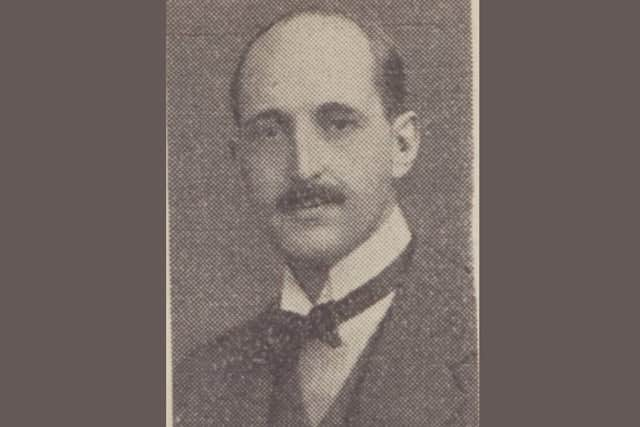
When the Spanish Civil War broke out in 1936 he was a strong supporter of Franco and then became fiercely anti-communist and anti-semitic.
As Britain moved closer to war with Germany, he made speeches in the Commons defending the Nazis and in 1940, after the war began, he was arrested and held in Brixton prison as a suspected Nazi sympathiser. One peer claimed he was Hitler's chosen “Gauleiter” for Scotland in the event of an invasion.
Released in 1944, he returned to Westminster but did not stand again.
In the 1935 campaign, the Evening News reported how Captain Maule Ramsay had "a lively time" when he addressed a meeting in Bonnyrigg. "The candidate was quietly listened to in the.early stages when he dealt with the effect of the import duties on local industries. It was when he dealt with the mining industry that the interruptions broke out.
“No one would be more glad than he, continued the candidate, to see the miners get an increase in wages, but he was afraid a flat increase of 2 shillings per man at the present time was impracticable. The concluding stages of Captain Ramsay's speech were inaudible owing to the continuous booing and cheering and ironical applause."
It seems the election campaign in Scotland ended on disturbing note. On election day, the Evening News reported: “A number of Scottish candidates experienced much rowdyism at their final rally meetings last night. At Armadale, Sir Adrian Baillie, the Conservative candidate for West Lothian, and Lady Baillie were “mobbed,” and windows of their car were broken.”
And polling day began with heavy rain. The News said: “Worse conditions for the first hour or two could hardly be imagined. Rain fell in torrents. with the result that some people who might have gone to the poll on the way to business postponed their privilege until later in the day.”
The paper also reported a wide variety of slogans used on the day, many reflecting the growing concern about potential war: “Election crosses not wooden crosses”, “Not wanton war but war on want”.
Supporters of Ernest Brown, Minister of Labour and Liberal National candidate for Leith, had placards saying: “Keep Leith in the Cabinet”
Counting took place at Boroughmuir School the following day, starting at 10am, with Mr Brown’s re-election in Leith the first result to be declared, shortly before 2pm.
No-one knew it at the time, but less than four years later the country would be at war with Germany and the MPs elected in November 1935 would not face the electorate again until 1945 once the conflict was over.