
Edinburgh planning: World heritage body challenged over its support for West End 'super hostel'
Edinburgh World Heritage is being urged to reconsider its support for a controversial proposal to turn four Georgian townhouses in a prestigious West End crescent into part of a 544-bed “super hostel”.
The heritage body said it views the plans for 14-17 Atholl Crescent as “acceptable”, saying heritage elements had been “sensitively considered” and the proposed alterations were generally reversible.
It added: “We appreciate concerns regarding the density of use, but we believe that this is a management issue rather than a planning one.”

But Jocelyn Cunliffe, chair of the Architectural Heritage Society of Scotland (AHSS), a charity dedicated to protecting the country’s historic buildings, said EWH’s stance put it at odds with professional opinion and civic opposition, with all four City Centre ward councillors recently coming out against the plans.
She said: “I hope that EWH will reflect on its outlier position on Atholl Crescent and engage constructively with organisations such as the AHSS and others who share a commitment to protecting the city’s historic fabric.
“Open discussion would be a positive step in ensuring that decisions affecting Edinburgh’s heritage are made with the fullest possible understanding of their long-term implications.”
Ms Cunliffe, a conservation architect, also questioned EWH’s claim that the intensity of occupation was a “management issue” rather than a planning consideration.
She said: “How a building is used matters just as much as how it is altered. The issue is not simply the physical alterations that may or may not take place. It is the scale and intensity of the proposed use.
“Cramming in hundreds of sleeping pods into those spaces inevitably alters that character, regardless of whether the pods themselves are technically removable.”
Ms Cunliffe warned that approving developments of this significance could have wider implications for the city.
“If developments of this scale and intensity are considered acceptable within some of the most important Georgian buildings in the New Town, what precedent does that set for other streets and crescents?
“These pressures cannot be allowed to erode the very qualities that make the city special.”
The proposal is currently under appeal to the Scottish Government after developers Atholl Crescent Propco Ltd chose to withdraw the application and seek a decision before it was determined by the council.
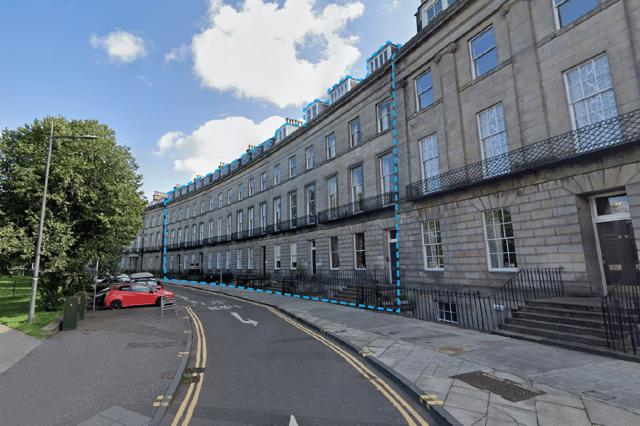
Atholl Crescent, designed in the early 19th century by architect Thomas Bonnar, is part of the Unesco World Heritage Site and is a key example of Georgian town planning, with its uniform terraces and carefully proportioned residential buildings.
Under the proposal, the four Category A-listed townhouses at 14–17 Atholl Crescent - formerly the headquarters of law firm Brodies - would be converted, along with associated mews buildings, into what the developers say would be a hotel with “capsule pods” but which objectors have branded a “super hostel”.
Critics say the plans represent a substantial shift from the buildings’ original residential purpose and also their more recent use.
As well as opposition from local councillors and the AHSS, there have been more than 280 formal objections, including from the Cockburn Association and the West End Community Council.
The appeal is currently under consideration by a Reporter at the Scottish Government’s Planning and Environmental Appeals Division.
EWH said it had not received any request from AHSS.