
Edinburgh plaque approved to mark spot where former slave and leading abolitionist gave speech in 1846

A new commemorative plaque has been approved in Edinburgh city centre to mark the spot where a former slave and leading abolitionist gave speech in 1846.
The application, submitted in January by Edinburgh World Heritage for the installation of a bronze plaque on the exterior of 29A Waterloo Place, the building where Frederick Douglass gave a speech in 1846 as part of his campaign that eventually helped bring about the legal abolition of slavery, was approved by the council on March 12.
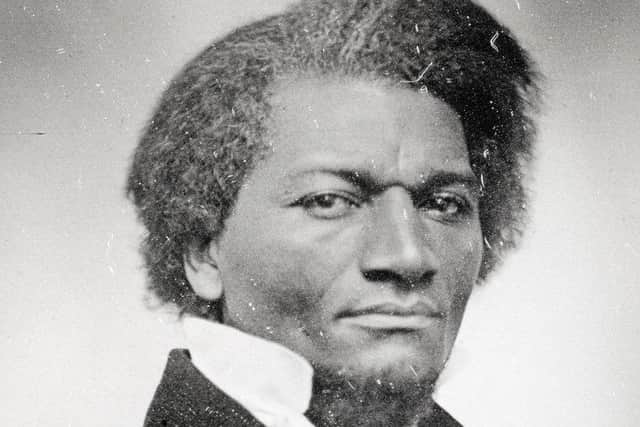
The plaque, which was put forward by the resident at this address, David Howie, will contain an image of Frederick Douglass which was gifted by artist Gordon Muir, and text explaining who he was, and will be 330mm wide by 500mm high.
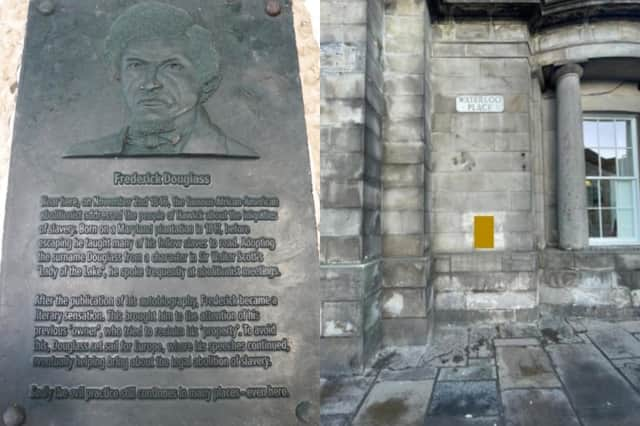

Born on a Maryland plantation in 1817, before escaping, Douglass chose his freeman surname from a character in Sir Walter Scott’s ‘Lady of the Lake’ and was a great admirer of Robert Burns.
Douglass visited Scotland during his tour of Britain and Ireland in 1846, and spent time in Edinburgh addressing public meetings on the injustice of slavery.
He was appointed “Scotland’s Anti-Slavery Agent”, and his powerful speeches helped to bring about the legal abolition of slavery in the 19th century.
Approving the plans, the council’s chief planning officer David Givan said: “The proposals have special regard to the desirability of preserving the building and its setting and would not adversely impact on its special architectural and historic interest.
“The proposed plaque is of appropriate location and material. It is small against the large scale of the building and the size of its individual sandstone blocks.
“The proposals would preserve the character and appearance of the conservation area. There are no material considerations that outweigh this conclusion.”
The plaque will be made by Powderhall Bronze Design and placed at eye level (1.6m above pavement), surface mounted, with the installation to be carried out by a qualified contractor.
The plans received three notes of support on the council’s online planning portal.
Mrs Dale Finlayson of the American Women's Club of Central Scotland said: “Douglass was truly an American hero, whose writings and speeches were important in gaining support for the abolition of slavery in the United States. He forged close ties with Scotland, where he found shelter.”

While, the Lord Cockburn Association added: “The application represents a valuable addition to Edinburgh's historic environment and offers an important opportunity to recognise the city's connections to global movements for justice and human rights.
“The installation would enhance the cultural and educational value of Waterloo Place without adverse impact on the character of the conservation area. We look forward to the plaque being installed at the proposed site.”