
Edinburgh scientists launch £1.5m study to 'sabotage' bowel cancer cells

A new Edinburgh-based Cancer Research UK-funded study hopes to find a way to ‘sabotage’ bowel cancer cells.
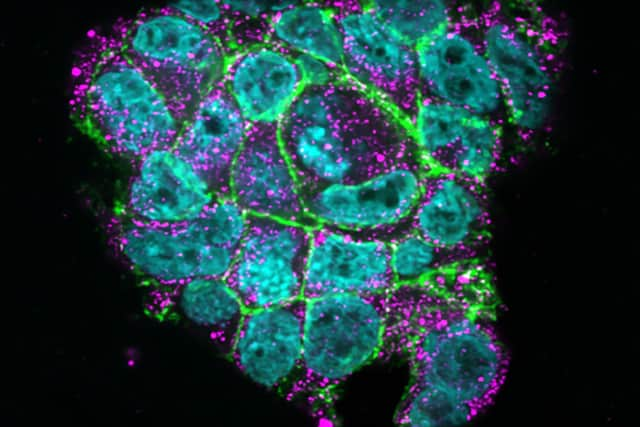
Scientists have launched the £1.5 million study at the University of Edinburgh’s Institute of Genetics and Cancer (IGC). It aims to disrupt cancer’s DNA messaging system, which allows cancer cells to disguise themselves from the immune system, causing errors that make the cells visible to immune defences.
Exploring how to trigger this vulnerability, the study’s long-term goal is to identify new treatments to tackle bowel cancer more effectively.
Project leader Dr Kevin Myant, of the Cancer Research UK Scotland Centre and IGC, said around 85 per cent of patients with bowel cancer find immunotherapy isn’t effective for them.
He added: “Our new project aims to explore why and find new ways to make bowel cancer more responsive to this type of treatment.
“Immunotherapy is exciting as it has the potential to be curative, not just manage the disease, and has the benefit of reducing side effects to patients.
“We hope this project will find a way to shine a light on bowel cancer cells so they are no longer invisible to our immune system, by disrupting the messages telling cancer cells to grow.”


The team aims to sabotage this system, through a process called RNA splicing, to disrupt these messages and introduce errors which will effectively “light up” bowel cancer cells to the immune system so it can destroy them.
Cancer Research UK Director of Research, Dr Catherine Elliott, said: “Immunotherapies, where a patient’s own immune system is harnessed to tackle cancer, are a key area of cancer research and for some patients, they are providing transformational improvements but not all patients respond to them.
“Being able to use the power of our own immune system to tackle cancer could offer more effective treatments and lead to the kind of breakthroughs which can revolutionise cancer treatment and care.
Dr Elliot added: “We need more research to understand the differences in patient responses to therapies and how to improve these, and Cancer Research UK is delighted to fund this innovative and potentially transformative research.”
Diagnoses are rising for younger people in the UK and across the globe, with a recent study by the American Cancer Society published in The Lancet Oncology showing early-onset bowel cancer rates in adults aged 25-49 are rising in 27 of 50 countries studied and at a faster rate in young women in Scotland and England than in young men.
Bowel cancer kills 16,800 people in the UK (1,700 in Scotland) every year.