
Edinburgh Zoo welcomes adorable capybara triplets
The healthy pups follow in the paw prints of older brother Bru
Capybara triplets are the latest new arrivals to be welcomed at Edinburgh Zoo.
Mum Luna and Dad Rodney welcomed the trio of babies overnight dethroning social media star Bru as the youngest pup in the family.
Keepers arrived to find the adorable trio huddled up against their mum as they explored their new surroundings.
The healthy pups follow in the paw prints of older brother Bru, who was the first capybara pup to be born in Scotland in 18 years when he arrived five months ago.


Capybara babies weigh around 1.5 to 2.5kg when born, similar to the weight of a six-pack of Irn-Bru.
Darren McGarry, head of animal care at Edinburgh Zoo, said: “The triplets are adorable, exploring their new home while staying close to mum and taking in the world around them. It is wonderful to watch.
"Bru is adjusting to no longer being the centre of attention. He is a little grumpy for now but we are sure he will but best buds with his siblings once he settles.”
Their arrival comes at a time of soap opera-esque turmoil in the habitat of the world’s largest rodent.

A video of dad Rodney mating with a mysterious capybara garnered thousands of likes in September, only for keepers to reveal his lover was none other than Luna’s sister, Cali.
Darren said: “Capys might look cute and innocent but honestly, their lives are like something from a soap opera. Cali rules the roost and Luna does as she is told. Bru is the golden child. Rodney is a bit of a shy boy - but he is clearly a hit with the ladies!
“Like they say, it is always the quiet ones.”
Over the coming weeks, the triplets will get a taste of this group hierarchy as they start to stray further from their mum.
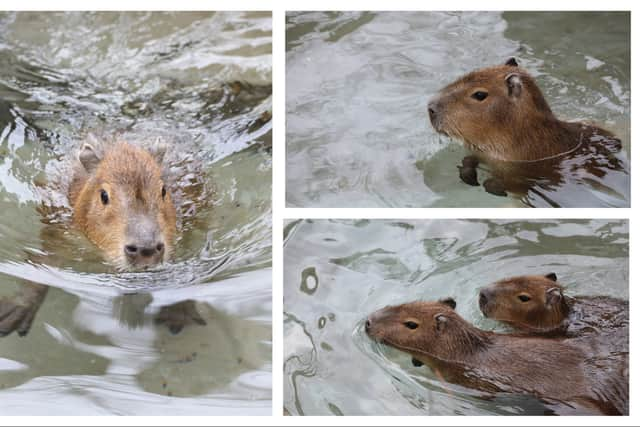
Videos released by the zoo show the adorable pups finding their footing as they timidly explore their new home.
Visitors will be able to catch a glimpse of the new brood ahead of their first health check at which point keepers will find out their genders and choose their names.