
Edinburgh's North Bridge finally set to fully open following eight painful years of closures

Pain for pedestrians and motorists finally set to end next month
Edinburgh's North Bridge is set to fully open next month following eight painful years of closures and traffic chaos.
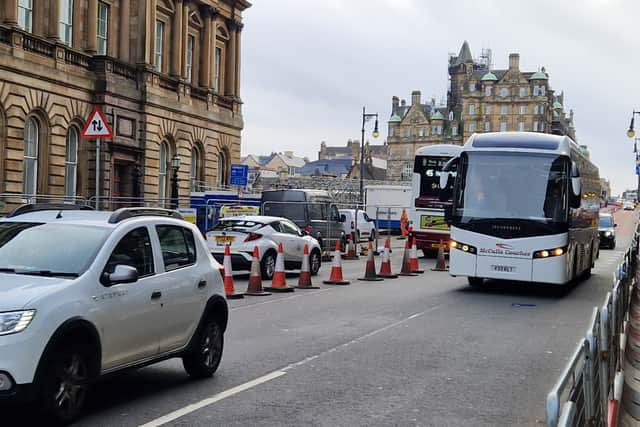

One of the city’s main routes, which connects South Bridge and Old Town with the New Town, the bridge has suffered major travel restrictions since 2018, with bus routes also often affected.
Motorists and public transport users have faced delays and closures over that time while the iconic city centre bridge above Waverley Station has undergone a multi-million package of improvement works over the last eight years.
Pedestrians have also been affected, with sections of the pavement having been closed while works were carried out at street level.
Now, and in time for the start of the Edinburgh Festival Fringe, the world’s largest arts festival which kicks off in August, the bridge will be cleared of any works at street level, with both carriageways and footpaths on the bridge set to be fully back in use.
Council leader Jane Meagher revealed in her regular council leader’s report that the long restrictions at North Bridge will finally end in July.
She said: “I’m pleased to report that, after years of painstaking work, the North Bridge will completely re-open to traffic and pedestrians by the end of July – ahead of festival season getting underway.
“This has been a complex and difficult project but I hope you’ll agree it has been worth it. The new façade is truly spectacular and it’s fantastic to see it restored to its former glory.”
A council spokesperson confirmed that North Bridge will fully open to traffic and pedestrians next month, although repair works will continue on the structure underneath street level.
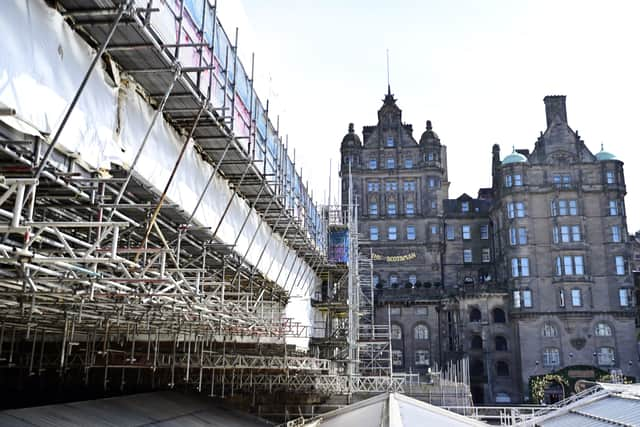
The project has taken far longer than expected and the final cost is expected to be around £86 million, many times the original estimate.
Traffic has faced major disruption with the bridge operating as a one-way system for prolonged periods, while pedestrians have been forced onto one pavement.
A routine inspection of the bridge in late 2016 discovered that water had got into cracks in the concrete. Work started to establish the scale of the problem, with £12m put aside in order to get the bridge into a long-term sustainable condition.
But it turned out the problems were far more extensive than first thought and the cost and timescale increased many times as the project proceeded.