
Elsie Inglis descendant supports Edinburgh statue plans and defends design amid 'military outfit' row

A descendant of Dr Elsie Inglis has revealed her family’s support for the planned Edinburgh statue depicting her, and defended its design amid the 'military outfit' row.
Dr Elsie Inglis’ great, great, great niece Clea Thomson has spoken out after protesters against the current design of the planned statue on the Royal Mile criticised the ‘military outfit’ Dr Inglis is depicted in.
An open letter was sent to those behind the plans claiming the statue misrepresents her legacy and disregards the historical significance of the site.


However, Clea disputes this for various reasons. She is proud that her ancestor would be seen in Scottish Women’s Hospital Uniform in the planned Old Town statue, near to the site of the hospice that Inglis set-up for poor women and children in 1904, with the statue recommended for approval at a council meeting next Wednesday, October 1.
She believes this statue is the best way to honour and remember the renowned Edinburgh doctor and suffragist, and disagreed with the Elsie on the Mile protest group.
Clea said: “The current statue is not erasing anyone's history, as some have alleged, quite the opposite - it is a celebration of all she achieved.
“Dr Inglis had set-up this hospital prior to the war with all-women staff, which was a big thing at the time. When war broke out she approached the British Army and offered to set-up these hospitals on the front-line, but she was told to do some knitting, and that women can’t go to war.
“In response she and other suffragist women raised the equivalent today of £53 million, which was an extraordinary achievement. They wrote to the allied forces, who welcomed them, and they set-up hospitals all across the front lines, led by Elsie. She was a surgeon, but also led her units.
“They designed this uniform which she was very proud of. She showed that women were as capable as men.
“The campaigners are saying that her service in World War 1 was work for men. This is mischaracterising her achievements and purpose, and demonstrates limited understanding of the impact of her role during the war, for women.
“War work is not work for men, it’s for everybody, it’s for your country. The brave and courageous women who served in the Scottish Women’s Hospitals for Foreign Service worked tirelessly, in harsh conditions, saving the lives of countless husbands, fathers, brothers and sons fighting at the front lines.
“They also treated women and children in surrounding areas suffering from the outbreak of a typhus epidemic sweeping through Europe.
“The statue recognises all women who served in the hospitals and her work in Edinburgh, given where the statue would be placed, as this draws attention to the site where her first hospice was created.”
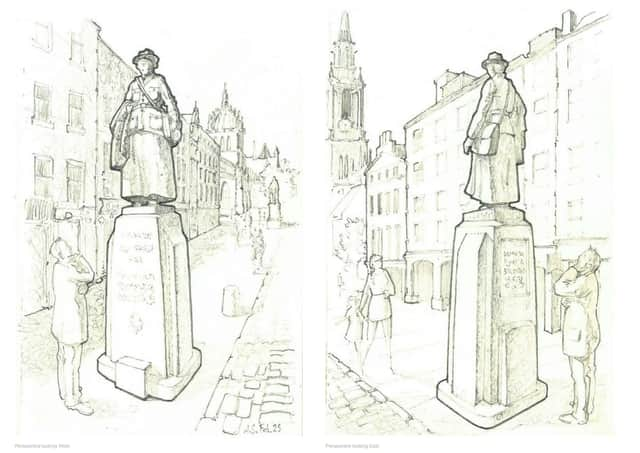
Dr Inglis descendent also dismissed protesters’ claims that children would not be able to engage with the statue.
She said: “The statue says everything about the fullness of her achievements, at home and abroad, and absolutely children can connect with that.
“The location itself draws attention to the Edinburgh hospital and all the work she did here in Edinburgh.
“The Scottish Women’s Hospital (SWH) uniform doesn’t diminish her work in Edinburgh, it adds to it. The key thing for me is representing all of her life, it’s not just about her life in Edinburgh, but all of it.
“The SWH headquarters were based in Edinburgh. Remaining funds after WW1, and after her death, were used to set-up the beloved maternity hospital named after her in Edinburgh.”
Clea also defended the decision to appoint the King’s Sculptor, Professor Alexander Stoddart, to create the statue, after protesters called for a woman to be given the role.
She said: “You have got somebody who is world renowned with a high level of skill. It gives the first female statue the same status as the other great statues on the Royal Mile.”
The application was referred to the Development Management Sub-Committee meeting next week by the council’s planning department because the application is of significant public interest, with 647 public representations received for this planning application - 237 in objection, 408 in support and two taking a neutral stance.
Clea said “this shows there is a lot of public backing for the plans, with a clear majority in support”.
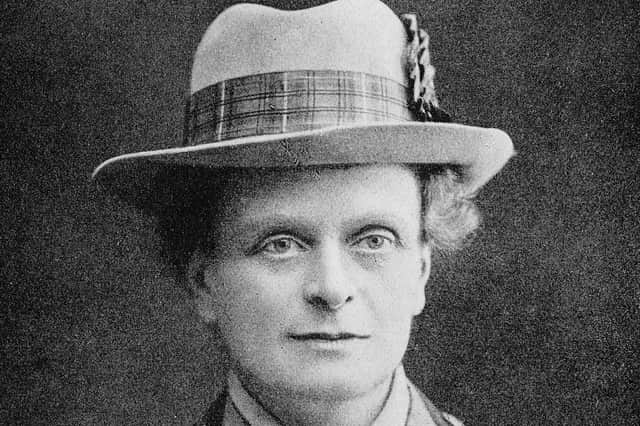
And Clea and the family are delighted that the Dr Elsie Inglis statue is expected to be approved next week.
She said: “As a family we are really pleased it’s up for approval. We support the design, the location, and all the work that has gone in. There has been huge amounts of effort to get to this point.
“It would be a shame to see it ‘cancelled’ by these protesters against the statue’s current format.
“The family are proud, and we will be there for the unveiling. The statue enables her story to be shared more widely and for future generations.”

Responding to Clea’s comments, the Elsie on the Mile group said in a statement: “The public have been forced into forming a protest group as a way of having our voices heard.
“Despite over a third of responses to the application being objections, a letter with over 1000 objectors, and with our group being over 1100 strong, public voices are still being ignored.
“Are we still in the days where public art is only to be commissioned by a handful of elitist folk, or those with political connections, who have no experience in the sector of public art?
“All public art must meet Edinburgh councils own policies. This project catastrophically fails to meet the standards that Edinburgh Council sets in its own public art policy.
“Due to lack of due diligence, the statue will require a retrospective plaque in line with the Edinburgh Slavery and Colonialism Legacy Review.
“Ignoring public views has led to this design being inappropriate for this historical women's site, and potentially offensive to descendants of enslaved people and the South Asian community.”
Elsie Inglis was not born in Edinburgh, but she was educated and spent much of her life in the city. Inglis was a doctor and suffragist, who tirelessly campaigned for better rights and specifically medical care for women.
Thousands of people lined the streets of Edinburgh before her funeral in 1917, which was held at St Giles Cathedral in Edinburgh and was attended by royalty.