
Fife and Borders don't want to be in the same region as Edinburgh, Scottish Parliament told in debate on council shake-up
Three-month timetable to redraw council map ‘just not possible’ says MSP
MSPs have voiced concerns about the Scottish Government's tight timetable for a far-reaching shake-up of councils and how big the proposed new regions might be.
In a debate at Holyrood, there were warnings that the deadline of early December was impossible and that areas like Fife and the Scottish Borders did not want to be taken into the same region as Edinburgh.

Public Sector Reform Secretary Ivan McKee opened the debate by saying the government wanted to empower communities and strengthen local democracy.
He was immediately challenged over the timetable, but insisted: "We feel that it is important that we move at pace on this important issue and, frankly, we want to make sure that we get minds focused on the change that is possible. The three-month period will allow us to engage extensively, and an awful lot has happened already. As we reach the end of the period, we will outline where agreement has been reached and where we will go next."
He said he had met Norway’s minister of local government to see what could be learned from the Norwegian model. And he said a programme of bilateral meetings between ministers and local authority representatives would take place over the autumn.
Murdo Fraser, Conservative MSP for Mid-Scotland and Fife, said a month had already passed since the government dropped its "bombshell" proposals. He said: "In effect, we have nine weeks left to draw up a detailed blueprint to reform local government in Scotland. I just do not think that that is possible.
"What people in Fife are worried about in these proposals is being absorbed into a bigger region, such as one that includes Edinburgh, in which decisions that affect Fife are taken in Edinburgh. That is why the proposals need more consideration.
"Large rural areas such as the Borders do not want to be absorbed into Edinburgh."
Edinburgh Central Green MSP Lorna Slater said the Scottish Greens supported a return to two-tier local government, and said the principle should be “local by default”.
She said: “Communities should not only be consulted on decisions but be able to make them. That means a defined share of local budgets being allocated directly by residents through participatory budgeting, building on what many councils already do.
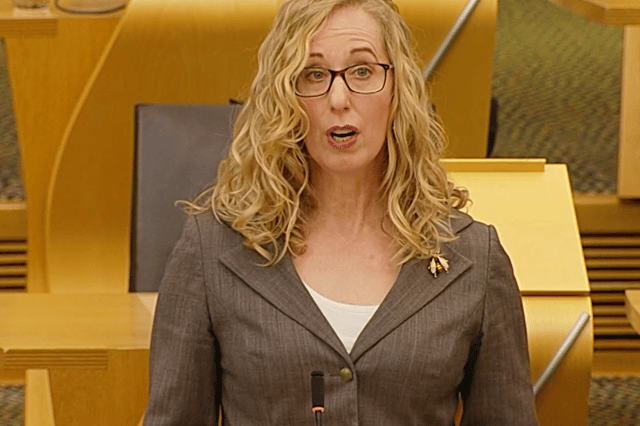
“It means a stronger, faster right for communities and local authorities to take on land and buildings, such as halls, parks and green spaces, when they want to run them themselves, or to bring empty homes back into use.”
But she also warned: “Council funding must be sustainable and sufficient to support the new responsibilities.”
Paul McLennan, SNP MSP for East Lothian Coast and Lammermuirs, said places like Musselburgh, Tranent, Haddington, North Berwick and Dunbar all had distinct identities, circumstances and priorities.
He said: “There may well be functions, such as economic development, infrastructure or other services, for which operating across a larger regional footprint will give greater strategic capacity.
“However, there must be genuine localism on the other side of that bargain. If decisions move upwards for strategic reasons without other meaningful decisions moving downwards towards communities, people could experience reform as government becoming more remote rather than less.”
Replying to the debate, Public Finance Minister Hannah Mary Goodlad highlighted First Minister John Swinney’s phrase that in the current system, many councils were “too small to be strategic and too large to be local”. She said: “Leith, which could be one of the largest towns in Scotland, is just another part of the Edinburgh City Council area.”
She acknowledged there would be different needs and requirements across the country, but said the government proposals were a starting point. And she defended the timetable.
“Certainly, from my experience in the world of business, a quarter of a year is fairly enough time to get things going. This is the start of a consultation period that will lay the blueprint and the foundation, and then we will continue to hold conversations and dialogue post-Christmas.”