
Gannet colony on Bass Rock may take up to two decades to recover following devastating bird flu outbreak

An outbreak of bird flu in 2022 saw the population of gannets on Bass Rock shrink by 26 per cent the following year
A new study has warned that the gannet population on Bass Rock may take up to two decades to recover following a bird flu outbreak in 2022.
The study, conducted by Aarhus University and the Royal Society for the Protection of Birds (RSPB), showed that deaths of adult gannets at two of the world’s largest colonies, one of which is located at Bass Rock, increased fourfold following the outbreak four years ago.
Death rates of gannets on the island, located off the coast of North Berwick in the Firth of Forth, increased from 6 per cent in the 11 years prior to the 2022 outbreak to 33 per cent during the outbreak.
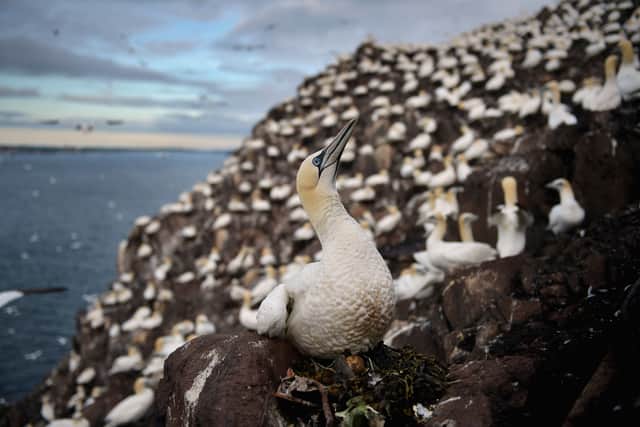

This in turn led to a 26 per cent decrease in the size of the colony which calls Bass Rock home.
Researchers have warned that the mortality rates as a result of the bird flu epidemic could mean that gannet population on Bass Rock, as well as the other hotspot at Grassholm in Wales, may not recover until 2041 at the earliest.
Jude Lane, lead author of the study and an RSPB marine conservation scientist said: “The bird flu outbreak in 2022 dealt an unprecedented deadly blow to UK seabirds and these findings show that key Gannet colonies on Bass Rock and Grassholm will be impacted for decades to come.
“While we can’t prevent diseases like bird flu, with long-term monitoring at key colonies and across wider populations we can better understand the impacts. With that knowledge we are in a far better position to address the many other pressures facing seabirds and halt the devastating declines of recent years.”
-Pete-Ivin.jpeg?trim=39,0,40,0&crop=&width=640&quality=65)
The surge of H5N1 bird flu cases in gannets could be traced back to Bass Rock, which recorded its first case on June 4, 2022.
The outbreak spread to gannets at Grassholm with the first positive cases there being recorded one month later.
The increase in deaths coupled with the slow population recovery since have left scientists concerned about the future sustainability of the species.
Researchers have recommended that the global conservation status of gannets be revised from ‘least concern’ on the International Union for Conservation of Nature (IUCN) Red List due to the impact of the bird flu outbreak.
Emily Burton, Conservation Manager at the Scottish Seabird Centre in North Berwick, said: "These findings underline the devastating impact bird flu has had on two of the world's most important Gannet colonies.
“Bass Rock is an iconic wildlife spectacle, but this research shows recovery will take many years and cannot be taken for granted.
“By working in partnership with RSPB Scotland to care for Bass Rock and continue vital monitoring and conservation, we can help give these remarkable seabirds the best possible chance of recovery while building a better understanding of the threats they face."