
Holyrood elections 2026: Doctor bidding to be MSP says heart attack let him see NHS problems from both sides
Labour hopeful was brought back to life by defibrilator
An Edinburgh doctor who is bidding to become an MSP has told how he "died" after feeling chest pains as he walked home from church one Sunday morning.
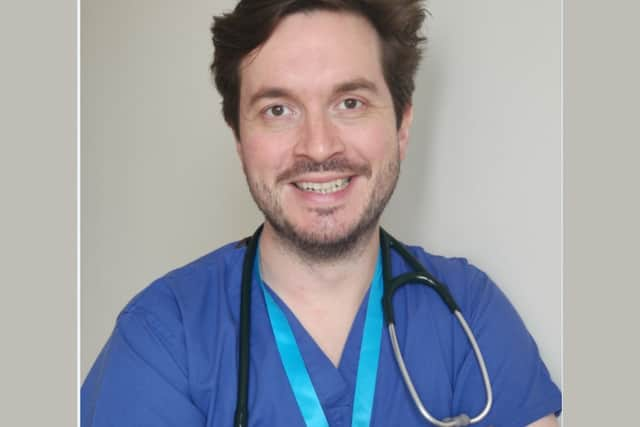
Oliver Thomas, who is standing for Labour in Edinburgh North Eastern and Leith, says his heart attack last year - at the age of 39 - has allowed him to see the problems in the NHS from both a doctor's and a patient's perspective.

He said: "I got a bit of heartburn walking home from church. I thought 'that's a bit sore' and as I was walking it got worse and worse. We got home and started to think maybe this was something else.”
He and his wife Rosie - also a doctor - decided to dial 999 for an ambulance. “We were quite clear this was something serious, but unfortunately it took about 40 minutes for the ambulance to come. And it was a single-crewed response car rather than an ambulance that arrived.
"Just as he walked in the door with his bag I had a cardiac arrest—my heart stopped. Rosie did chest compressions, they got all the wires on to me and I got a shock which luckily brought me back."
The couple’s two young daughters were playing in the next room throughout the drama.
Dr Thomas said: "I'm incredibly aware of how close I came to not surviving it. Had the ambulance man not been there with the machine to shock me it would definitely have been a much worse outcome. I'm incredibly lucky there was a defibrillator right next to me at the time."
He is full of praise for the ambulance crew. “And when I got to the hospital they were fantastic too - I was straight into the cardiac laboratory to get a stent put into the heart to open the blockage, then up onto the ward and the staff there were great.
“The bit I’ve found most stark was the follow-up. I’ve had cardiac rehab through Astley Ainslie, which was brilliant. It was mainly psychological support, which was incredibly valuable - there was a lot about facing your own mortality and working out how I live as a patient.
“But in days of old there would have been group therapy sessions where I would have been able to meet other people in a similar position and have peer support - that service just doesn't exist any more. I felt very alone through it.
“I have a good GP surgery and I have the advantage of being health literate, speaking English as a first language and I can be pretty bolshie when I need to be, but even I have struggled to get appointments, to arrange blood tests, to get the results and to arrange my repeat prescriptions. So it’s very easy to see how people fall through the cracks.
“In the hospital I'll often say to patients when they’re being discharged, 'Go and see your GP and get a blood test in three months’, as if it’s the easiest thing in the world - but now I realise just how tricky that is and it's no wonder people don’t get these blood tests.”
Dr Thomas said the system currently was not working for anyone - staff or patients - and proper workforce planning was essential. “We have an ageing population, so we know we're going to need more geriatricians in the future. We’ve got to take steps now for the next five, 10, 15 years because that's how long it takes to get the workforce in place that we need”.
And working conditions for staff needed to be improved. “If you're a nurse working a 12-hour shift, no nursery works around a 12 hour shift, so we lose really highly trained people from the workforce, people who we’ve put a lot of investment into, because we’ve not got childcare right or their shift patterns right.
“Many GPs work less than full time because the workload is too high and people don’t feel they’re able to do five days a week, or because they can’t make childcare or other care commitments work around their job.”
But Dr Thomas said the new walk-in GP clinics were not the answer. “Most people needing to see a GP on the day can’t use them; they won't take children under five or people with long-term conditions; and there are geographical restrictions on who can use them.
“Even if you do get in the door, you're seeing someone who has never met you before. Data shows the best care is when you have someone who knows you - that's how you get the highest value for patients and the system.
“Instead of investing in proper primary care that is delivering for people, the government is putting money into walk-in surgeries which are completely the wrong answer and so the profession feels even more demoralised because it feels like the government is prioritising a quick headline over actual fundamental change to the system that is letting people down.”