
How Edinburgh helped decide Britain's relationship with Europe 50 years ago
Britain's vote to leave the European Union in 2016 - nine years ago this month - was a close-run thing and came as a shock whose repercussions are still being felt today.
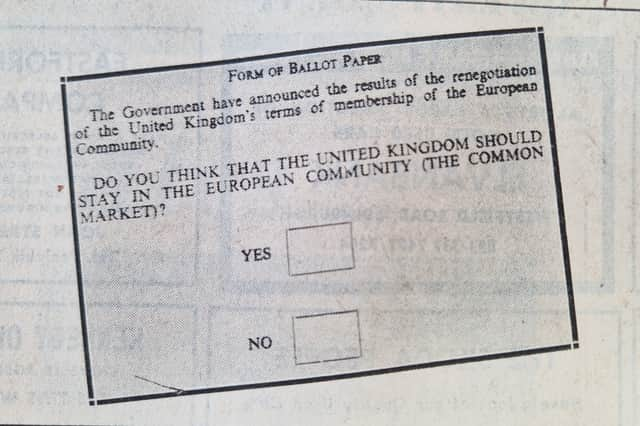
But it was a different story in the UK’s first ever national referendum in 1975, when voters decisively backed British membership of what was then known as the European Economic Community (EEC) or Common Market.
While the Brexit result - 52 per cent to 48 in favour of Leave - reflected a divided nation and forced the departure of Tory prime minister David Cameron, the vote 50 year ago was 67 per cent to 33 to stay in and represented a convincing victory for Labour's Harold Wilson.
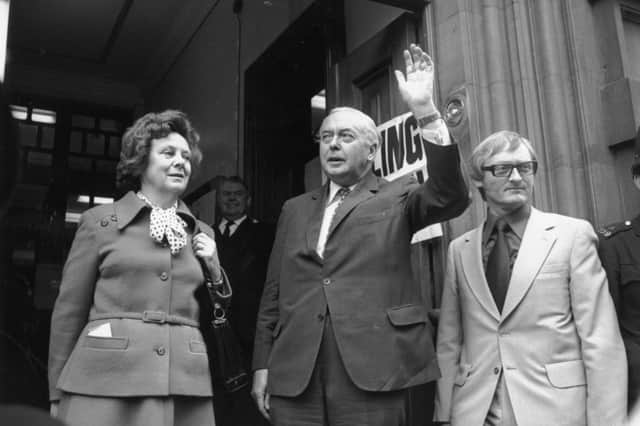

He had called the referendum, held on Thursday June 5, 1975, to allow the British people the say they had not been given when Ted Heath's Tory government took the country into the EEC without any ballot on January 1, 1973.
Labour had made a manifesto pledge to renegotiate the UK's terms of membership and then hold a referendum to decide whether Britain remained in. It was also a way to deal with the internal tensions inside the Labour party, where there were passionate pro-Europeans as well as fierce critics of "the Market".
There was much debate about the rights and wrongs of holding a referendum. Opponents called it "un-British", "a constitutional monstrosity" and incompatible with parliamentary government.
But supporters pointed out referendums had been used in Northern Ireland and the Commonwealth and recalled that Ted Heath had promised he would take Britain into the EEC with "the full-hearted consent of the British people".
Talks with Europe, led by Harold Wilson and Foreign Secretary James Callaghan, did not achieve the "fundamental renegotiation" they had wanted. But they did secure a partial refund of Britain's inflated financial contribution to the EEC. They were also helped by a change of leadership in both France and Germany, rising world food prices which closed the gap with those in Europe and support from Commonwealth countries for Britain staying in.
The campaign saw politicians from different parties co-operating - with varying degrees of enthusiasm - on each side of the debate. There were two umbrella organisations - Britain in Europe running the Yes campaign and the National Referendum Campaign co-ordinating the No side.
There was some debate among politicians on the issue of democracy and loss of sovereignty. But polls consistently found the topics which voters were interested in were food prices and jobs.
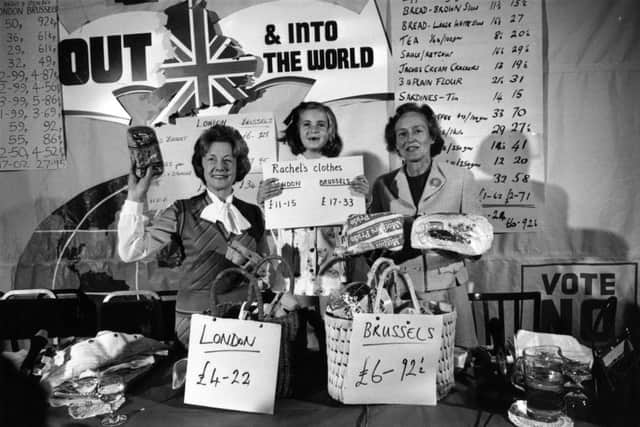
Leading Labour anti-Marketeer Barbara Castle made a well-publicised shopping trip to Brussels to show prices were higher inside the Common Market. But in retaliation, the pro-EEC campaign sent one of their members to Norway - which had voted against joining - to prove that shopping was even more expensive outside.
The Evening News organised its own shopping expedition, running a competition to choose two shoppers and sending them to Amsterdam as guests of the Dutch Dairy Board.
"I must admit I was quite shocked to see that most of their food in tins and packets with well-known brand names were twice or three times more expensive than in Scotland," said Mrs Ella Daniel, 31, from Cortorphine. "But their fruit and vegetables were about the same price or cheaper and much nicer and fresher looking, They also have a greater selection. Alcohol is also cheaper."
Mrs Kathy Urquhart, 60, from Kingsknowe, said: "The Dutch also have a generally higher standard of living with bigger wages than here. But we were told they do pay a lot of income tax and have a lot of deductions for their various social benefits." Both women said despite the prices, they still planned to vote to stay in.
The Trades Union Congress formally backed a vote to leave the EEC, though some key union figures backed Yes. And an Economist poll found 95 per cent of businesses favoured staying in.
The week before the vote, the Evening News reported how Peter Balfour, chairman of Scottish & Newcastle breweries, warned that leaving the Common Market would result in the loss of jobs for some of the company's employees in Edinburgh. Waverley Vintners, based in Holyrood Road and responsible for the group's wine and beer exports, would be worst hit, he said.
William Reilly, chairman of the shop stewards' committee at S&N, branded the warning "a form of political blackmail".
And Robin Cook, then Labour MP for Edinburgh Central, criticised employers for trying to influence the votes of workers. He cited one constituent who received a letter from her employer urging her to vote in favour of the EEC.
"She was even invited to draw this advice to the attention of her family - the whole family would be voting according to the wishes of the boss. I am sure many workers will respond with some degree of sceptical indignation."
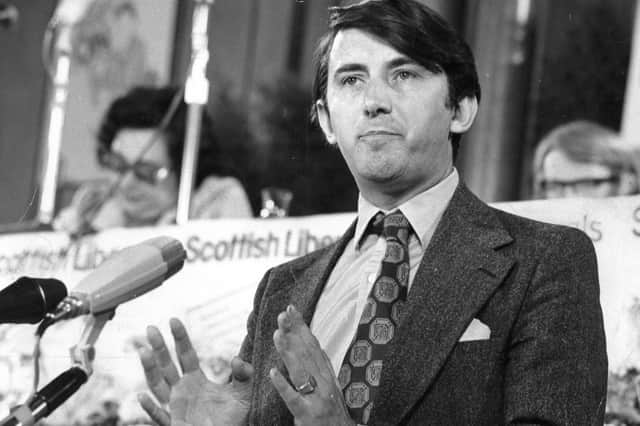
David Steel, then Liberal chief whip, described Scotland's anti-Marketeers as the "most narrow, inward-looking, xenophobic forces which Scotland could muster". And he rejected claims that EEC membership would obstruct plans for devolution in Scotland and Wales.
Malcolm Rifkind, Conservative MP for Edinburgh Pentlands, argued that if there was a Yes vote to stay in the EEC, Edinburgh should become the centre of administration for the European Regional Fund.
In an open letter to constituents he said: "In our two years of membership there have already been major benefits in Edinburgh and the Lothian Region. More than £1,500,000 of grants and loans have been made available and the regional fund will ensure continuing benefits."
But Leith Labour MP Ronald King Murray, who was the Lord Advocate, told a press conference he would be voting No because he was concerned about the loss of parliamentary power and because the principal aims of the founding treaty were economic rather than social or human.
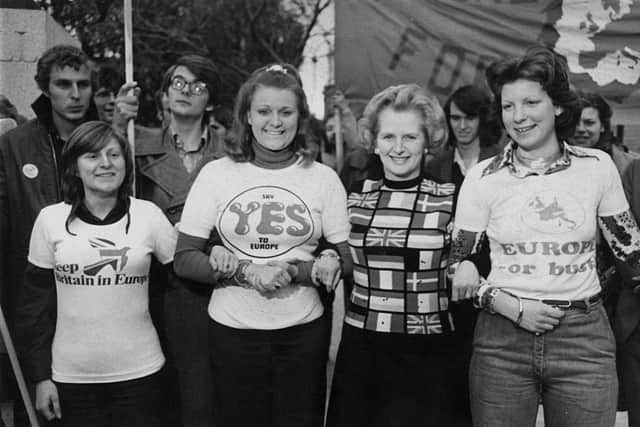
The Yes campaign in favour of staying in the EEC had a lead in the opinion polls throughout the campaign. The leaders of the three main parties all wanted a Yes vote - including Maragret Thatcher, who had taken over as Tory leader just a few months earlier.
But Scotland was the part of the UK where seemed to be most chance of a No vote. The SNP argued for leaving, though its slogan opposed membership "on anyone else's terms" and at least some leading figures would have supported separate Scottish membership.
There had been a big debate about whether there should be one national count in London of all the votes from across the UK. Some feared problems if it was clear that Scotland or Wales had reached a different conclusion from the rest of the country.
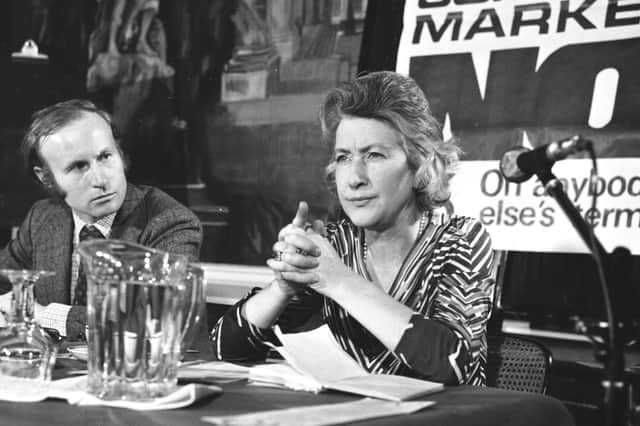
But in the end, the counts were held at county level in England and regional level in Scotland and all parts of the UK voted Yes, except for Shetland and the Western Isles.
All the counts were held the next morning. The Lothian count took place at the Meadowbank sports centre and revealed a 59.5 per cent vote for staying in - 208,133 votes for Yes to 141,456 for No. That was slightly above the Scottish average Yes vote of 58.4 per cent, but well behind the Borders, the most enthusiastic Scottish region for Yes with 72.3 per cent.
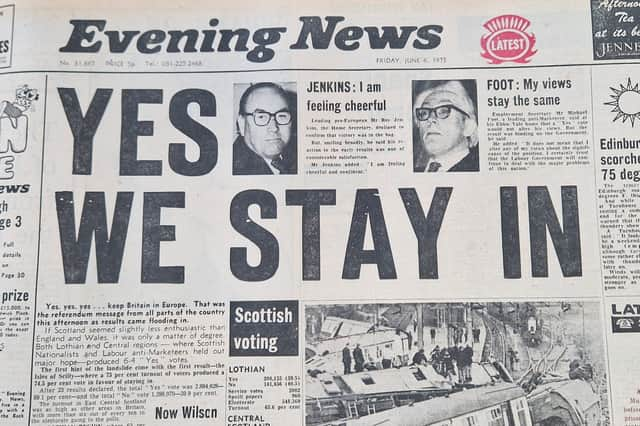
An academic study of the referendum published six months afterwards concluded that the Yes vote to stay in was "unequivocal but also unenthusiastic".
"Support for membership was wide, but it did not run deep. The referendum was not a vote cast for new departures or.bold initiatives, it was a vote for the status quo."
When parliament met after the referendum, an MP asked Harold Wilson for an assurance he would not repeat this “constitutional experiment”. Wilson replied: “I can certainly give the Right Honourable Member the assurance he seeks.”
But 40 years later, another prime minister took a different view and got a very different result.