
Lothian former mining communities still need help 40 years after miners' strike
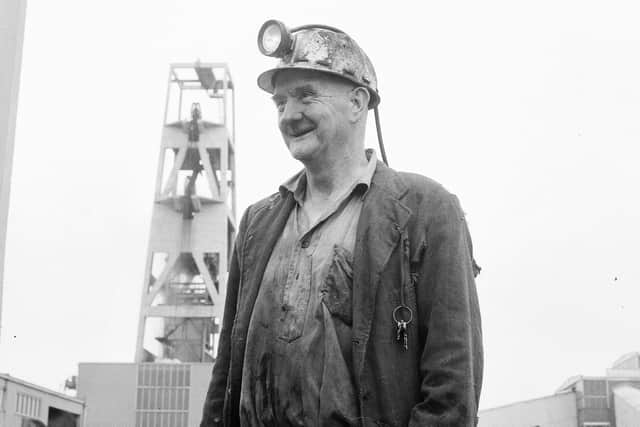
Forty years after the miners’ strike, coalfield communities in Scotland - including Lothian - are still in need of support to recover from the legacy of pit closures, a new study has found.
The State of the Scottish Coalfields, commissioned by the Coalfields Regeneration Trust (CRT), paints a picture of poor health, persistent unemployment and a high proportion of people on disability or incapacity benefits.
The report, produced by the Centre for Regional Economic and Social Research at Sheffield Hallam University, found high levels of deprivation as typical of coalfield communities, and noted that lower figures in Lothian likely meant that the true level of deprivation was being masked by better-off commuters to Edinburgh who had moved into new housing developments.

The CRT is calling on the Scottish Government to support its plans to build industrial units for small businesses to generate jobs and economic growth in coalfield areas and then uses the rental income to fund charitable programmes to tackle economic and social issues.
The CRT has recently purchased land in Cowdenbeath in Fife which could become the first such development.
The report compares the fortunes of the Lothian coalfield - covering all of Midlothian and parts of East Lothian - with the Fife coalfield, including parts of Clackmannanshire and Stirling and a small area of Falkirk, and the Ayrshire/Lanarkshire coalfield, including Upper Nithsdale and part of West Lothian.
And it notes that the statistics suggest a different situation in Lothian because of its proximity to Edinburgh.
The population of the area has increased by 12.5 per cent between 2011 and 2022, compared with a Scottish average of just 2.6 per cent, and jobs in Lothian have increased by 31 per cent between 2012 and 2022, compared with a Scottish average of eight per cent.
But despite the increase in employment in Lothian, the number of businesses in the area was still low. The number of private enterprises in the Lothian coalfield was 258 per 10,000 people, compared with 226 in Fife and 271 in Ayrshire/Lanarkshire and well below the Sottish average of 313 and the British average of 407.
And the report says the relative weakness of the economy in the Scottish coalfields is reflected in the “job density” - the number of employee jobs in the local working-age population. In Lothian it was 50 jobs per 100 working-age residents, compared with 58 in Fife, 44 in Ayrshire/Lanarkshire, a Scottish average of 73 and a British average of 75.
The proportion of people aged between 16 and 64 claiming out-of-work benefits in the Lothian coalfield was 14.6 per cent, slightly above the Scottish average. The proportion claiming incapacity benefits was 10.9 per cent, also slightly above the Scottish average.
Other figures show Lothian in line with, or even above, the Scottish average. But the report warns against thinking all is well in the Lothian coalfield.
It says: : “The Lothian coalfield has become a destination for overspill from Edinburgh. The consequence is that there are now in effect two parallel communities in the Lothian coalfield – the original residents (who may or may not work in Edinburgh) and large numbers of incomers (often commuters to Edinburgh though not necessarily of course).
“The effect is to shift statistical averages and, almost certainly, to dilute measured disadvantage. What this means in practical terms is that even within the former Lothian coalfield there are likely to be communities, households and individuals who still face acute disadvantage.
“Just because their disadvantage is masked by more positive figures for the area as a whole does not make it any less serious.”