
Addicts don’t need a ‘safe’ space to inject but proper treatment - Susan Dalgety
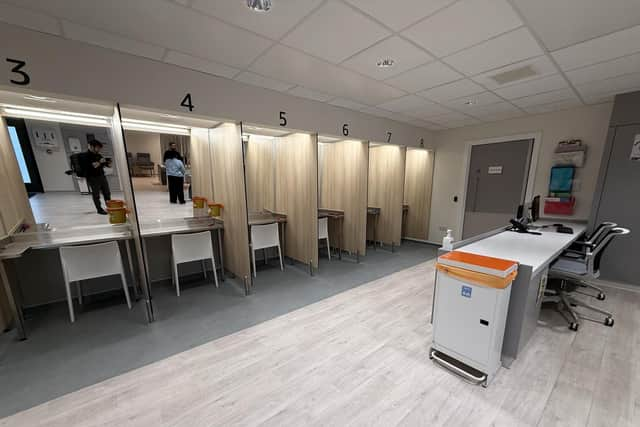
Edinburgh is another step closer to copying Glasgow’s example and opening a drug consumption room where addicts can go to inject themselves with banned substances, free from fear of arrest and with help on hand if they overdose.
Edinburgh's Health and Social Care Partnership has opened a public consultation on its plans to establish a “safer drug consumption facility” in the heart of the city and Capital residents have until July 1 to make their views known.

I won’t bother waiting until then. I think this is the wrong approach to tackling the scourge of addiction that destroys so many families and kills more than a thousand Scots each year.
Figures for 2025 show that 1146 died of drug abuse, an eight per cent rise on 2024, and that Glasgow had the highest number of drug deaths with 243 people dying – despite that city’s drug consumption room being in operation for a full year.
Figures out last week show that crime near Glasgow’s Thistle centre has doubled since it opened. Local businesses complain of large groups of users regularly hanging about outside the space and of people overdosing in public. The community is clearly affected.
Arguably, this in itself is not sufficient reason to dismiss drug consumption rooms out of hand. After all, if they are proven to help people recover from drug addiction, then surely we could put up with a few more addicts visible on the streets and a temporary rise in crime while the police got to grips with the new environment.
But the hard evidence from the USA and Canada, where drug consumption rooms were first tried, suggests that they do not work. They do not save lives.
The experience of cities such as San Francisco, Portland and Toronto shows that deaths from drug overdoses went up following the opening of ‘safe’ rooms. And the police were helpless as property crime nearby surged and the surrounding streets were taken over by drug dealers.
Doug Ford, the prime minister of Ontario, criticised safe rooms only last month, saying they are a “failed experiment” that trap people in addiction and “make communities unsafe”.
His government is ending its financial support for drug consumption rooms, instead investing public money in treatment and “lasting recovery” for addicts.
This is the approach favoured by one of Scotland’s leading campaigners on drug addiction, Annemarie Ward, the chief executive of FavorUK. She argues that there is simply not hard enough evidence to show that drug consumption rooms work – quite the opposite.
She supports rehabilitation for drug users, whereas the Scottish government and the groups it funds favour harm reduction, an approach which includes giving users methadone on prescription and opening drug consumption rooms.
My heart breaks for every young person trapped in drug addiction and for every middle-aged man or woman who has tried to stop, but remains dependent on their daily dose of methadone.
It breaks for the parents who have buried their children and the children who will grow up without a mum or dad because addiction killed them.
Drug addiction does not just affect users, it destroys families and blights communities. But the answer is not a ‘safe’ space to inject heroin. It is proper treatment leading to recovery.