
Adolescence holds a vital mirror up to our society - Alex Cole-Hamilton
Do you like me? Even just a bit?” Given the context, I’m not sure there was a more devastating line of dialogue in modern drama that I can remember.
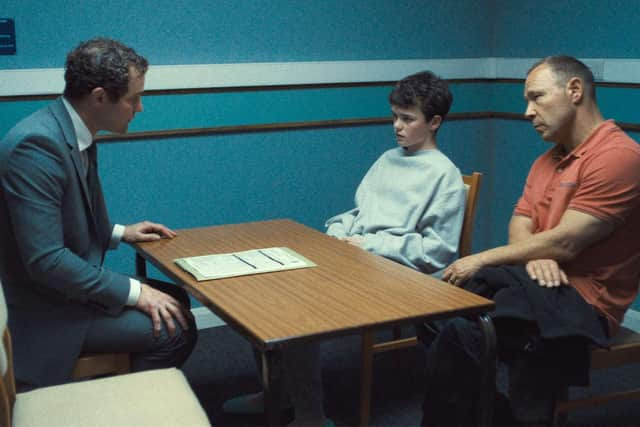
Delivered in episode three of Netflix’s important and astonishing mini-series, Adolescence, the words are spoken by 13-year-old murderer Jamie Miller as he’s being dragged away from the child psychologist who is assessing his competency to stand trial.

His words speak to an ocean of deep insecurity and profound lack of self-worth, which have been forced on him by a young life spent largely online and which ultimately cause him to attack his teenage victim.
The show holds a mirror up to the online subcultures that are influencing our young people, particularly our boys. It explores aspects of the so-called ‘manosphere’ where toxic and misogynistic influencers like Andrew Tate offer a warped view of masculinity and what men, and boys for that matter, can expect from women and girls.
While the feelings of disconnection and isolation shared by so many young people rarely lead to the events depicted in the drama, there is evidence of their malign impact wherever you look.
Last week the Scottish Liberal Democrats published research which shows there have been over 24,000 violent incidents reported in schools since the start of this school year.
Incident for incident, it’s matching the trajectory of the record-breaking 40,000 incidents of school violence that we also uncovered were recorded last year. No wonder that stress-related absences among teachers are surging.
Last summer, the Scottish Government published a new action plan aimed at making pupils and staff feel safe and supported. But I don’t think the government has got its head around the scale of the challenge yet, or really got to grips yet with the practical steps that are going to be needed to combat violence in schools.
There is a generation of young people who spent large parts of the key formative years of their lives trapped in their bedrooms. They spent months out of school, away from their friends and without their normal routine and activities. For them the long shadow of lockdown is still being felt. Meanwhile, we have seen an explosion in the levels of harmful online content and the steady erosion of important interventions like youth work in our communities.
Youth work can be transformative to young lives. By offering young people who might be disengaging from society a positive adult role model who is neither a teacher or a parent, youth work can build life skills and crucially self-confidence.
Young people are looking for meaning in their lives and direction in the turbulent world of teen society and can easily slip down an increasingly extreme rabbit hole. There, exactly the wrong kind of role model the Tates of the world can fill the void.
I’m glad that Netflix have stimulated a national conversation, it certainly seems to have caught fire. But this can’t just lead to collective hand wringing. We need solutions and that starts with recognising the role of social media companies in the online harm we are witnessing.
Liberal Democrats would immediately treble the digital services tax these companies pay. We should then use that revenue to invest in our young people.
Pupils shouldn’t be going to school afraid, young people need help to feel better about themselves and teachers deserve to know the government has their back.
Alex Cole-Hamilton, Scottish Lib Dem leader and MP for Edinburgh Western