
Chatting with your late gran may be OK, but engineering your kids? - Susan Dalgety
It’s not often that a news story unsettles me in the way one I spotted in this very newspaper last week has done. Apparently, artificial intelligence (AI) can now be used to ‘resurrect’ our dead friends and relatives. Not as in bringing granny back to life in the real sense, but by using the digital traces people leave behind to make a chatbot that you can have a conversation with as and when you like.
The technology is very straightforward. You simply upload granny’s social media posts, WhatsApp messages and voice notes and AI builds a profile of how she spoke and wrote. Before long your granny chatbot will be telling you off for wearing too much make up and demanding another cup of tea (or gin and tonic), just as she did when she was alive and kicking.

I can just about understand the appeal. My own mother died a few months ago, and while I can still hear her voice in my head if I concentrate hard enough, that memory will soon disappear and all that will remain will be a bundle of photographs, a few of her novels and her well-worn pearl necklace. But the thought of having a conversation with her via an app that has replicated her voice and thought patterns makes me feel quite queasy. Just as cloning a much loved pet fills me with horror. Former NFL superstar Tom Brady revealed earlier this month that he cloned his beloved pit bull Lua. The co-owner of Birmingham City football club paid tens of thousands of pounds to recreate his dead pet, and says that his new dog Junie is “not a scientific experiment, but part of our family”.
But the most disturbing news of all came only a few days ago, when it was revealed that Sam Altman, the owner of one of AI’s most popular apps, ChatGPT, was investing in a start-up company Preventative that will explore the genetic engineering of babies to eliminate hereditary diseases.
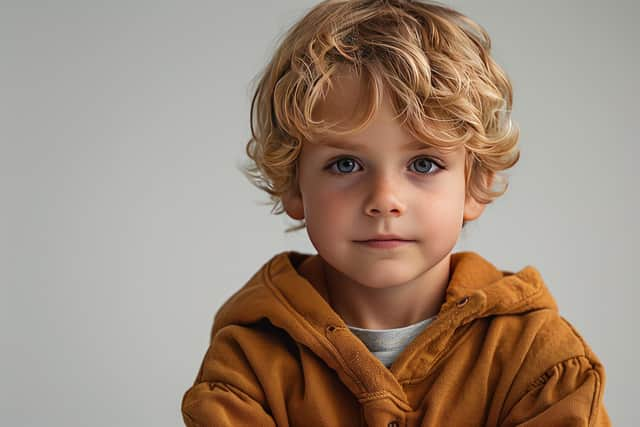
Preventative says its ambition is to use gene editing to correct “devastating genetic conditions”, and if successful, it could be one of the most important health breakthroughs in generations. I can understand why parents who are at risk of having a baby with a genetic condition such as cystic fibrosis or Duchenne muscular dystrophy may welcome such a medical advance, but what about the wider risks? In the future, what is to stop people buying custom-made babies, choosing their IQ, their hair colour and their sex from a catalogue? Within a decade the world could be full of blond, blue-eyed boys.
Artificial intelligence promises so many benefits, including faster and more accurate health diagnosis and personalised learning, and it will speed up scientific and medical discovery. Progress in genetic medicine will also be life-changing. One day, sooner than we think probably, there may well be gene therapy that can cure or prevent Alzheimer’s and Parkinson’s, as well as producing a vaccine for cancer.
But the benefits come with significant ethical risks. Tech billionaires like Altman will have the means to create a new species of superhumans, while the majority of the population will only be able to observe this brave new world via an app.