
Culture’s role in reconciliation and the understanding of others - Susan Dalgety
I am sure the director of the Edinburgh International Festival (EIF) does not need advice on sensitivity from Patrick Harvie MSP, the Scottish Greens former leader, now its culture spokesperson.
Nicola Benedetti was the subject of Harvie’s unsolicited guidance recently following the announcement that the 2026 Festival will mark the 250th anniversary of the signing of the Declaration of Independence by featuring the largest ever representation of American artists.
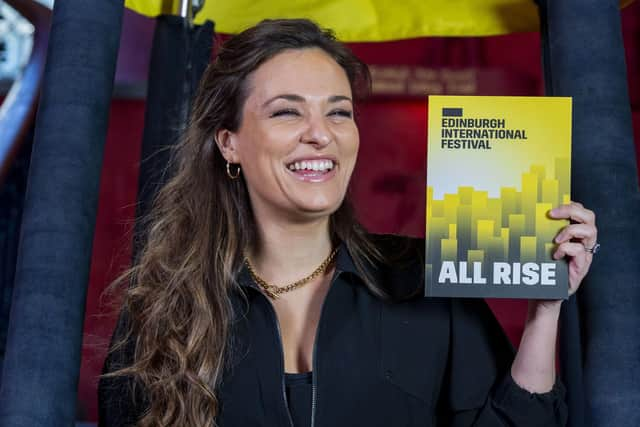

Harvie chipped in to say that he hoped the festival would reach out to those “most threatened and marginalised” by President Trump. “I hope the festival will remember that in this year of turbulence and extremism in the US,” he said, in his most pious of tones. No-one does piety quite as well as the veteran Green.
His intervention smacks of some people’s response when I tell them I am off to the States next month for a three-week road trip round North and South Carolina with a detour to Atlanta to see Bruce Springsteen. “Ooh, I couldn’t go to America just now, not when he is in charge,” they say, while planning the trip of a lifetime to China or Thailand, or any other country where democracy is a shaky concept.
Whatever you think of him, Donald Trump is in the White House because a majority of Americans voted for him. His war against Iran may be ‘unwise’ to say the least, but he is the democratically elected President of the United States of America.
It is the people of America who will be celebrating the Declaration of Independence on 4 July, just as they have done every year since 1776. (Fun fact: Congress adopted the final text of the Declaration on 4 July 1776. The physical signing actually took place a month later on 2 August).
And it will be America’s exhilarating, rumbustious, painful past and present that will be on show this August in Edinburgh, with challenging themes such as slavery, HIV/Aids and the opioid crisis explored through art, theatre and music – exactly as the Edinburgh International Festival was set up to do.
Elsewhere, a group of artists under the banner Art Workers for Palestine Scotland (AW4PS) have called for performers and the public to boycott this year’s festival because of its continued links with Baillie Gifford. “The embedding of Baillie Gifford and other bad actors within Scotland’s cultural infrastructure must end,” said the group.
Clearly, neither Partrick Harvie nor AW4PS truly understand the role of culture in reconciliation and understanding. The festival was set up in 1947 in the aftermath of a world war that saw tens of millions of people slaughtered, including a genocide that killed six million Jews.
One of its founding principles is to use art as a common language to bridge political and cultural divides. It teaches. It heals. It offers hope.
Imagine a festival overseen by Harvie and his friends, where the only performers were those approved by a central committee. A festival that did not allow different points of view, or boycotted countries because the committee did not approve of its democratically elected leader.
Nicola Benedetti has put together an amazing programme that promises to be one of the best festivals in recent years. And Baillie Gifford should be applauded for supporting it.