
Donald Anderson: Edinburgh’s economic success was hard won - now to build on it
How did Edinburgh become successful? was the great question I was asked recently by Chamber of Commerce chief executive Liz MacAreavey.
Edinburgh’s prosperity can seem inevitable – it was anything but. From the 1950s to the late 1980s, Edinburgh faced industrial decline, depopulation and weakening appeal as a shopping destination. Behind the handsome streets lay communities struggling with unemployment and a city where not much happened outside ‘The Festival’.

The centre suffered spectacularly. Slum clearance emptied neighbourhoods, undermining shops and services. Edinburgh lost ground as a shopping destination, with spending and investment increasingly drawn to Glasgow. The recession of the early 1980s compounded these problems, destroying livelihoods and deepening poverty.
The election of Labour administrations at district and regional council levels brought a determination to respond. Economic development and partnership with business became the chosen means of tackling the social consequences of recession: attracting employers, creating jobs, and rebuilding confidence rather than managing decline.
That successful approach has remained intact after decades and changing political administrations.
Alongside protecting Edinburgh’s historic core, a renewed emphasis on city centre housing helped bring residents back to create thriving shops, restaurants and cultural activity.
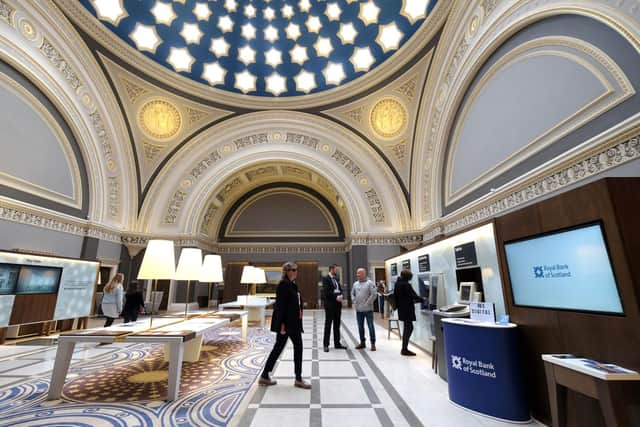
At the same time private enterprise did some heavy lifting too. Banks, insurers and investment companies expanded enormously, generating skilled jobs, spending power and demand for professional services. Standard Life, Scottish Widows, Royal Bank of Scotland and investment managers really transformed Edinburgh’s economy.
The council created space for that growth. Edinburgh Park provided a major new business hub. The Exchange financial district emerged through a bespoke partnership with Scottish Enterprise Edinburgh and Lothian, securing the Edinburgh International Conference Centre, the expansion of Standard Life and establishing a modern commercial quarter in the heart of the city.
Edinburgh University was equally fundamental. Its international reputation attracted talented people who came to study, research and work. Lots stayed to build today’s “smart city”.
Tourism, too, reflected deliberate choices. Edinburgh fought to secure high-quality year-round tourism. Hogmanay and Christmas complemented the summer festivals, extending demand into winter and strengthening the investment case for hotels, restaurants and attractions. Edinburgh became one of Europe’s most attractive tourism investments, while creating year-round and well-paid jobs.
Winning Harvey Nichols transformed shopping. That helped secure the £1billion redevelopment of the St James Centre which has reinforced that transformation.
Trams were another essential ingredient that supported major investment and improved access to Edinburgh Airport, making it Scotland’s busiest airport.
Those strengths supported recovery after the 2008 financial crash. Corporate headquarters and ownership changed, but Edinburgh retained its substantial financial services workforce. Its quality of life helped keep expertise rooted here, enabling businesses to rebuild and diversify.
At the same time there was a similar transformation boom in the Lothians and Fife. Councils there also pursued a job and investment strategy achieving equally stunning results.
West Lothian’s unemployment number in 1986 was 11,166. Today the number (seeking work) is 3400 or 3.4 per cent. In Edinburgh the highest unemployment rate at the start of the year was in the Forth council ward at 4.4 per cent. That’s not perfect, but it’s lower than average unemployment across the whole of London at 5.5 per cent.
Indeed, the Edinburgh and Lothians economy actually grew a litter faster than Greater Manchester’s between 1998-2024. Edinburgh’s success was hard won. The task now is to build even further on that success.