
Donald Anderson: Tourism jobs are real – don’t talk down Edinburgh’s success story
Nothing leaves me feeling disappointed more than hearing people talking about tourism and hospitality jobs as though they are somehow not “real jobs” or dismissing tourism as a somehow negative force in Edinburgh.
Try telling that to the tens of thousands of Edinburgh people who earn their living from tourism. The Hawksmoor restaurant in Edinburgh – just opposite my office - has recently advertised for waiting staff at up to £18.91 an hour. That’s roughly a salary of £34,000 for a 35-hour week.
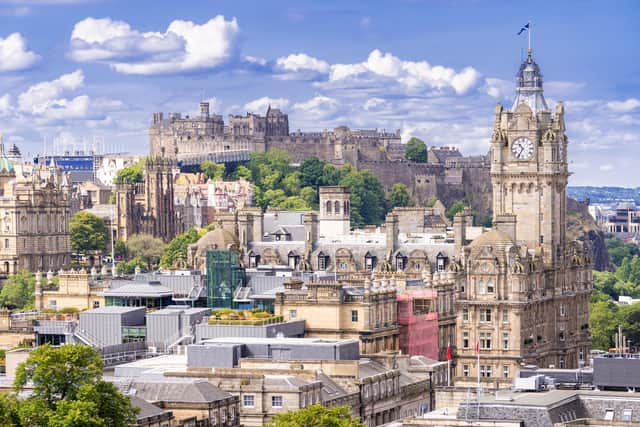

Signature Group, one of Scotland’s leading hospitality businesses, has starting salaries around £28,000. One major city-centre hotel manager told me recently that its wage bill was £6.5 million a year – that’s just one hotel.
These are real jobs, real wages and real careers. Around 40,000 people work in Edinburgh’s tourism economy. That economy didn’t happen by accident.
For decades Edinburgh worked hard to escape the old model where the city filled up in August and effectively went back to sleep afterwards. We built Christmas and Hogmanay into major attractions, built the EICC and developed conference tourism, expanded the festivals, improved international connections and encouraged investment in hotels, restaurants and visitor attractions.
The objective was to create a successful, year-round tourism destination. We succeeded. Edinburgh now stands alongside some of Europe’s strongest visitor destinations.
That strength matters. It helped Edinburgh recover from the financial crash after 2008 when other parts of the economy were struggling. It provides customers for thousands of businesses and supports jobs well beyond the hotel reception desk or restaurant table.
Edinburgh is a high-wage economy thanks in no small way to tourism. Average workplace earnings are around £865 a week, placing the Capital fifth among Britain’s 63 largest cities and behind only London, Cambridge, Reading and Slough.
There’s another benefit that often gets overlooked. Tourism helps a city of just over half a million people sustain an extraordinary collection of restaurants, bars, theatres, galleries, shops, festivals, attractions and transport services that residents enjoy all year round.
Tourism even helps support our buses. Those tourists who occasionally drive us mad standing at a bus stop trying to work out whether the number 29 goes anywhere near the Castle are also customers of Lothian Buses – arguably the most successful municipal bus company in Britain and part of a public transport system that is the envy of other cities.
Of course, five million visitors create pressures too. Streets need cleaned and bins emptied. Which is why Edinburgh’s Visitor Levy represents such an important next step.
Edinburgh is the first UK city to introduce a visitor levy. For the first time a city is establishing a direct connection between the millions who visit and investment in the services its residents rely on.
The levy is already supporting additional city-centre policing, while agreed spending includes extra money for cleansing, public toilets, streets and public spaces. Other cities are queueing up to see how Edinburgh did it.
Tourism has helped shape the modern Edinburgh economy. It has helped create jobs, prosperity and facilities that cities considerably larger than ours would envy. It’s high time we stopped apologising for being successful at it.
Tourism jobs are real jobs, tourism wages are real wages and tourism makes Edinburgh a better place to live as well as a great place to visit.