
End to violence campaign against women and girls continues - Susan Dalgety
Tomorrow sees the start of the annual 16 Days of Activism campaign to end violence against women and girls.
It is a global effort, with countries across the world joining in, from the United States to South Africa and of course here in Scotland.

Statistics show that in the last five years, at least 24 women in Scotland were killed by men. And Police Scotland figures show repor-ted crimes of domestic abuse rose by 11 per cent last year.
So on Thursday, I will join a vigil outside the Scottish Parliament, organised by the Women’s Rights Network and hosted by Pam Gosal MSP, to remember the women who were killed as well as the women who survived.
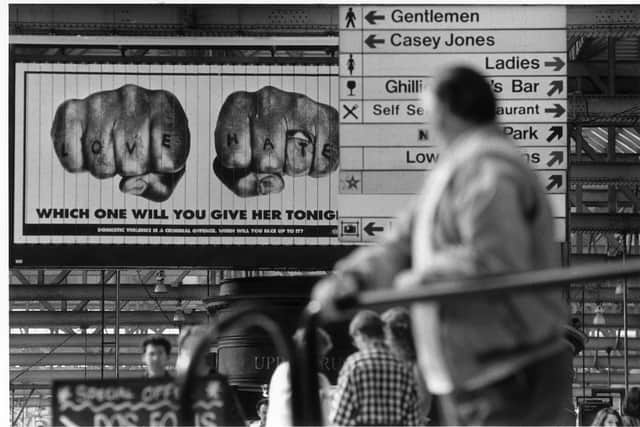
Edinburgh has a special place in the history of women’s rights and the campaign against male violence. It was in the City Chambers, 33 years ago, that the District Council’s Women’s Committee launched the ground-breaking Zero Tolerance campaign to raise public awareness about the issue.
Nothing like it had been tried before anywhere in the UK or Europe, possibly the world. It took immense political – and personal – courage by a small group of women led by Councillors Margaret McGregor and Lesley Hinds to drag domestic violence out of the shadows and into public view.
As the campaign posters began to appear on Princes Street and on the Capital’s iconic maroon and white buses, there were quite a few voices raised in opposition. People found the stark black and white images of ordinary Edinburgh life accompanied by powerful slogans such as: ‘From flashing to rape no man has the right’ and ‘From three to ninety three women are raped’ too shocking for public display. It sent the wrong image about Edinburgh, was their main gripe.
But many more were proud that the city was leading the way in tackling this crime. One woman who responded to a 1994 survey about the campaign summed up many residents’ feelings.
She said: “People should be proud that the city’s taking on something like this and put it in the most noticeable place in Edinburgh [Princes Street]…”
This newspaper played a key role in promoting Zero Tolerance, in a tie-up with the council which saw the Evening News running articles that explored the challenging subjects raised in the posters. Thirty-odd years ago, it was a courageous thing for a much-loved family newspaper to do, and there is no doubt the support of the News helped make the campaign the global success it became.
Edinburgh’s Zero Tolerance campaign was much more than a collection of powerful posters and hard-hitting features. It fundamentally shifted public attitudes about domestic abuse and sexual violence and paved the way for a raft of legislation. It was a landmark in women’s rights and remains influential today.
It showed how a small group of determined women can change the world. I know that Margaret McGregor, Lesley Hinds and the staff of the council’s Women’s Unit who conceived the campaign did not develop Zero Tolerance to make history, but that is what they did.
And there are millions of women the world over who are grateful today for their courage and foresight.