
Future growth of green data centres needs a national strategy - Susan Dalgety
Pass me a cold compress. I need to lie down in a dark room after I find myself agreeing with the Scottish Greens' co-leader, Ross Greer.
At last Thursday’s session of First Minister’s Questions, Greer challenged the Scottish Government’s planning policy on ‘green’ data centres.
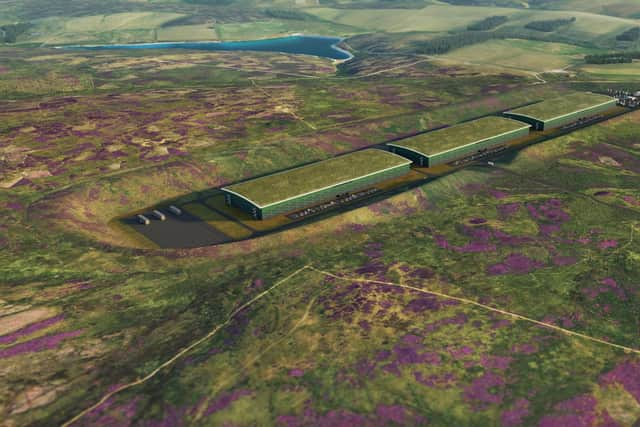

Since 2021, the government has designated large scale ‘green’ data centres as an integral part of the country’s digital infrastructure, but has left the decision on what constitutes a ‘green’ centre to individual planning authorities.
The Scottish Greens are now demanding a national strategy with proper guidance for councils.
Edinburgh City Council has gone even further. Councillors agreed last week to ask the government to put a stop to all new data centres until there is a Scotland-wide plan in place. And they decided to develop their own definition of a ‘green’ centre in the absence of clear advice from the government.
What is all the fuss about? Data centres are not new. The first commercial facility opened in Glasgow nearly 20 years ago, and since then a number of ‘metro’ data centres have sprung up across the central belt.
In simple terms, a data centre stores all the information from our smartphones, laptops and TVs. Every song or movie we stream, every picture we post on Facebook, every WhatsApp message, every email – all are processed from a data centre.
Business depends on them too, to power online shopping and supply chains, as does the public sector, from the NHS to council planning departments. Data centres are as essential to our daily life and our national economy as electricity and roads.
But as demand increases, we now need ‘hyper’ data centres, some as big as 100 football grounds, to feed our insatiable appetite for digital products.
And as Ross Greer pointed out last Thursday, the government’s policy was decided before ChatGPT and the other AI models existed.
He warned that if all the current applications for large scale centres were approved, they would use up to 6000MW of power, which is more than one and a half times our entire national power use at peak time. This is “obviously completely impossible,” said Greer, and I have to agree.
John Swinney batted off Greer’s demand for a national plan, effectively saying that planning is a local matter and it is not up to government to dictate to councils, but he will have to confront the issue, the sooner the better.
Edinburgh has already knocked back an application to build a data centre at Edinburgh Park, which is now under appeal, and the council has received a pre-application notice for another facility at Hermiston.
And a proposal to build a ‘hyper’ £5bn data centre in Fife has met with a storm of protest, with opponents saying it could draw so much electricity it would drive up energy prices and threaten the stability of the national grid.
The reality of modern life is that we need data centres, which means we need a national strategy to plan where they go and how best to power them with minimum impact on the environment.
In this instance, Ross Greer is spot on.