
History has taught us to avoid Gulf wars but we’re not listening - Vladimir McTavish
As widely predicted, the current conflict in the Gulf is causing another fuel crisis. This has followed every war happening in the Middle East, yet through recent history, any hostilities will create a potential disruption to energy supply.
From the second World War, through the 1956 Suez Crisis to the Yom Kippur War of 1973 when Syria and Egypt attacked Israel, via the first Gulf War of 1991. We then had the second Gulf War of 2003 and most recently Russia’s 2022 invasion of Ukraine.

We are becoming increasingly mired in the build up to the third Gulf War. Who knew back in the day that the 1991 shooting match would become a franchise?
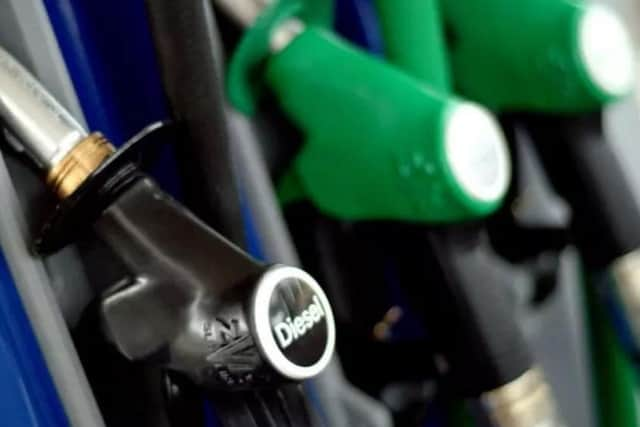
Anyway, as feared, at-pump petrol prices are already on the rise. According to the RAC, diesel in motorway service ares currently retails at £1.82 a litre. Hang on. That’s almost two pints. As a beer drinker, the idea of the cost of a lager going up to 91p a pint takes me back to 1983. Sadly, however, I’m also a driver as well as a boozer. Although rest assured I have attempted to contain both of these “hobbies”.
Of course, as we have all recently experienced, virtually all prices will go up. We know that. They inevitably do. Understandably so as retailers do need to cover their own increased supply costs.
But we also all know that when the global price oil drops, the only product which will reflect this will be the at-pump price of petrol. None of the other price rises are going to come down, further fuelling the already crippling cost of living crisis.
So prepare for a long spring of inflation, queues at petrol pumps, fights and meltdowns at petrol pumps, prepare for profiteering and for scams.
Some have already flagged up the idea of rationing. In recent similar events, this has been discussed and attempted. Some forecourts may will introduce their own rationing. Will it work? Possibly, but history would suggest not.
There will be scams. The government in World War II introduced nationwide petrol rationing. The population were issued with ration books. However, many chose to get some cash by selling their much-desired fuel coupons. Which were quickly snapped up by dodgy spivs who bought whole bundles to spend on filling fuel cans to sell to a willing market.
From my teenage years, I recall our first fuel crisis. It was caused by the aforementioned Yom Kippur Israeli-Arab war of 1973. Petrol prices soared, queues at pumps were endless and profiteering scams were rife. Without doubt, the most enterprising con trick happened in Ireland.
In Dublin, customers in long queues outside pumps faced a group selling raffle tickets for £1, which were to be handed over in exchange for a gallon of 4-star. Therefore, two five-ticket strips for £10 filled the tank.
By the time the middle of queue reached the forecourt, the poor conned drivers were told their “coupons” were worthless. By which time, the jack-the-lads had hightailed it to the other side of the city to rip off another bunch of gullible drivers.
Would it work today? Probably not, we’re too scam savvy. Plus, these days a tenner will only just buy one gallon.
So, drive slowly this weekend. Every litre counts.