
Labour up to their old tricks over employers’ National Insurance rise - John McLellan

It was all going to be so different, wasn’t it? Those dreadful Tories were swept away and in came that nice Sir Keir Starmer. A bit wooden maybe, but looked like an honest sort of chap. His father was a toolmaker, did you know?
But set aside the free wardrobe for him and his wife, and more designer glasses than Joe 90 (look him up, young reader) from his dresser Lord Alli, because while gallingly hypocritical and reputationally damaging there’s no direct effect on the rest of us.
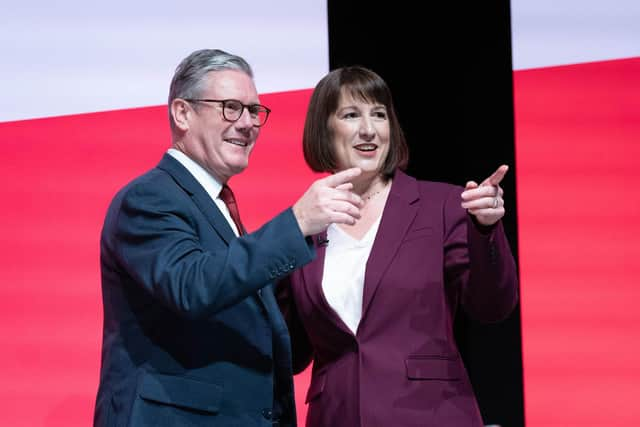

Not so, however, the trickery over National Insurance, with his clear signal this week that the employers’ contribution will rise in Chancellor Rachel Reeves’ budget on October 30.
The pre-election commitment was clear, on Page 21 of the Labour manifesto. “Labour will not increase taxes on working people, which is why we will not increase National Insurance, the basic, higher or additional rates of Income Tax or VAT,” it said.
But it seems that it wasn’t that clear at all, because we are now expected to accept it’s fine because sticking up the employers’ contribution NI wasn’t explicitly ruled out.
It is that kind of linguistic sophistry which voters hate and another example of why all that stuff about Change, the manifesto title, is increasingly being seen as hokum.
It also appears that in Sir Keir’s world a small business owner employing two or three people, like a plumber or electrician, isn’t really a working person. Many of those running such businesses will be putting in a 60-hour week to keep it going and to deal with all the paperwork and book-keeping it entails so their staff will have jobs to go to.
And small business owners, the thousands of people who are the real backbone of the economy, will have looked at Labour’s Employment Rights Bill with utter horror.
Drawn up at the behest of the party’s trade union paymasters, it represents a disincentive to hire because it makes it more difficult for an employer to part company with a new recruit who very quickly proves not up to the job.
Proposed new rules for maternity/paternity leave could saddle businesses with costs for which they had not planned if a new hire is immediately off long-term.
And plans for a “right to switch off” which will prevent employees from being contacted out of hours, will severely limit the ability of firms to react to unforeseen circumstances. Emergency workers will surely be ruled out, but there are plenty of other workers for whom flexibility is a necessity.
Even if the employer is in the right, it still widens the possibility for a disgruntled employee to go to a tribunal, and increase the chances of an unexpected verdict and by extension encourage an early settlement. In other words, a pay-off, which again means extra costs.
It means an employer must be even more cautious before taking someone on and the result could be fewer full-time opportunities, more short-term contracts and lower productivity.
And this from a government claiming to prioritise growth? Now Ms Reeves is looking for £40 billion of tax rises and cuts, that looks less likely by the day and small business owners could be paying the price.
Meanwhile, public sector workers protected by no compulsory redundancy policies must wonder what all the fuss is about.