
Leader election should be about more than choosing a new face - Lorna Slater
Scottish Labour’s leadership contest has exposed something deeper than the question of who should replace Anas Sarwar. It has shone a light on a party wrestling with its identity, its culture and ultimately, its future.
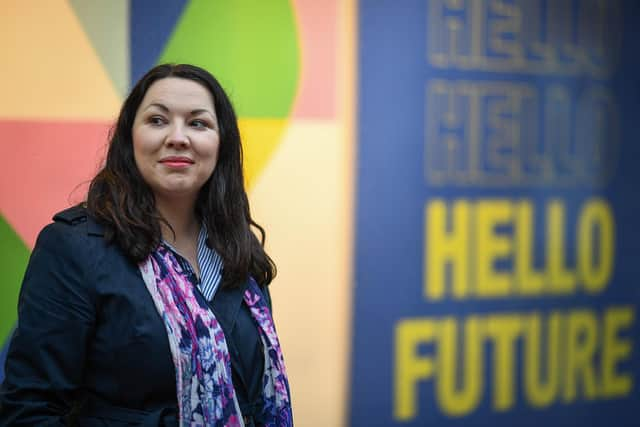
Monica Lennon has spoken publicly about what she describes as a contest that ‘reeks of misogyny and male entitlement’.. Whether every Labour member agrees with her assessment or not, dismissing those concerns out of hand would be a mistake. Women in politics know all too well how often legitimate criticism is brushed aside, uncomfortable truthsare minimised and difficult conversations are avoided.

Scotland has made progress on women’s representation, but politics remains far from equal.
Too many leadership positions across our political parties are still occupied by men. Women continue to face different expectations, different scrutiny and different barriers when they seek positions of leadership.
The answer is not simply to elect more women. It is to create political cultures where women feel able to speak honestly without being portrayed as the problem.
The Scottish Greens have chosen a different path.
For years we have recognised that leadership does not have to rest in the hands of one individual. Our co leadership model reflects our belief that politics is stronger when power is shared, when different experiences are represented and when collaboration replaces personality politics.
I was proud to serve as one of the Scottish Greens' Co-Leaders. Sharing leadership with Patrick Harvie brought different perspectives to the table, strengthened our decision making and demonstrated that politics can be both effective and inclusive. It also ensured that women were not waiting in the wings for an opportunity to lead. We were already there.
That is why Monica Lennon’s intervention matters. Her comments are not only about gender. They are also about a party that appears reluctant to hear uncomfortable truths about why it continues to lose the trust of Scottish voters.
Scottish Labour has spent years trying to balance two competing identities. On one hand it claims to speak for Scotland. On the other, it remains tightly bound to decisions taken in Westminster, even when those decisions prove deeply unpopular north of the Border. Scottish voters have noticed.
Time and again, Labour in Scotland has struggled to convince people that it can truly stand up for Scotland when it remains so closely tied to the priorities of UK Labour. The result has been repeated electoral disappointment and growing frustration among members who believe their party should be charting its own course.
Monica Lennon has previously argued that Scottish Labour needs greater independence from the UK party. That conversation should not be shut down. If Labour genuinely wants to reconnect with Scottish communities, it must be willing to ask whether its current relationship with Westminster is helping or hindering that ambition.
No one minds if the Scottish Labour Party want to campaign to stay in the Union, but they cannot continue to deny democracy and the electoral maths by continuing to deny Scotland the right to a referendum on our independence.
Scottish Labour’s leadership election should be about more than choosing a new face. It should be an opportunity for honest reflection.
Because if a party cannot hear difficult truths from one of its own leadership candidates, how can it hope to hear the concerns of the people it wants to represent?