
Let’s be clear about the real reasons for city’s congestion - Iain Whyte
Was your bus to work late today? Were you held up in traffic on your car journey? Have you noticed increasing congestion clogging our city?
Traffic information company Tom Tom has published data showing Edinburgh is the second most congested city in the UK after Belfast with average congestion increasing yet again. I’ve also written before about Lothian Buses Operations Director explaining that traffic congestion is his biggest headache for efficient bus services.
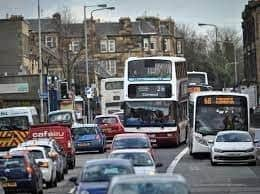

Even the Transport Convener says, “our city is too congested”. Although its normal for the Council to blame all this on car volumes and car ownership.
Yet this week some other information has come to my attention. The Department for Transport has created a new website presenting very clear information on traffic counts at various points in the city which they summarise as an average daily annual flow.
This shows that for most major roads into the city there have been some considerable drops in traffic volume since the early 2000s. If I take a key route in my own ward the average annual daily frow on London Road has dropped from 17, 061 vehicles a day in 2002 to 12,502 in 2018. This is based on real vehicle counts and estimates for the years since 2018 suggest it will have dropped slightly more since then.
These data are mirrored across the city with drops in traffic flow on Glasgow Road, Liberton Brae, Old Dalkeith Road, Calder Road, Slateford Road and Seafield Road. Only Queensferry Road and Fairmilehead show slight increases.
If there are fewer vehicles on our roads what has caused the congestion? Most people I know believe it’s the Council’s own traffic restricting schemes like cycle lanes, low traffic neighbourhoods, the blocking and narrowing of many routes and the ways we mismanage traffic and road works.
Ironically the left-wing councillors put forward a motion this week calling for action to improve bus journey times. It won’t surprise you that they called for more measures that would restrict other traffic but failed to mention that bus operators say the biggest recent impacts on slower journeys come from 20 mph speed limits and cycle lanes on main roads.
Our buses are our best way to encourage people out of cars but instead the Council focusses on cycling. It is now clear that the Council’s own policies are working against its objectives by clogging them in self-imposed congestion.