
Mad about Manchester? Why not get excited about Edinburgh! - Donald Anderson
At a time when “Manchester-ism” has become the week’s most fashionable shorthand for city-led growth and success, perhaps it is time to ask a different question: is Britain ready for a little Edinburghism?
Manchester’s resurgence deserves huge respect. It has shown how a city can build success through investment and civic leadership. But Edinburgh has its own great story to tell — quieter in tone, perhaps, but no less powerful. Our great city is enjoying a modern renaissance built around the strongest city economy in the UK outside London. We should be no less confident than Manchester about the value we bring to Scotland and Britain.
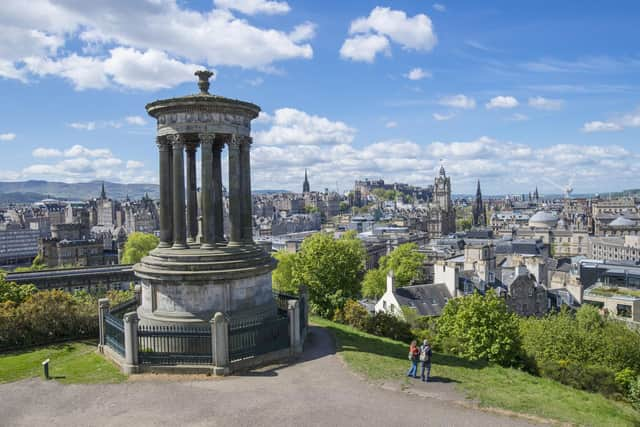

Edinburgh’s success is built on depth. A city where world-class universities, financial services, technology, tourism, culture, life sciences, hospitality and public institutions overlap in ways that have created the largest and most successful economy in Scotland. It is compact enough to collaborate, beautiful enough to inspire, and global enough to attract talent, visitors and investment from far beyond Scotland.
Edinburgh is a distinctive model of growth: not a copy of London, not a replica of anywhere, but something unmistakably Edinburgh. It combines heritage with innovation, civic pride with international reach, and economic success with a quality of place that few cities on the planet can match.
Three recent wins illustrate that story perfectly. First, Edinburgh has been recognised as Scotland’s cleanest city, with its street cleanliness score rising sharply and placing it ahead of other Scottish city authorities. That matters because cleanliness is not cosmetic. It is a signal of care, competence and civic seriousness — the everyday foundation of a city people want to live in, visit and invest in.
Second, Edinburgh was highlighted by the Scottish Retail Consortium as leading the UK recovery in high street footfall. At a time when high streets across the country are still searching for a post-pandemic future, Edinburgh’s city centre has shown real resilience, appeal and commercial strength.
Third, Edinburgh has been named the second most beautiful city in the world in a Time Out survey, with 84 per cent of city residents describing our city as beautiful. That is more than a flattering headline. Beauty is also an economic asset. It shapes how people feel about Edinburgh, how long they stay, whether they return, and whether they can imagine building a life or business here.
If Manchesterism is about confidence, devolution and urban growth, Edinburghism should be about something complementary: excellence of place, sustainable prosperity, civic stewardship and global openness. It is the belief that a city can grow without losing its character; that beauty, culture and liveability are not soft extras but core strengths; and that prosperity is strongest when it is rooted in the quality of everyday life.
Edinburghism would not be mere boosterism. There are reasons Edinburgh punches above its weight. It has the institutions, the talent, the history and the international reputation. It also has something increasingly rare: a sense of place that people can feel.
So yes, let Manchester have Manchesterism. Its confidence has helped change the national conversation. But Edinburgh should not be shy about offering its own answer. In a city experiencing a modern renaissance, with recent wins on cleanliness, retail resilience and global beauty, Edinburghism may be exactly the kind of positive civic idea whose time has come.