
No division, just a moment when nation became politically engaged - Vladimir McTavish
Over the past week much has been written about the tenth anniversary of the independence referendum, which was marked on Wednesday.
While some of the events of September 18, 2014 feel very recent, others seem like a lifetime away. It was a highly-charged period politically. I have never known such an exciting time in all my life in Scotland.
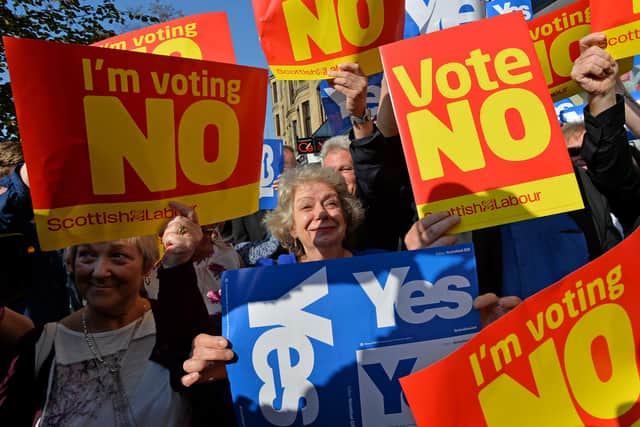

Yes voters will be looking back at an opportunity missed, while supporters of Better Together will see it as the moment when Scotland dodged a bullet. Yet, no matter how you voted, it must be agreed it was a hugely exhilarating time. In the weeks leading up to the vote, there was this palpable feeling that we were living through a really important period in our nation’s history.
Some say it was divisive, but I don’t buy that argument. It was a full and frank debate about Scotland’s future. To see the entire country becoming so actively politically-engaged is something we had not witnessed before nor seen since. Young people were openly discussing politics on trains and buses.
Another false narrative pedalled at the time was that it was anti-English. Again, nothing could be further from the truth. If anything the Yes campaign was pro-English in that it was campaigning for England to be independent from us. Furthermore, I’m sure I’m not alone in finding I had a much healthier relationship with my parents after I had grown up and left home that I did when I was a sullen teenager.
And 2014 was an inspiring year culturally. In the months leading up to the referendum, the arts took a front seat in the discussion. I was involved in a monthly comedy show “Aye Right? How No?” which took a left-field look at both sides of the argument. We had Yes-supporting comedians such as myself and Mark Nelson, and No voters like Rory Bremner. It did a sell-out run at that year’s Fringe, such was the public’s appetite for political entertainment.
Indeed a number of celebrity artists were keen to pledge their allegiance to one side or other. The Yes Campaign famously were supported by Brian Cox, a Scottish actor who lives in New York and Alan Cumming, another Scottish actor who lives in New York. Not to mention Midge Ure, a Scottish singer who lives in the 1980s. Prominent Better Together backers included JK Rowling and Kermit the Frog.
Many of the major players have departed the scene. We still have Alex Neil and Jim Sillars around, although I am not totally sure whether they can say the same about their marbles. And of course Alex Salmond remains the same larger-than-life character that he was back then. Except he appears to have become even larger over the past decade.
We will doubtless have another referendum some time in the future. In the meantime, let us all reflect on a time when Scotland discussed its future in a largely civilised manner. Other countries have not had the same opportunity. America had to fight a war of independence, as did Ireland. While Gandhi went on hunger strike in the struggle to free India from British rule. I’m not sure if Alex Salmond ever considered a hunger strike. That could have easily lasted ten years.