
Reforms to help put Scotland’s public services back on track - Angus Robertson
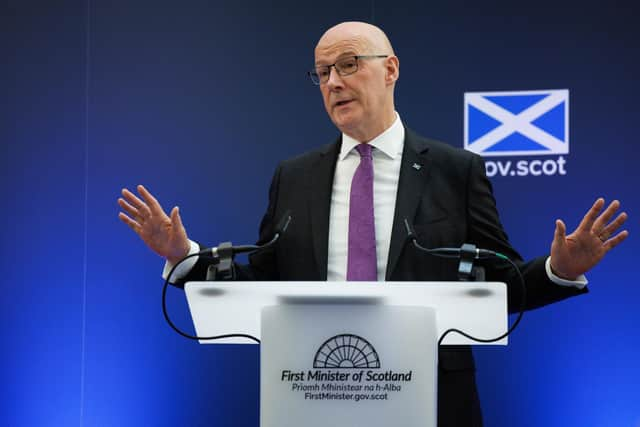
First Minister John Swinney has outlined a national strategy for reforming Scotland’s public services.
In a speech delivered this week, he set out proposals to modernise how services are delivered, improve coordination between agencies and increase the use of digital tools across health, education and social care.

The reforms are framed around four principles established by the 2011 Christie Commission: prevention, integration, empowerment, and efficiency.
The First Minister stated that public services need to adapt to new demographic, economic and technological pressures. “Public services first built in and for the 20th century must become rooted instead in the realities of the 21st,” he said.
One major focus of the strategy is the use of digital infrastructure. Planned improvements include more accessible appointment systems in the NHS, digital access to test results and the use of wearable technology to monitor health. According to the First Minister, existing systems often operate in isolation and need to be redesigned to allow better communication between agencies.
A separate strand of work involves the development of precision medicine. Led by Professor Anna Dominiczak, Scotland’s Chief Scientist for Health, this approach involves using genetic data, AI and localised health information to provide more tailored interventions. The aim is to identify risks earlier and improve long-term outcomes through more targeted treatment.
Reform will also involve changes to how services work together. The Government intends to develop interoperable systems that can be shared across sectors. This includes creating digital platforms that allow social work, education and health services to coordinate support and track progress more effectively.
Another major element of the strategy is the expansion of Whole Family Support. These programmes are intended to reduce the need for crisis-based services by delivering coordinated assistance tailored to families’ needs.
In pilot areas, this approach has shown results in reducing the number of children in formal care, lowering intervention costs, and improving service efficiency. Families in the programme are supported by a single point of contact who helps navigate housing, childcare, health and other issues without repeated referrals between departments.
The Government has committed to publishing a new Public Service Reform Strategy, developed in collaboration with councils, public bodies and voluntary sector organisations.
This will provide a framework for decision-making and align reforms with Scotland’s National Performance Framework, which is also under review. Ministers will lead on sector-specific priorities and a national group of public service leaders will be convened to oversee implementation.
Alongside these structural changes, the Government is examining how to realign budgets to support early intervention. The First Minister cited examples such as the £1 billion a year investment in early years childcare, the creation of a single police force with estimated savings of over £200 million and city-region economic partnerships that coordinate transport and infrastructure.
In a second speech this week, the First Minister discusses longer-term planning goals through to 2050. He stated that gaining further constitutional powers would allow Scotland to take a more integrated approach to public finances, workforce planning and investment decisions. These powers, he said, would strengthen the ability to sustain and expand preventative public services.
In the meantime, the Government is progressing with elements already within its remit. Digital health initiatives are being expanded, new service integration models are being piloted and a coordinated leadership structure is being established to support implementation across sectors.