
Remembering grave atrocity should strengthen resolve to uphold peace, human rights and justice
This month marks 30 years since the genocide at Srebrenica, where over 8000 Bosnian men and boys were murdered by Bosnian-Serb forces. It remains the gravest atrocity committed on European soil since the Second World War.
In February 2014, I led the first Scottish delegation to Srebrenica, supported by the UK charity Remembering Srebrenica. During our visit, we met survivors, religious leaders, police and the International Commission on Missing Persons in Sarajevo. The experience left a lasting impression and deepened our understanding of the importance of remembrance and justice.
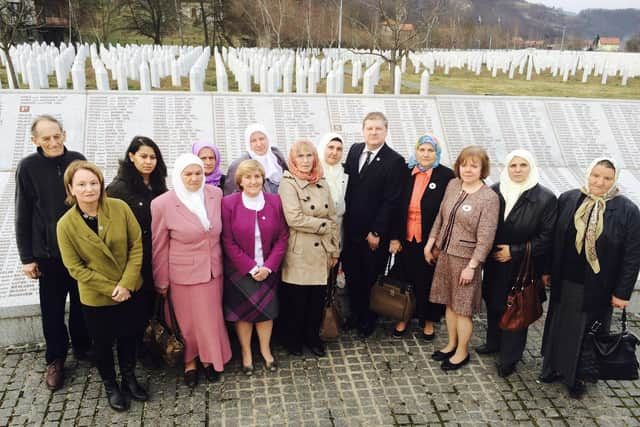

Shortly after the trip came the foundation of Remembering Srebrenica Scotland, an independent charity which has since led national efforts in education, commemoration and outreach. Across Scotland, schools, faith groups and local authorities take part in Srebrenica Memorial Week each July. The charity, now called Beyond Srebrenica, also runs a schools programme that helps young people learn about the consequences of hatred and division.
In May 2024, the United Nations General Assembly officially designated July 11 as the International Day of Reflection and Commemoration of the 1995 Genocide in Srebrenica. The resolution underlines the global responsibility to remember and to challenge genocide denial and hate speech. Scotland’s engagement reflects a strong commitment to those principles. Beyond Srebrenica Scotland has amplified the voices of survivors, encouraged critical discussion, and built solidarity with Bosnia’s diaspora communities.
Marking this anniversary is not only about remembering the past. It is also about strengthening our collective resolve to uphold peace, human rights and justice in the present and for the future. Indeed, as we observe devastating conflicts in the world today, genocide remains very real.
Angus Robertson is SNP MSP for Edinburgh Central and Constitution, External Affairs and Culture Secretary