
Scotland has the right to decide its own future – plain and simple - Lorna Slater
Today, MSPs will be asked to vote on a simple proposition: that Scotland is a nation with the right to decide its own future. It is difficult to see how anyone who believes in democracy could object to that principle.
You can support independence, as I do, or believe Scotland is better served remaining within the United Kingdom. You can have strong views about what our constitutional future should look like. But surely we can agree that the people of Scotland should have the right to

decide. That is what self-determination means.
We have exercised that right before. In 2014, Scotland held an independence referendum and voted to remain part of the United Kingdom. That result was accepted. The campaign was hard fought and passionate, but ultimately it was democratic.
Nobody suggested then that the question could never be asked again. Yet today, when Scotland has consecutively elected yet another Parliament with a clear pro- independence majority and a mandate to offer people another choice, Westminster continues to say no.
The issue is not simply whether you support independence. It is whether one parliament, elected by voters across the United Kingdom, should have the power to prevent people in Scotland from even being asked the question.
There should be a democratic mechanism for resolving that.
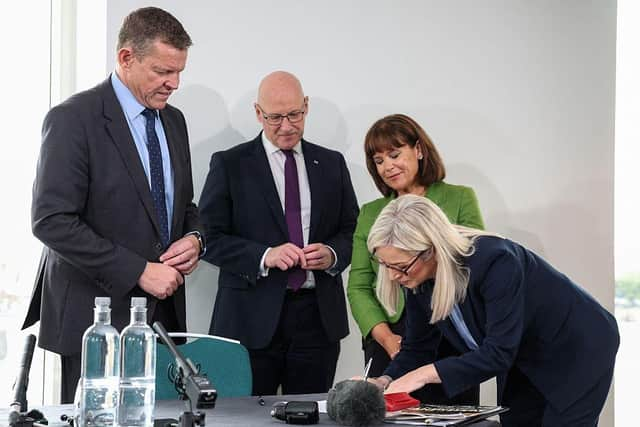
This is not just a Scottish conversation. Last week, the leaders of Scotland, Wales and Northern Ireland came together in Cardiff to assert their nations’ right to self-determination and to call for constitutional change. For the first time, all three devolved nations have governments led by parties committed to independence. That should make Westminster stop and listen.
The democratic mandate in Scotland is clear. At May’s Scottish Parliament election, voters returned the largest pro-independence majority ever elected to Holyrood, with 73 SNP and Scottish Greens MSPs.
And beyond Parliament, public opinion has changed significantly since 2014. Support for independence has repeatedly reached or passed 50 per cent in polling, demonstrating that this is not a question that can simply be put back in a drawer and ignored.
That does not mean everyone in Scotland wants independence, nor does it mean the constitutional question has been settled. It means there is a substantial public demand for the question to be put to the people.
If Westminster believes independence is the wrong choice, it should have the confidence to let Scotland decide. Instead, we are still being told no. That cannot be a sustainable way to run a voluntary union of nations.
If the United Kingdom is genuinely a partnership between nations, then the consent of those nations has to mean something. It cannot mean that Scotland is free to choose its future only when Westminster agrees with the choice being offered.
This is about more than independence; it is about respecting democracy even when you do not like the possible outcome.
You do not have to believe in independence to support Scotland’s right to choose it. You simply have to believe that the people who live here, work here and build their lives here should have a say in what kind of country we want to be.
I believe that choice should be ours. Scotland cannot keep knocking on a locked door and being told to wait.
We need a fair and democratic mechanism through which the people of Scotland can decide their future. And we need it now.