
Scotland’s route to growth runs through our two principal cities - Donald Anderson
I’ve always been interested in figures and read recently that Scotland’s gross domestic product per capita has grown faster than the United Kingdom’s since 2007. That statement is true.
However, the growth of the UK economy has actually been greater, but because population growth has been slower in Scotland, our per-head figure has risen faster. What’s more intriguing is where Scottish growth has come from, and those figures make interesting reading for Edinburgh and Glasgow.
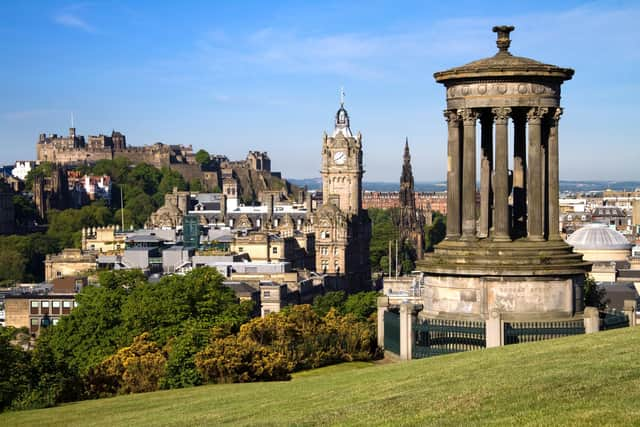

Using the Office for National Statistics’ official city-region GDP data, the Edinburgh and Glasgow City Regions have generated around 86% of Scotland's cumulative growth in real Gross Domestic Product (GDP) since 2007. Indeed, Edinburgh city region with only 20% of the Scottish population has produced nearly half of Scotland’s growth since 2007. That compares favourably to the growth London has generated for the UK over the same period, and of course Edinburgh has never had the scale of government support and spending that London’s success has been built upon.
Indeed, Edinburgh and Glasgow’s city regions produced 86% of the increase in Scotland’s growth over that period, despite containing well under half of the nation's population. That is not an argument for concentrating prosperity in two places. It is simple recognition that there’s no road to growth and prosperity in Scotland unless it runs through our two principal cities.
This fact is rarely acknowledged in Scottish economic debate. Discussion often centres on how growth should be shared before recognising how growth is created. These figures are also partly a sad reflection of the fact that Aberdeen’s economy has moved backwards since 2007, whereas between 1999 and 2007, Aberdeen’s growth far exceeded Edinburgh’s coming in at 43 per cent compared to a hugely impressive 31 per cent for the capital.
There are two lessons from this data. First, Edinburgh is an astonishingly successful city. Second, so too is Glasgow. Too often Glasgow is portrayed as a failing city, but it’s one of Scotland’s greatest economic, cultural and social assets.
On its own Glasgow has generated nearly 40 per cent of Scotland’s growth since 2007, which is an astonishing figure. Scotland is fortunate to have such an economic powerhouse.
I’ve previously described ‘Scotland’s Growth Corridor’ as both city regions combined. These figures bear that out.
The OECD recently described Edinburgh as an economic outlier of success alongside London, reflecting its remarkable ability to attract global investment, highly skilled workers and knowledge-intensive industries.
Edinburgh’s basically a machine for success and redistribution making a substantial positive contribution to public investment in the length and breadth of Scotland, while Glasgow’s scale makes it an equal partner as a generator of economic growth and tax revenue.
All that’s been achieved pretty much by accident in policy terms. Imagine what could be achieved if our two great city regions were supported by design. Councils in England are being given additional financial incentives to grow their economies by new PM Andy Burnham.
That kind of change that could transform Edinburgh and Glasgow’s ability to grow the Scottish economy successfully. Against a backdrop of wars and increasing disruption of international trade, Scotland needs to redouble its efforts to support and grow our economy.
All the evidence shows that the best way to do is by realising the full potential of Edinburgh and Glasgow.