
The Capital’s public transport goes from strength to strength
We all have plenty to complain about. The aftermath of Brexit and all that it brought canmake you feel that politics and government are complete failures. However, in Edinburgh we have an amazing city and quality of life.
However, it’s increasingly obvious that one of our best successes is transport, as the hat trick of wins at the most recent National Transport Awards demonstrated.
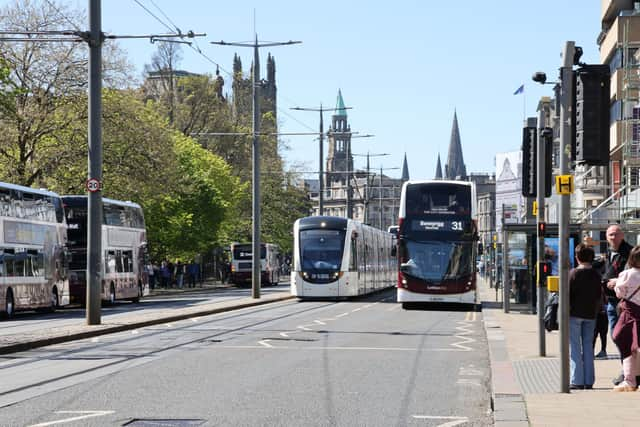

The awards were for ‘Bus operator of the year’, ‘Tram operator of the year’ and Sarah Boyd, Managing Director of Lothian Buses who won ‘Woman of the year’ in recognition of her leadership of the industry. It’s a great success for a small city and a reminder of just how good our public transport is.
In 2025, Lothian carried 119 million passengers and Edinburgh Trams another 12.5 million. That is 131.5 million journeys and is more passenger journeys than Scotrail. Public transport is not simply a service in Edinburgh. It is a key part of what makes our city work.
This success was never inevitable. Lothian evolved from Edinburgh’s municipal transport tradition through Lothian Regional Transport into today’s modern operator. Following deregulation in 1986, it had to operate commercially in an increasingly competitive market. I’ve written before about how Eric Milligan and Keith Geddes led the campaign to save Lothian Buses from privatization. That success has been built upon over the years. Keeping the company public preserved an asset whose value extends far beyond its balance sheet.
There are other heroes too. In 1999, the consortium involving FirstGroup emerged as preferred bidder for Edinburgh’s proposed CERT guided busway. The scheme was a costly failure and it became clear that First saw the contract as a way of breaking into the Edinburgh bus market and potentially breaking Lothian Buses dominance of city services. Then Lothian Buses Chief Executive Neil Renilson fought a formidable campaign to get the bus company through what might have been an existential battle and we can be thankful he did.
That fight included a bus war which reached its height in 2000–02, with competing routes, increased frequencies and fare reductions. Lothian faced a much larger corporate rival, with much deeper pockets but again Neil Renilson’s leadership and commercial nous won through. Lothian retained its position as Edinburgh’s principal operator and the threat to the Edinburgh Bus market by a private operator was defeated.
Lothian remains a model of best practice and our trams are no less successful. Our buses are self-financing with no subsidy from the council. Compare that to London where London’s transport authority receives around £2 billion annually from the Greater London Authority.
At a time when the reputation of government at all levels has lost a huge amount of credibility Edinburgh’s council, Lothian Buses and Edinburgh Trams are a model of best practice. At key times over many decades council officers and politicians of all political persuasions have taken the right decisions on public transport and for all the right reasons.
They put your interests first and the result is undoubtedly Britain’s best-value city public transport service and the best service outside London. A service that widens opportunity, connects communities and gives people independence. Above all, it’s a service that makes one of the best cities in the world a better place to live.