
UK out of step with international consensus on Palestinian state
The consensus to recognise Palestinian statehood is broad and cross party. Scotland’s First Minister John Swinney has called for the formal recognition the state of Palestine and 221 MPs from across all parties in the UK Parliament signed a letter calling for the UK Government to take this step.
This is a political decision with serious implications. Recognition affirms the right of the Palestinian people to self-determination and gives their representatives standing in international legal and diplomatic forums. It also opens clearer pathways for the international community to intervene, uphold humanitarian law and hold states to account.

France is moving in this direction. Spain, Ireland and Norway have already taken the step. Over 140 countries worldwide now recognise Palestine as a state. The UK’s position is increasingly out of step with the international consensus and with its own stated commitment to a two-state solution.
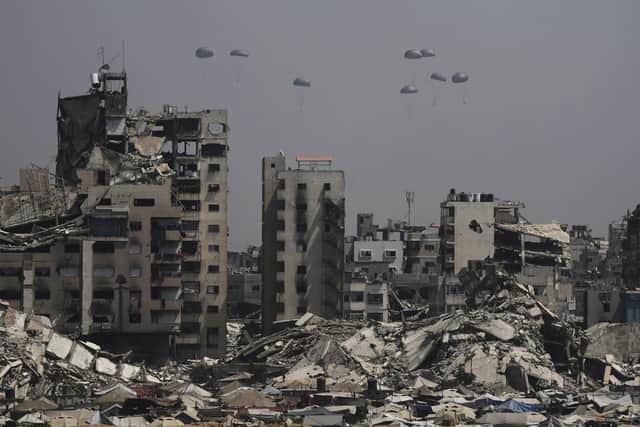
The current scale of violence in Gaza and the West Bank reinforces the urgency. UN agencies, international courts and humanitarian organisations have provided consistent evidence of widespread destruction, displacement and loss of life. Médecins Sans Frontières (MSF) has documented the collapse of medical services and repeated attacks on healthcare workers.
MSF has concluded that genocide is taking place, as has Amnesty International and other reputable NGOs and individuals. The International Court of Justice has issued provisional measures in relation to allegations of genocide. These are not political claims, but formal findings and warnings issued by some of the world’s most credible legal and humanitarian bodies. Israel’s actions must be examined with the full force of international law.
Recognition of Palestinian statehood strengthens the international legal framework. It supports the work of institutions such as the International Criminal Court and allows for greater coordination of humanitarian aid. It also gives future peace negotiations a more equal and legitimate starting point.
Israel has a right to rid itself of the threat of Hamas. But when it became clear that Benjamin Netanyahu was no longer just interested in defeating Hamas and releasing the hostages but making Gaza uninhabitable, I was first in Parliament, on behalf of the Scottish Government, to condemn and call formally for an end to the disproportionate Israeli military action in Gaza.
That position was taken at a time when UK Government ministers refused to issue the same condemnation and when the Labour leadership remained largely silent and continued to arm Israel. Delay has consequences. The longer it has taken to acknowledge the seriousness of the situation, the more difficult meaningful action has become. The Labour Party must now recognise the cost of that delay and support recognition without further hesitation.
There is no credible basis for continuing to treat Palestinian statehood as a future possibility to be granted under political conditions. Legal statehood already exists in the eyes of most of the international community and under the criteria set out in international law. Recognition from the UK would reflect that reality and allow for greater diplomatic and humanitarian engagement.
The Scottish Government has made its position clear. With growing international support, the UK Government now faces a choice. Recognition can help re-establish international norms, strengthen legal enforcement, and support a more sustainable approach to peace. Further delay will only weaken the UK’s credibility and reduce the scope for constructive involvement. The UK has stood by for too long issuing words of condemnation, the time for action is now.
Angus Robertson is SNP MSP for Edinburgh Central and Constitution, External Affairs and Culture Secretary