
Council shake-up plans - more questions than answers as Edinburgh council faces the axe
What would people feel about Edinburgh council being abolished?
The city council is not usually in top spot for public popularity.
But it does feature quite prominently in people's daily lives, responsible for bin collections, schools, roads, housing, planning, parks and more.
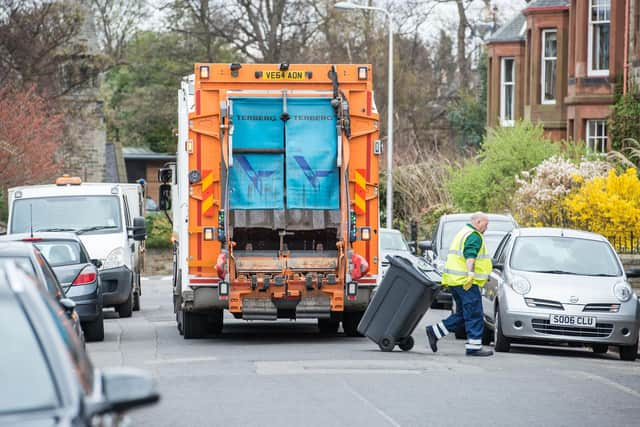

So what would people feel about Edinburgh council being abolished?
The initial plans produced by the Scottish Government for a shake-up of Scotland's councils appears to propose exactly that.
Instead of the current 32 local authorities across Scotland, there would be six to ten new regional authorities and, within these, up to 160 new community authorities.
The regional bodies would likely take charge of strategic planning, transport and economic development, but also education, housing and waste and cleansing.
Community authorities would look after local planning, licensing and green spaces.
It's not clear how big the regions would be. Would Edinburgh be linked just with the three other Lothian authorities? Or would it also include the Borders and perhaps even Fife, as with the Edinburgh and South East Scotland City Region deal?
The Scottish Government's discussion document offers Leith as an example of a place which could have its own community authority. But how far would the Leith boundary extend? And where else in Edinburgh would get one - Corstorphine, Craigmillar, Morningside, Portobello, Wester Hailes?
The government wants the same councillors, elected at ward level, to serve on their local community authority and also the regional authority - although that could mean some very small community authorities and some very large regional ones and it would probably also mean a pay rise for the extra responsibilities.
Meanwhile, there seems no place in this scheme for city councils like Edinburgh, which some might argue are the most obvious and easy to understand unit for local government.
So far, there seem to be more questions than answers on how the new system would work. There is no mention of council tax in the document or how that would be divided up.
The main objective behind the government’s public sector reform programme seems to be to reduce costs. But although it talks about “duplication” and “efficiencies”, it must know that bureaucratic reorganisation in itself is a hugely expensive business.