
Holyrood elections 2026: Labour's Anas Sarwar in positive mood despite poor opinion poll ratings
Anas Sarwar needs to persuade voters to focus on SNP’s record at Holyrood rather than Labour’s at Westminster
There's not much in the polls to encourage Labour, with the Holyrood elections now less than four weeks away. But Scottish Labour leader Anas Sarwar was in positive mood as he launched the party's manifesto at Edinburgh University's Pollock Halls on Monday.
The 92-page document is packed with commitments on everything from potholes to prisons. There are promises not to raise income tax for the next five years, to build 125,000 new homes, ban mobile phones in schools, replace business rates and keep free university tuition.
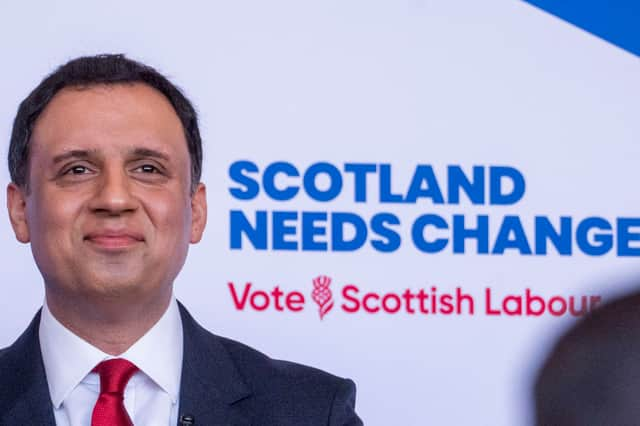

It's serious piece of work and a fairly comprehensive set of policies for all Holyrood's areas of responsibility. The party highlights long NHS waiting lists, the struggle to get GP appointments, schools under pressure and young people priced out of home ownership.
It says it will "fix the SNP's mess" and presents the election as a choice between “more of the same” with the Nationalists or "the change Scotland needs" with Labour.
In his speech, Mr Sarwar addressed immediate concerns by saying that if if the war in the Middle East and the resulting international instability continue, he would deliver a £100m package of emergency support, including loans for energy intensive industries to protect jobs, bulk buying of fuel to drive down prices at the pumps and crisis grants and loans for households, as well as an emergency summit of the supermarkets to bring down the cost of staple items.
But polls consistently give the SNP a clear lead and some show it achieving its target of an overall majority of seats in the parliament, while Labour battles with Reform for second place. The poor Labour showing is mostly to do with the party's unpopularity at UK level.
Mr Sarwar moved to distance himself from Prime Minister Keir Starmer in February by calling for him to quit. But the move seems to have done little to improve Scottish Labour's popularity.
However, if Mr Sarwar was able to shift the election debate from, as he puts it, talking about a government "somewhere else" to talking about the SNP's record after nearly 20 years in power, he may have more chance.