
Painfully slow robotic surgery roll-out stretches waiting times - Sue Webber
If there was a way to start slashing the dreadful waiting lists many people are forced to endure in extreme discomfort or in some cases, fear, we’d expect the Scottish Government to grab the opportunity without delay.
There is such an opportunity, and what’s more it has already proved to be highly successful, yet the roll-out of proven technology is proving painfully slow, for thousands of people literally.
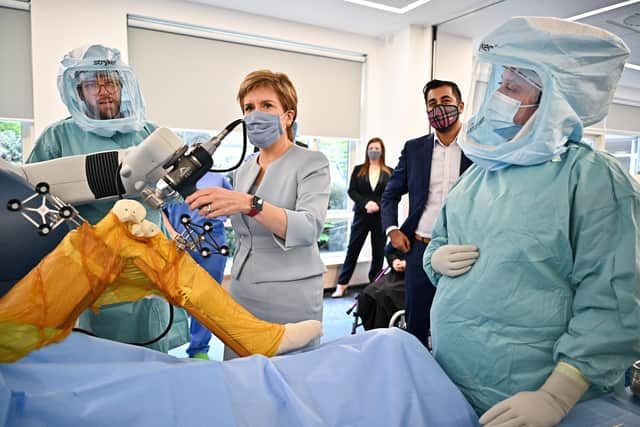

Such is the pace of change in medical science that robotic-assisted surgery (RAS) is not revolutionary, but from the tentative way it’s being introduced by NHS Scotland to replace keyhole operations, you’d think it was like the first ever organ transplants in the 1960s, with unknown risks being taken by surgeons at the very edges of pioneering medicine.
It’s new, certainly, and just as when keyhole procedures began to replace open surgery, the benefits are beyond question, not least by reducing scarring. In England there is a £26 billion programme to ensure that 90 per cent of all keyhole operations are robot-assisted by 2035, only nine years away.
Here, just 16 robot systems have been introduced to Scottish operating theatres, mainly in urology to carry out procedures like prostate operations. Availability for gynaecology is very limited, so the benefit is almost entirely for men.
But what a benefit they bring, with over 11,000 bed days put back into NHS services last year alone. In other words, each machine has been responsible for allowing nearly 700 patients to recover at home rather than an extra day in hospital.
NHS trusts are clamouring for the kit because the benefits are not limited to allowing patients to go home far more quickly, but dramatically reduces the amount of stock each hospital has to retain. The reason is that surgeons can choose different suppliers, so not only does the hospital need to carry a range of sizes from the different manufacturers, but they need different instruments and the nursing and theatre staff need different training too.
Put in one robotic system bought by the authority which all the surgeons use, and the practical advantages and potential cost savings are obvious.
Last January First Minister John Swinney bragged to an audience at Heriot-Watt University about how his government would use technology to bring down waiting times, and there’s no reason for Scotland to be behind England.
But over a year later there’s no published national plan or timetable for expanding the use of robotic surgery. There’s not even a completed review of current capabilities and, despite knee and hip replacement waiting lists stretching for well over a year, no obvious sense of urgency.
Last week I raised the issue at First Minster’s Questions, and as usual John Swinney just dismissively ignored the question as if it doesn’t matter. He might leave the debating chamber feeling smug about himself, but his arrogance is costing the NHS millions and needlessly prolonging the discomfort of thousands of people.
I’ve written to the SNP’s health secretary Neil Geray to see if I can get any sense out of him, but I’m not holding my breath for anything other than flannel and excuses.
Meanwhile, by the end of the year there will be almost as much robotic operating capacity in Cumbria than the whole of Scotland, so if you want faster, effective treatment, try Carlisle.