


As part of our celebrations to mark 150 years of the Edinburgh Evening News, we’ve taken a look back at the big events that shaped Edinburgh since our publication was founded in 1873.
So many landmark moments have taken place in the Capital since then, including the creation of Edinburgh’s two premier football clubs Hearts and Hibs, the Cowgate fire in 2002, two Papal visits, Hearts players fighting in the First World War, the restoration of the Scottish Parliament and the signing of the Edinburgh Agreement in 2012 for the terms of the 2014 Scottish Independence Referendum.
Other iconic events include the opening of Central Library in 1890, the Zeppelin bombing of the city in 1916, Potobello joining Edinburgh in 1896 and Leith following in 1920, despite locals voting against it. The city has also welcomed the Commonwealth Games twice, in 1970 and 1986.
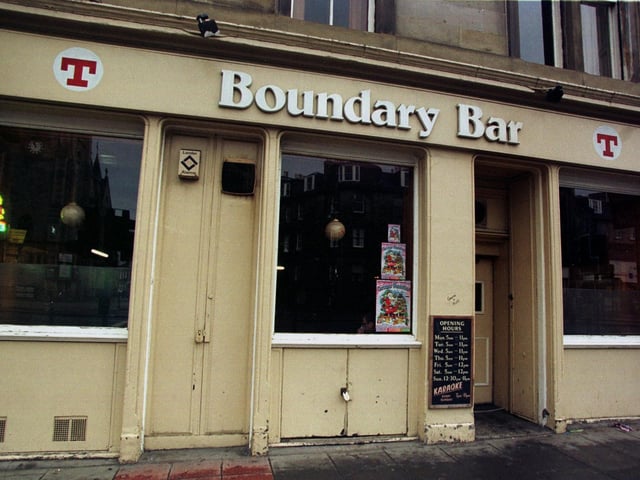
13. Leith joining Edinburgh
Leith was merged with Edinburgh on November 1, 1920 despite a referendum in which the people of Leith voted 26,810 to 4,340 against the merger. The population of Leith at the time of the merger was 80,000 representing 20 per cent of the population in around five per cent of the city area, reflecting the town's high density. Many Leithers still consider themselves different to Edinburgers and some still see Leith as separate from the Capital. Pictured is the Boundary Bar in Leith Walk, which was famous as the pub which straddled the boundary between Edinburgh and Leith with a dividing line running right through the middle of the bar. For years Edinburgh drinkers would be served for an extra half-hour there after last orders were called across the city at 10pm. All they had to do was shuffle over the line into the Leith side of the pub where licensing laws were more liberal. Photo: Julie Bull
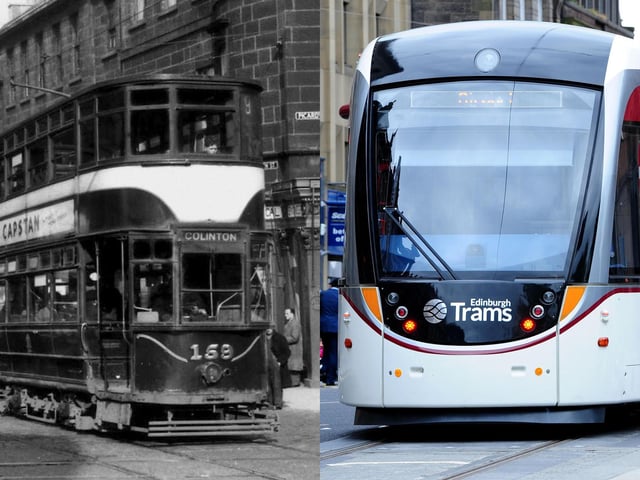
14. Trams
Trams operated in Edinburgh from 1910 until 1956 before the city's tram network was ripped up to make way for the rising demand of motor vehicles. However, they returned to the Capital in 2014 after a long and controversial construction process with an initial estimated cost of £375 million in 2003, but by May 2008, when contracts were signed, the cost had risen to £521 million. The final cost after delays was £776 million. The trams operate on a 14-kilometre line between St Andrew Square in the New Town and Edinburgh Airport, with 15 stops. Although the extension of the line to Newhaven through Leith is expected to open this summer. Photo: National World
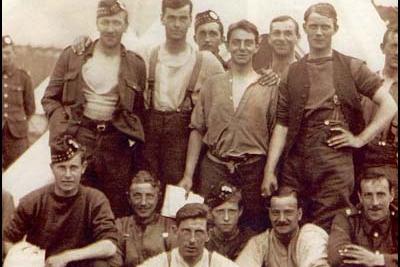
15. Hearts players make the ultimate sacrifice
McCrae's Battalion was the affectionate name given by the people of Edinburgh to the 16th (Service) Battalion of the Royal Scots in World War I, raised from volunteers in 1914 as part of the New Armies called to the Colours by Lord Kitchener. The unit was named after its charismatic colonel, former Liberal MP for Edinburgh East, Sir George McCrae. 16 players from Heart of Midlothian F.C. ("Hearts") enlisted, along with 500 supporters and ticket-holders, the first British team to sign up en masse. Hearts were leading the Scottish League at the time the battalion was raised in November 1914. The war ended up claiming the lives of seven of the Hearts players , with several others returning so severely wounded they were unable to play football again. A memorial was erected at Haymarket in 1922 to honour these men and the many others who fought in the two World Wars, with fans and players at the club still coming together every Remembrance Sunday to remember them. Footballers from Hibs, Falkirk, Dunfermline Athletic, East Fife and St Bernard's also enlisted with the regiment. Photo: Submitted
16. Scottish National Portrait Gallery
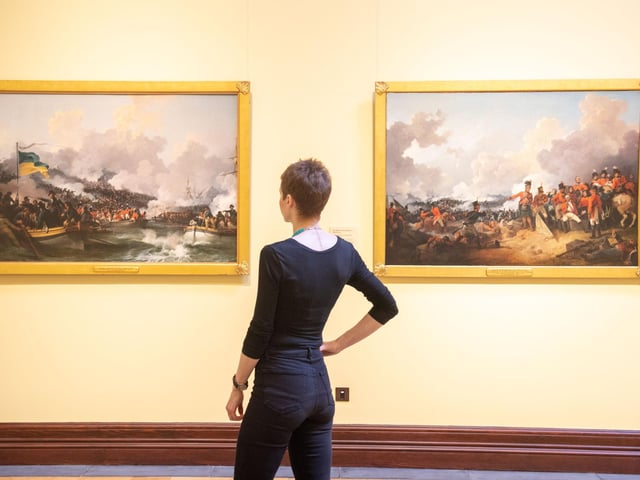
Since 1889 the Scottish National Portrait Gallery has been housed in the red sandstone Gothic revival building on Queen Street, designed by Robert Rowand Anderson and built between 1885 and 1890 to accommodate the gallery and the museum collection of the Society of Antiquaries of Scotland. The building was donated by John Ritchie Findlay, owner of The Scotsman newspaper. In 1985 the National Museum of Antiquities of Scotland was amalgamated with the Royal Scottish Museum, and later moved to Chambers Street as part of the National Museum of Scotland. Portrait expanded to take over the whole building, and reopened in December 2011 after being closed since April 2009 for the first comprehensive refurbishment in its history. Photo: Ian Georgeson