
Rare plants at Royal Botanic Garden Edinburgh evacuated after panes smash at glasshouse
Rare plants removed from glasshouse after panes smashed
’Irreplaceable’ rare plants have been evacuated from a vital research glasshouse at the Royal Botanic Garden Edinburgh after an incident which saw ‘a huge amount’ of glass panes break.
Specimens including Brugmansia sanguinea and Rhododendron kanehirae, both of which are extinct in the wild, were removed from the glasshouse after an aging vent arm mechanism worked loose and failed.
The incident, according to a spokesperson at the garden, saw a rescue mission “kick into action”.
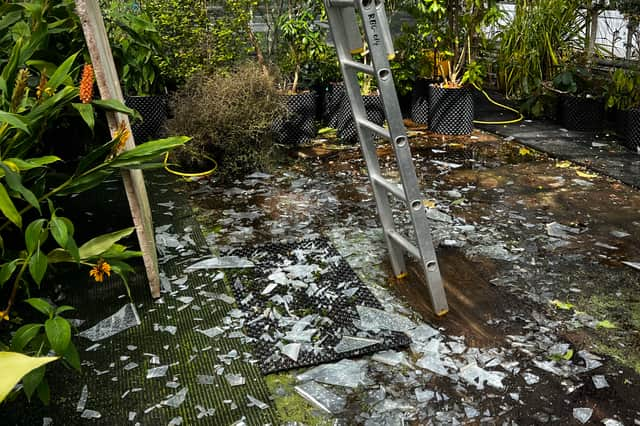

The spokesperson said: “A huge amount of glass broke, and the plants underneath were at risk both from being damaged from falling glass and also being exposed to the elements.”
The affected collections are set to be temporarily rehomed while repairs are carried out at the glasshouse.
The research glasshouses are set to be the focus of part of the second phase of the Edinburgh Biomes initiative, the first phase of which has seen the garden’s famous Palm Houses, which open to the public in October, fully restored over the past three years.
The second phase of the project will partly focus on restoring and replacing all glasshouses at the Inverleith site.
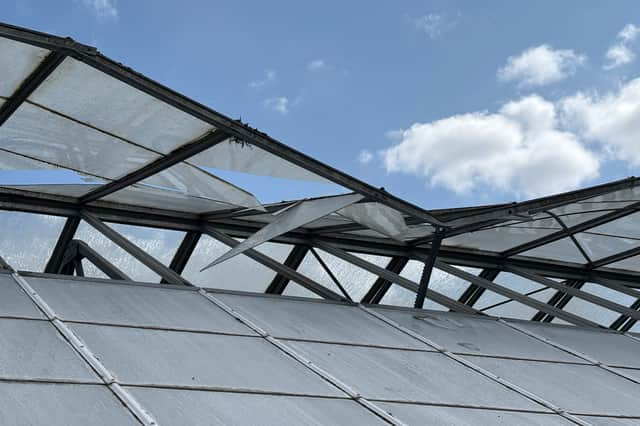
Professor Peter Hollingsworth, director of science and deputy keeper at the Royal Botanic Garden Edinburgh said: “This incident is a stark reminder of the need to future-proof all glasshouse facilities at the Royal Botanic Garden Edinburgh. While we prepare to celebrate the re-opening of our iconic Palm Houses after a major five-year refurbishment, it is important to stress that this work is only part of the extensive Edinburgh Biomes initiative.
“Our research houses are at the core of globally important work focussed on gaining the knowledge required to protect endangered species and save habitats around the world. These facilities are not only home to many plant species that are threatened and some that are extinct in the wild, but also house others still to be scientifically named for the first time.
“We have a long way to go before all our glasshouses stand resilient for the future.”