
Retiring Edinburgh trade union leader Des Loughney looks back on 50 years of change in the city's industry and employment
‘I think we've turned a corner and the role of the trade unions is increasing’ - Des Loughney
Leading Edinburgh trade unionist Des Loughney is set to retire after nearly five decades at the heart of the movement in the Capital.
His long years of dedicated service were recognised with an award at the Scottish Trade Union Congress's (STUC) annual gathering in Dundee. And a motion praising his contribution has been tabled for this week's meeting of Edinburgh council.
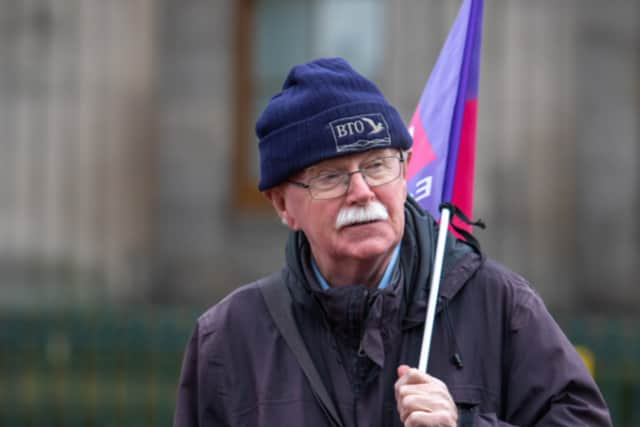

Mr Loughney was secretary of Edinburgh Trades Council from 1978 until stepping down in March this year. But he will continue as secretary of the Edinburgh not-for-profit branch of the Unite union - which has around 1,500 members in the voluntary sector, charities and NGOs - for another year before retiring fully.
After growing up in London, Mr Loughney went to Manchester University, got a good degree and came to Edinburgh to do a PhD in geo-chemistry.
“But my career got derailed because I got involved in the student uprising in Edinburgh in 1970 - we had a big campaign for the university to get rid of its shares in apartheid South Africa and we were successful, which made international news at the time. I was one of the leaders of that campaign, so that led to a rethink of what I wanted to do.”
He decided to get a job in engineering and did that from 1971 until 1978, the last five years of it working at Parsons Peebles, which at that time employed around 2,500 people in East Pilton. Mr Loughney became a senior shop steward and joined the executive of Edinburgh Trades Council in 1976 before being elected secretary two years later after the previous secretary went to work for the STUC.
He says he has witnessed a lot of change in industry and employment in the Capital over the years.
“When I became secretary the city was quite different in terms of industry - 15,000 people employed in engineering at places like Ferranti and Parsons Peebles, 1,000 employed in print, we had a shipyard, a dock workforce and two mines - Bilston Glen and Monktonhall.
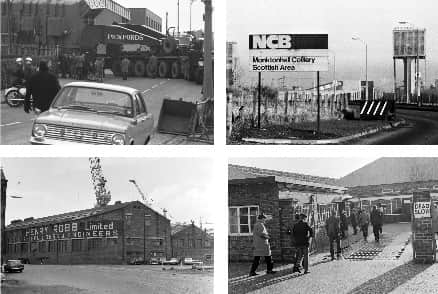
“So the bastions of the trade union movement in 1978 were manufacturing and mining, but most manufacturing has gone, the mines have gone and print has mostly gone. So the trade union movement has had to readjust to a new economy.
“During the 1980s and 90s that was a very painful process and during that time, due to the loss of jobs there was a loss of trade union membership too. I think we're recovering from that, but it's a long process.”
Mr Loughney recalls high points during his time as trades council secretary, including the solidarity campaign he helped organise during the year-long miners strike in 1984-85. “Edinburgh Trades Council raised over £100,000 for the miners,” he says. “For a whole year we had 12 stalls around the city collecting money, and food too, and we got really good support from the public.
“And in my time as secretary there were three general strikes in Edinburgh. There was one in 1980, part of a UK general strike in protest about unemployment. The strike was solid in Edinburgh and we had a big demonstration - around 15.000 people - and we filled the Usher Hall, so that was a high point.
“A couple of years later we had a general strike over the Lothian Regional Council cuts. Then in 2011 we had the pensions general strike - that was a public sector strike, well supported in Edinburgh, with a huge turnout on our demonstration.”
He is also proud of the role the trade unions played in campaigning for a Scottish Parliament.

He says the trade union movement has changed and is no longer based on manufacturing or mining. “Now a huge proportion of the movement is women and the concerns we have have changed quite a bit. I think we've turned a corner and the role of the trade unions is increasing, but there was a period in the 1990s when there was a big dip.”
Mr Loughney also served for four years as Labour councillor for Broughton/Inverleith on Lothian Regional Council from 1990 until 1994. Labour controlled the council at the time and he was on the social work and education committees. “I enjoyed the experience,” he says.
And even after he retires next year, he won’t be idle. As well as spending more time with his family, he is chair of Longstone community council and carries out bird surveys around Edinburgh for the British Trust for Ornithology.
In the meantime, there’s a newly-elected parliament to lobby. “Our Unite branch will be involved in campaigns, keeping an eye on the new Scottish Government and trying to enlighten our new MSPs about what their priorities should be.
“One of the biggest priorities for the trades council now is persuading politicians to do more on Edinburgh’s housing emergency. I think that will be one of the big campaigning priorities over the next couple of years. We're very enthusiastic about the work being done by Living Rent.”