
Royal Infirmary worker describes childcare 'nightmare' after direct bus route to hospital cut

John Wedlock is one of many workers at the Royal Infirmary now struggling with their commute after a direct service from Rosewell to the hospital was withdrawn
A father-of-four from Bonnyrigg who has worked at the Royal Infirmary for nine years has said he has been forced to look at redeployment after changes to a local bus route created a childcare “nightmare” for his family.
John Wedlock, who works in traffic management at the city hospital, said he now has to get up at 4am every morning to catch two buses to make his 6.30am shift after the 46 bus route - which provided a direct link to the Royal Infirmary - was withdrawn by Lothian Buses earlier this year.
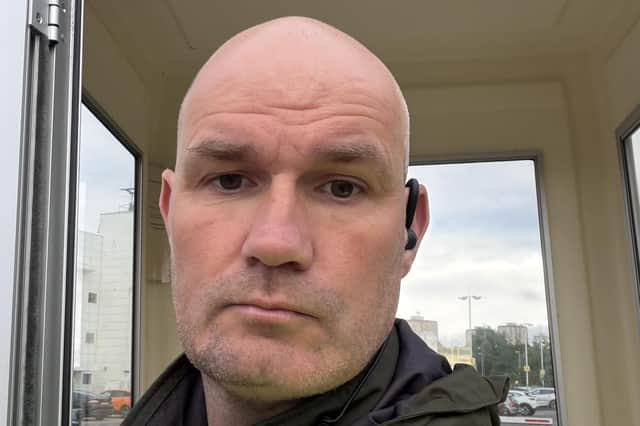

The 43-year-old has three children at primary school and described the disruption to his family life since the changes came into effect as an "absolute nightmare”.
“I used to get the 46 straight home when I finished at 2.30pm and be home by ten to, leaving me with about 20 minutes before the school got out,” he said. “It meant I could pick up the kids every day.
“Now I’m always running late and having to rely on other people at the last minute, meaning they have to drop their plans. It’s becoming a real strain.”
He said the services - the 31 followed by the 7 or the 18 - are supposed to connect, but if delays mean he misses the connection he can be left stranded in Gilmerton for up to 40 minutes until the next bus arrives.
There is currently no shelter at the stop where he switches bus and says there have been multiple occasions he’s had to work the whole day soaking wet after being drenched in rain while waiting for the connection.
He said the daily stress of getting to and from work is taking a toll on his health, and his wife, who uses the car for her job, is also feeling the strain.
“I’m on antidepressants just now as it is and this has just made it worse,” he said.
“You build your whole life around transport. I can’t help but worry about what they are going to do next, which buses will they cut next.
“It just gets so tiring.”
He said many staff at the Royal Infirmary are in the same situation and can no longer rely on public transport to get to work.
“People are now taking their cars in but they don’t have permits, meaning they are having to park in nearby housing schemes or taking up patient spaces,” he said.
“They’re bringing more cars and pollution on to the streets rather than doing away with it.”
Lothian Buses said the changes brought in earlier this year followed a detailed analysis of customer usage and travel patterns, and that since 2023 passenger numbers on the service 46 had not reached the levels required to sustain the service long-term.
It said passengers travelling to the Royal Infirmary are served by connecting buses at the Lasswade Road crossroads.
It is understood representatives from Lothian Buses met with staff at the Royal Infirmary earlier this year to discuss the challenges faced by staff, but John said he wasn’t satisfied by the justification he received.
“The bus was always busy, sometimes you were having to physically stand because you couldn’t get a seat,” he said.
Like several other staff in the same situation, he is now looking at options to be redeployed closer to home because of the daily battle with the buses.
A spokesperson for Lothian Buses said: “Lothian is committed to delivering reliable, accessible and cost-effective bus services across Edinburgh and the Lothians.
“As a wholly commercial operator, our decision to implement network changes is driven by detailed analysis of data and evolving travel patterns, helping to ensure our services remain viable.
"We will continue to monitor the revised services and listen to community feedback as we consider further improvements to connectivity across the wider bus network."
You can read our explainer about how recent bus changes are affecting residents in Midlothian here.