
Scottish Secretary and East Lothian MP Douglas Alexander on winning, losing and why he doesn't want to be prime minister
The SNP's "terrible" record in government should help Labour at next year's Holyrood elections, according to Scottish Secretary Douglas Alexander. But he admits his party has yet to convince people it should be elected to govern Scotland.
Mr Alexander, who is co-chair of Labour's campaign for the 2026 Scottish Parliament elections, pointed to the parties' relative performances at last year's general election.
"Scottish Labour got the highest vote share of any part of Great Britain in July 2024 - we got 35 per cent of the vote. The SNP have the support of about 30 per cent of the Scottish population and have had for 40 years."

But he acknowledged that since the election Labour had lost votes to Reform and others. And he said the party's core strategic challenge was to recreate the coalition of voters which produced a higher vote share than the SNP's.
"I don't underestimate the scale of the challenge but they have a terrible record of government in Scotland. After 20 years it's hard to think of a single area of public life that has got better.
"They can rely on 30 per cent of the population who see politics through the lens of identity not delivery, so for them it's about 'I'm Scottish therefore I'm going to vote SNP' regardless of whether they can build a ferry, improve standards in schools or get waiting lists down.
"So you've got 30 per cent pretty impervious to failure and you've got 70 per cent who are acutely aware Scotland's government has let down Scotland's people over the last 20 years - and we are fishing in that pool of the majority of voters.
"That pool have decided the SNP are bad enough they deserve to lose, they haven't yet decided we're good enough we deserve to win - and that's the challenge of the next seven months."
Mr Alexander - who returned to Westminster as Labour MP for East Lothian at last year's election, nearly a decade after losing his previous Paisley and Renfrewshire South seat to the SNP's Mhairi Black - was speaking at an "in conversation" event with Catherine MacLeod, former special adviser to Alistair Darling.
As well as next year's election, he talked about losing power, why he does not want to be prime minister, how to tackle Reform and the importance of the Scotland Office.
Mr Alexander said he had not been prepared for his 2015 general election defeat, despite two opinion polls in the constituency showing the SNP on course to win.
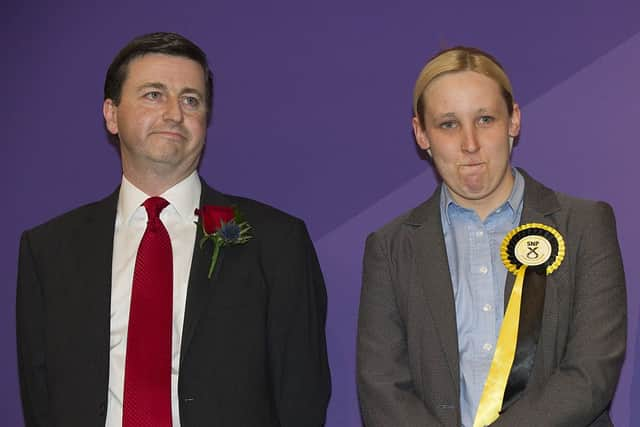
"Personally, I thought if you anticipate your defeat you guarantee your defeat; you need to lead from the front, you need to motivate your team, and if you are going to die on the battlefield you might as well die on your feet and not on your knees. That is incredibly motivating - until you lose."
But he said he would always be grateful for the support he received from colleagues and friends - and also an unlikely source in the shape of a former Tory prime minister.
"I'd never met John Major, but two months after the general election I was in a restaurant in London having lunch. John Major was at the next table and he sent across a message asking if I would like to join him for coffee.
“He was faultlessly generous. He said he was very sorry to see me lose my seat. And he said 'I just wondered if I could be any help to you in sharing my experience of leaving public office and going on to do other things'. He then gave me a 40-minute tutorial on the dos and don'ts of life after public life."
During his nine years out of parliament, Mr Alexander worked in academia - at King’s College, London, as well as Harvard and New York University - but also in corporate law, private equity and finance and consulting, all of which he said had given him useful insights and experience which he now uses as a minister.
He was close to both Tony Blair and Gordon Brown, but insists he has no ambition to move into Number Ten himself.
"I have never aspired to be PM," he said. "I've absolutely aspired to be in the room because ultimately politics is a team sport and you want to be in the room where it happens, making that contribution.
"But, having had the immense privilege of working with Tony Blair and Gordon Brown, I realise how unbelievably difficult a job it is, both leading a party and leading a country.
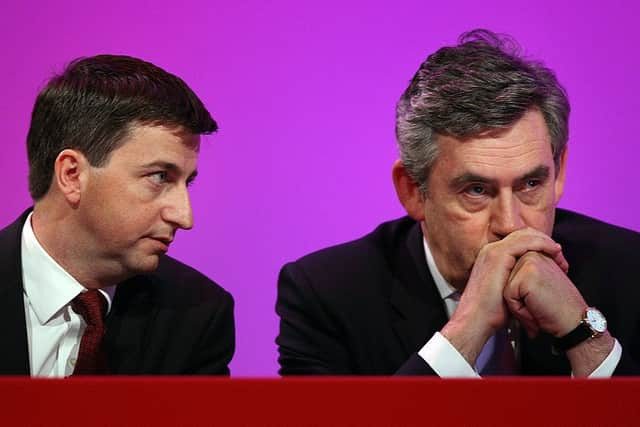
"I think there's a certain personality type that feels incomplete unless they're Prime Minister and in their different ways they both have it and I just don't have that."
After returning to parliament last year, Mr Alexander was appointed Minister for Trade Policy, then in last month's reshuffle he was promoted to the Cabinet as Scottish Secretary.
It's a job he held before under Tony Blair in 2006-07, when he simultaneously served as Transport Secretary.
Some have questioned the justification for the UK Government keeping a Scotland Office in the age of devolution. But Mr Alexander seems in no doubt.
"Our job is to solve problems and seize opportunities on behalf of Scotland," he said. "By having a seat at the table you have the ability to influence other government departments in the judgement they are making in a way that reflects distinctive Scottish circumstances or distinctive Scottish priorities."
And he said making good use of Scotland's voice at the Cabinet table would show that "Scotland being heard does not require Scotland being separate".
Mr Alexander said the past decade had seen economics usurped by culture as the defining concern in British politics. Labour's victory last year had resulted from economics making a comeback, but there was still a "very live battle" between economics and culture for dominance.
He said there had been an increase in economic anger, with wages flatlining for 15 years; political alienation, a feeling that politics was a battle between out-of-touch elites and ordinary people; and cultural anxiety, people feeling the country was changing in ways they didn't vote for.
Asked about the threat from Reform, he said: "We will only defeat Reform by being a remedy for Reform, not a replica of Reform.
"And the most effective way to vaccinate the country against the appeal of Reform is to be an effective, purposeful government because ultimately Reform strikes me as an extraordinarily bad answer to some really good questions - and we need to be the people answering those questions."