
Women who died in explosion at Linlithgow munitions factory in Second World War will never be forgotten
Three years of research and campaigning have ensured the story of hundreds of Lothian women who did vital war work, and the explosion which killed four of them, will never be forgotten.
Nobel's Regent factory in Linlithgow, which originally produced safety fuses for the mining and quarrying industries, was used during both the First and Second World Wars to manufacture munitions.
And with so many men away fighting, most of the work fell to women. They faced daily danger, working with toxic chemicals which turned their skin yellow and caused liver poisoning, as well as the ever-present risk from the explosives they were making.
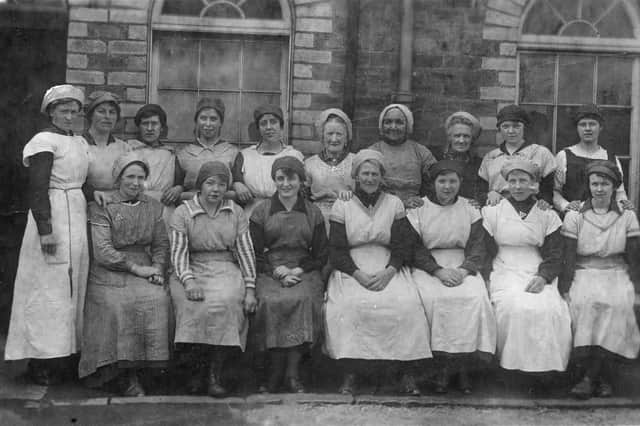

On February 5, 1943, an explosion at the factory killed four of the women workers. But until now, their sacrifice and the contribution of the "Linlithgow Munitionettes" has gone largely unrecognised.
Local woman Kathryn Welch was determined to change that. She and a group of other women from the town succeeded in getting the names of the four women who died - Jane Baillie, Barbara Baillie, Margaret Wilson, and Susan Allan - added to the Roll of Honour at the Scottish National War Memorial at Edinburgh Castle.
Kathryn laid a wreath in memory of the women at this year’s official remembrance ceremony at St Michael’s Church in Linlithgow. And there is now a plaque next to the war memorial in the church, recognising the work of the munitionettes and remembering the four women who were killed.

Previously, the munitionettes only got a passing mention on some information boards about general Linlithgow history. Kathryn said: “It didn’t recognise the scale of their work, the importance of what they did, the danger they faced or the sacrifice they made.”
She became fascinated by the munitionettes’ story after going on a women’s history walking tour in Edinburgh. “We went up and down the Royal Mile and we learned all about these brilliant women in Edinburgh's history - teachers and suffragettes, politicians and campaigners.
“On the way home in the train to Linlithgow, I was wondering what the equivalent stories were here and the only famous woman I could think of was Mary Queen of Scots.
“I'm sure she's fascinating, but it didn't feel particularly representative. I wanted to know what other women had made a contribution, so I set up a Facebook group called ‘More Than Mary’ to to find out about the history of women's lives here.
“It was planned to be an ongoing research project, looking into all different groups of women, but the munitionettes became so interesting and so all-consuming that we haven't moved on from them yet.”
Just over 500 women worked as munitionettes in Linlithgow and over the course of the two world wars they made 11 million incendiary bombs.
“It's a huge scale of work and it made a huge contribution to the war effort,” said Kathryn.
As part of the research, she spoke to one of the last surviving munitionettes, aged 102.
“Her memory was almost completely gone, but she could remember the day of the explosion in Linlithgow. She was due on shift later that day. Her mum woke her up and told her there had been an explosion. They lived just up the road and she ran down to the factory.
“Even though her memory was lost to dementia - she couldn't remember what she'd had for breakfast - she still remembered people’s clothes hanging over the telegraph wires where they had been blown off their bodies.”
Wartime censorship meant that although the explosion was reported, it said only that it had happened in “a town in south-east Scotland”.
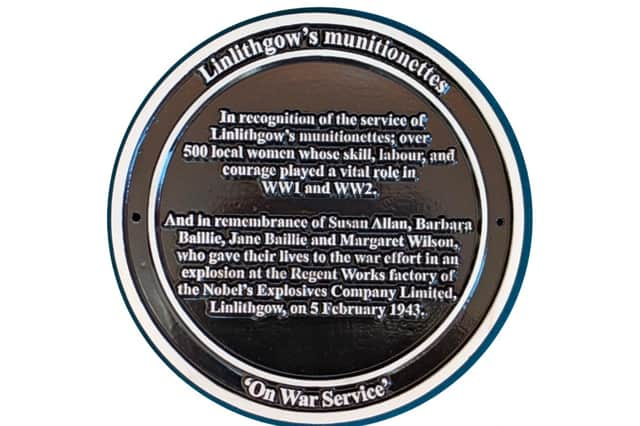
Kathryn said: “The more I learned about the danger of the conditions they were working in, the health conditions they faced, and how difficult and precise and skilled the work was, the more it felt their role was worthy of recognition alongside those who fought and died on the frontline.
“One account in 1916 talks about one woman who is filling detonators, where dropping a grain or two of the chemical would mean dangerous explosions, and she said she filled as a regular thing between 1,500 and 1,600 detonators a day. It's astonishing the whole place wasn't blown to smithereens every day.”
She said a key part of the story is the big assumptions made at the time about what women's work looked like and what they would be able to do.
“There was a lot of scepticism about women moving into these kind of industrial and manufacturing roles and an assumption they wouldn't be able to develop the required skills particularly quickly. And a lot of the reporting at the time is expressing surprise at how well they have done and the level of responsibility they have been able to take on and the professionalism they have developed over a short time.”
Kathryn is pleased that the story of the Linlithgow Munitionettes has been captured just as it risked disappearing from memory.
“I've been really struck by how political remembrance is,” she said. “We honour some kinds of people and some kinds of achievement, and those of other people, particularly working class women, just don't get remembered.
“It feels really satisfying that's now carved in metal and screwed to the wall of the church. I’m glad the story has been recorded forever in a way that won't be forgotten.”
She said there were people in Linlithgow whose grandmother or great aunt or some other relative had worked in the Nobel’s factory.
“Almost everybody will say they would have been astonished that we were still talking about it.
“They were humble, working women who were doing what was necessary, rolling up their sleeves and getting on with it. I think they would have been surprised to be considered heroes and worthy of remembrance because by and large they were very ordinary women - and that's why it's really important that we remember them.”
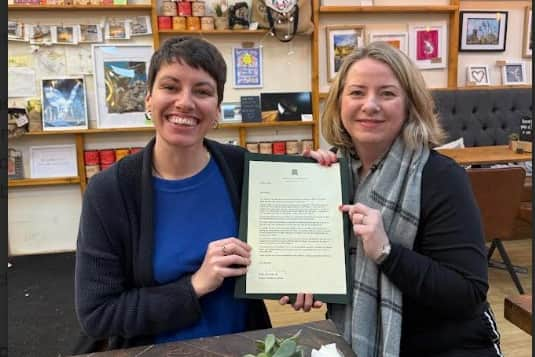
Kirsteen Sullivan, Labour MP for Bathgate and Linlithgow, has supported Kathryn’s efforts and just before Christmas handed her a letter from Defence Secretary John Healey, thanking and congratulating her for her work to secure a permanent memorial to the Linlithgow Munitionettes who died in the Nobel’s factory explosion.
Ms Sullivan said: “The legacy and inspiring story of the Linlithgow Munitionettes is a lesson in the collective efforts of the women who were vital to the war effort, and the dangers they faced not only with the risk of explosion but also to their long-term health.
“Kathryn deserves every recognition for her hard work to get the memorial installed in St Michael's and bring so many people together to remember these hard-working women. These local histories are an important part of our national story.”