
'Resilience isn’t enough': Dr Alison Edgar on leading through change
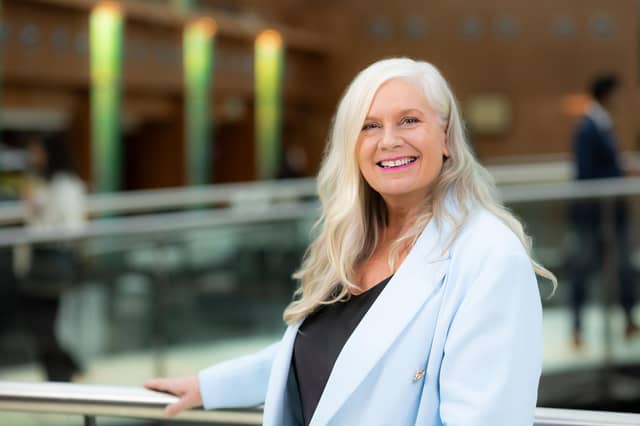

Born and raised in Scotland, Dr Alison Edgar MBE brings a distinctly Scottish lens to how organisations lead through change, communicate under pressure and build cultures that deliver sustained performance.
A transformational keynote speaker and author, Dr Alison Edgar MBE has spent more than three decades leading and performing at a senior level within global organisations. Her corporate career placed her inside a business that once dominated its industry worldwide, where she saw at close range how resistance to change in emerging markets led to a dramatic decline.
That experience shaped her focus on what truly drives high-performing teams and future-ready leaders, and how organisations can create cultures rooted in ownership, accountability and consistent results.
Awarded an MBE for services to entrepreneurship and business in 2020, and an Honorary Doctorate of Education in 2024, Alison is widely recognised for her contribution to learning and development. Her work has taken her inside major global brands, helping teams navigate change, strengthen collaboration and raise performance standards at every level.
In this exclusive interview with the Champions Speakers Agency, Dr Alison Edgar shares her perspective on the leadership behaviours that stall progress, what resilience looks like in practice, why thinking like an owner matters more than ever, and how clear, confident communication can transform workplace culture and performance.
Q1. High performance is a phrase used loosely in business. How do you define it, and what are the first leadership behaviours that need to change to achieve it sustainably?
Dr Alison Edgar MBE: “High performance is on the lips of every business I work with, it’s like it’s a secret club that only the very top organisations can tap into, but I see it as something very everyday and achievable for every business.
“High performance is when people come into work looking to move things forward a little bit from where they were yesterday — and they can do that consistently because the environment allows them to. It’s progress that becomes part of how the organisation breathes, rather than a big campaign or a motivational poster.
“A lot of leaders assume that sharing a vision and values statement will do the job. Those things are important, but they only mean something when the people inside the business feel connected to them and can see themselves reflected in the work. High performance doesn’t trickle down, it grows through the day-to-day behaviours inside a team.
“That’s where leadership plays a huge role. Change happens when leaders genuinely back their people — when they make space for ideas, listen properly, and create a climate where conversations can happen early rather than being avoided. If people feel comfortable speaking up when something isn’t working, they’ll also feel comfortable exploring what could work better.
“Over time, that builds momentum. Individuals start to stretch themselves a bit further, teams collaborate more freely, and those small daily improvements compound. High performance becomes something everyone contributes to, not something they’re told to hit. Psychological safety is paramount to achieving high performance in any organisation.”
Q2. Confidence gaps and self-doubt affect leaders at all levels, especially during uncertainty. What practical advice would you give leaders struggling with confidence while still needing to perform?
Dr Alison Edgar MBE: “Confidence wobbles happen to every leader I’ve ever worked with — regardless of title. In times of uncertainty, the most important thing isn’t pretending you’ve got every answer, it’s backing yourself enough to choose a direction and communicate it clearly. Your team doesn’t need perfection, they need honesty and belief. If you can say, “This is where we’re heading, and we’re giving it our best shot,” people will follow.
“The other piece is sticking to your process. Self-doubt often creeps in when leaders second-guess themselves, try to be all things to all people, or abandon what they know works. When you have a plan, whether that’s weekly priorities (managing your Big Balls!®), decision-making frameworks or leaning on your strongest people, stay with it. Imposter syndrome thrives in chaos.
“And finally, remember you don’t need to carry everything yourself. Ask questions. Bring others into the conversation. Confidence grows from progress and action, not from sitting in a room waiting to feel brave enough. When leaders keep moving, stay transparent and trust their team, that’s when capability — and confidence — actually starts to build.”
Q3. Looking ahead, what do you see as the biggest leadership challenge facing Scottish organisations over the next few years, and what should leaders be preparing for now?
Dr Alison Edgar MBE: “The biggest challenge on the horizon is keeping pace with the change that’s already underway. AI is moving fast, industries are shifting, and the expectations of younger generations are completely different to those who built the businesses we work in today.
“We are creatures of habit, and our instinct is to keep doing what we’ve always done — especially when things feel uncertain. But that approach won’t hold organisations steady for long.
“Scottish companies are brilliant at graft and grit, but the next stage requires curiosity as well. Leaders will need to stay open, stay informed and stay willing to experiment, even when the pace feels uncomfortable.
“Younger employees are coming in with a completely different relationship to technology — they’ve grown up with it — and they’ll play a crucial role in how organisations adapt. The opportunity lies in tapping into that enthusiasm rather than resisting it.
“But leaders don’t need to become AI experts overnight, but they do need to keep their knowledge current, listen to what’s emerging and build teams who aren’t afraid to learn alongside them. The organisations that thrive will be the ones who lean into change early — not the ones who wait until it feels safe.”
Q4. You work with leaders across sectors and stages of growth. What is one leadership habit you believe is quietly holding organisations back, even when performance looks strong on the surface?
Dr Alison Edgar MBE: “One of the most damaging habits I see — and it often crops up in very successful organisations — is leaders stepping in and doing the work for people. Sometimes it shows up as micromanagement, sometimes it’s disguised as “helping,” but the outcome is the same: it signals that the leader doesn’t trust their team.
“When that becomes the norm, talent stops stretching and they look to the leader to do everything for them, not because they are lazy but because that’s the way it’s always been done.
“I often compare it to an orchestra. Great leaders aren’t meant to play every instrument; their role is to conduct, set the tempo and help each section shine. When leaders take over and play the violin themselves, the whole performance suffers, and, of course, nobody learns how to play better next time.
“A big part of this is how feedback is handled. In strong cultures, feedback flows in all directions: leaders coach their teams, and teams feel confident enough to challenge back or offer a different perspective. When feedback becomes a one-way street, or avoided altogether, the organisation loses a vital source of improvement.
“So even when results look strong from the outside, leaders who step back, let people own their work and invite honest conversations tend to unlock far more capability than those who tighten their grip. High performance grows when people are trusted to contribute fully.”
This exclusive interview with Dr Alison Edgar MBE was conducted by Tabish Ali of the Motivational Speakers Agency.